Scrum is a widely used Agile framework for managing complex projects, especially in software development. It helps teams collaborate, adapt to change, and deliver high-quality results efficiently.
Breaks work into small iterations called sprints for step-by-step delivery.
Promotes collaboration, continuous feedback, and improvement.
Developed by Ken Schwaber and Jeff Sutherland in the early 1990s.
Scrum Workflow
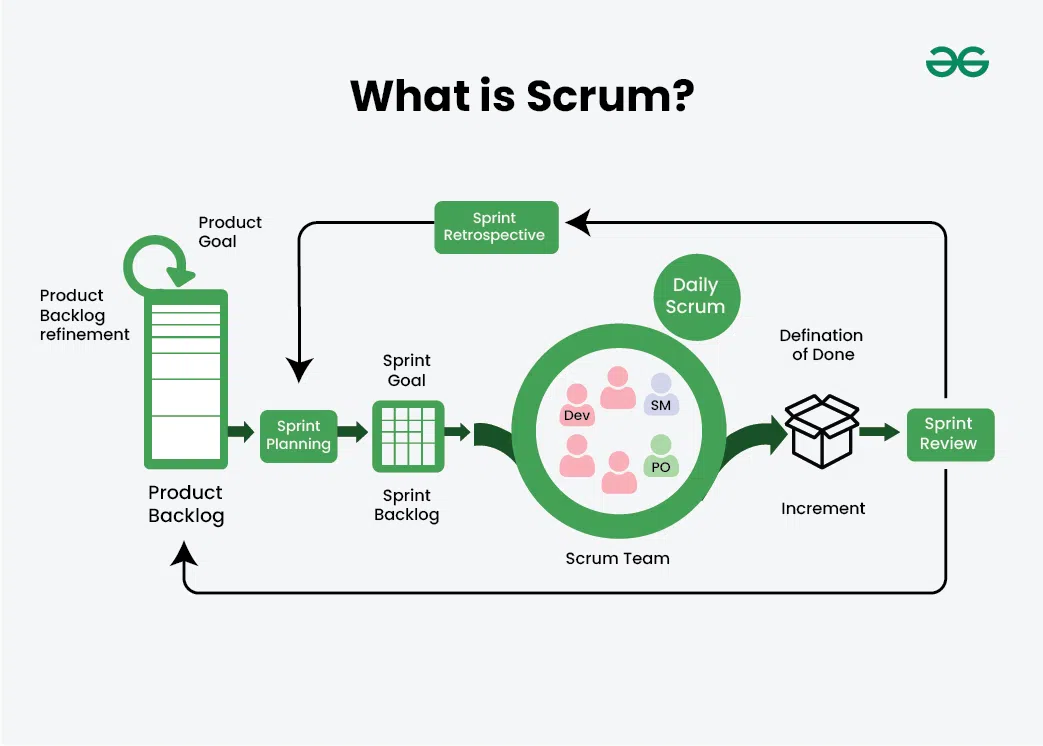
The Scrum workflow shows how work moves across stages to deliver a usable product increment in each sprint. It ensures continuous feedback, collaboration, and improvement.
Work starts from the Product Backlog containing prioritized requirements.
Sprint Planning moves selected items to the Sprint Backlog.
Team works during the sprint and tracks progress via Daily Scrum.
A working Increment is delivered at the end of the sprint.
Sprint Review and Retrospective ensure feedback and improvement.
Scrum Framework
The Scrum framework provides a structured approach to managing projects using defined roles, artifacts, and events. It enables teams to collaborate effectively, adapt to changes, and deliver high-quality products in an iterative and incremental manner.
Scrum Roles
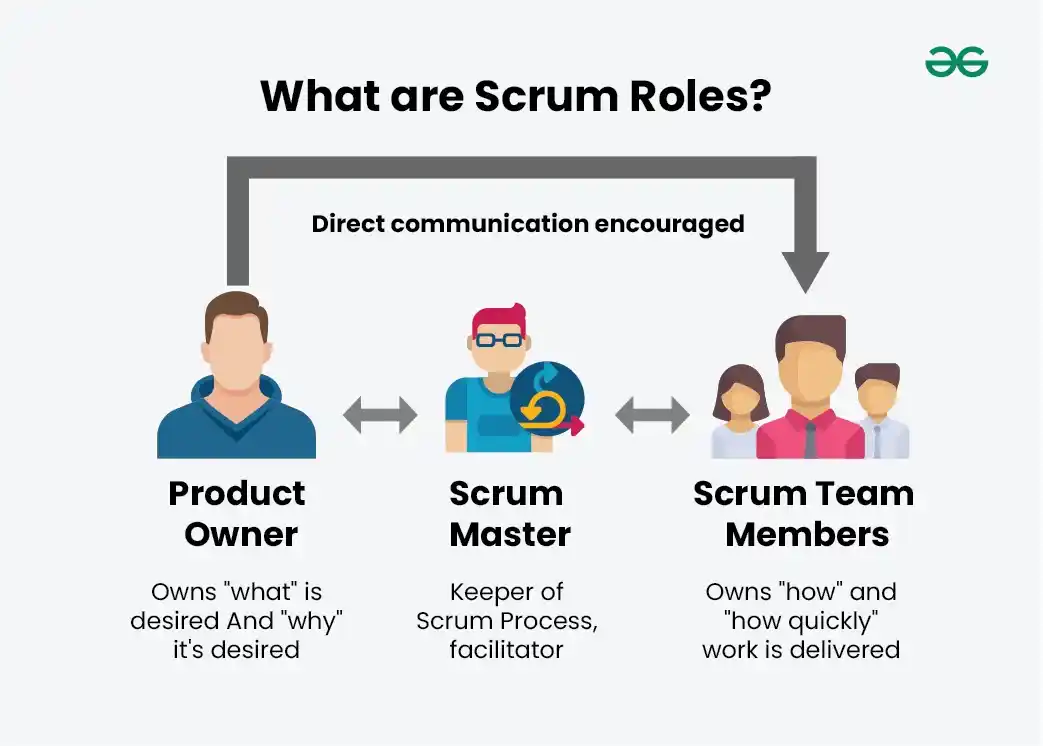
Scrum defines specific roles to ensure accountability, collaboration, and smooth execution.
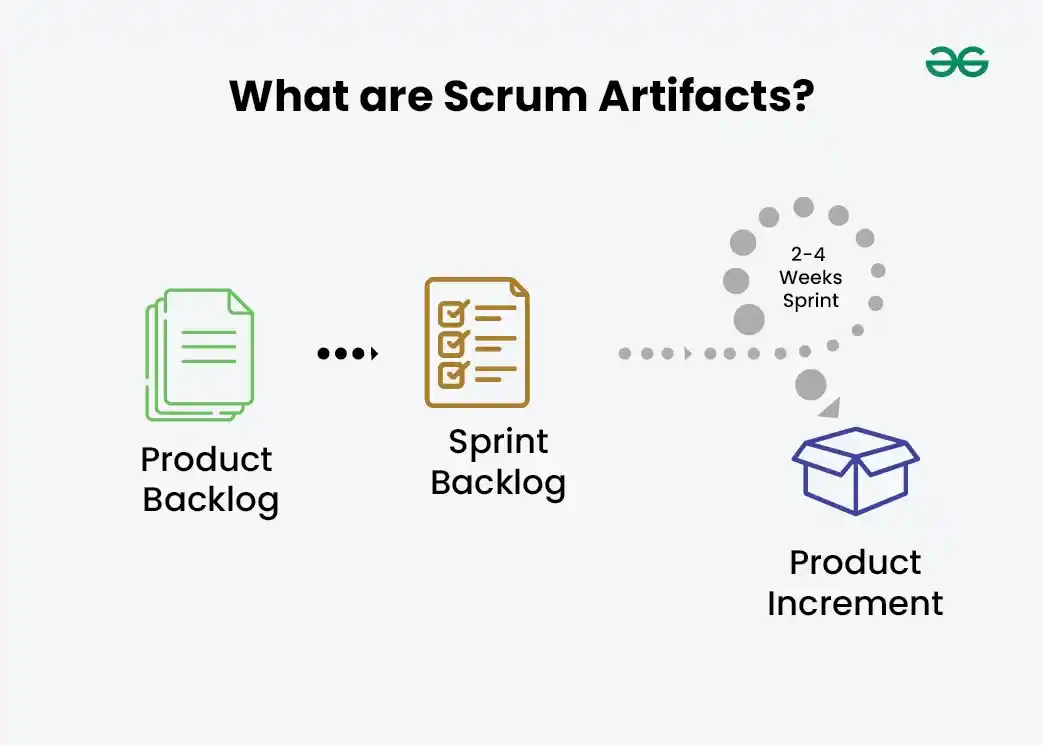
An evolving, prioritized list of all features, enhancements, and fixes.
Sprint Backlog: Set of tasks selected for the current sprint by the development team.
Increment: A usable and potentially releasable product delivered at the end of each sprint.
Scrum Events
Scrum events structure the workflow and enable regular communication, inspection, and improvement.
Sprint: A time-boxed iteration (1-4 weeks) where development work is completed.
Sprint Planning: Meeting to define sprint goals and select backlog items.
Daily Scrum: 15-minute daily meeting to track progress and plan next steps.
Sprint Review: Demonstration of completed work to stakeholders for feedback.
Sprint Retrospective: Meeting to reflect on performance and identify improvements.
Scrum Principles and Values
Scrum is guided by a set of core principles and values that help teams collaborate effectively, adapt to changes, and continuously improve their performance.
Scrum Principles
Scrum principles define how teams work, interact, and improve throughout the project lifecycle.
Transparency: Ensures all team members have clear visibility of progress, challenges, and work status.
Inspection: Regular evaluation of work through events like daily scrums and sprint reviews.
Adaptation: Allows teams to adjust plans based on feedback and changing requirements.
Scrum Values
Scrum values define the mindset and behavior expected from team members.
Commitment: Team members focus on achieving goals and delivering value.
Courage: Encourages open communication and addressing challenges confidently.
Respect: Promotes trust, collaboration, and mutual support within the team.
Sprint Lifecycle
The sprint lifecycle defines the sequence of steps followed to plan, execute, and deliver a working product increment within a sprint, ensuring continuous development and improvement.
The above diagram illustrates the complete flow of a Scrum sprint, showing how work moves from planning to execution and finally to delivery. The following steps explain each stage of the sprint lifecycle in a structured manner.
Step 1: Product Backlog Creation: The Product Owner defines, organizes, and prioritizes all requirements, features, and enhancements that are needed for product development.
Step 2: Sprint Planning: The Scrum Team selects appropriate backlog items, defines a clear sprint goal, and plans the tasks required to achieve the desired outcome.
Step 3: Sprint Backlog Preparation: The selected items are broken down into smaller tasks and organized into the sprint backlog for smooth execution during the sprint.
Step 4: Sprint Execution (1-4 weeks): The development team works collaboratively within the defined time frame to build and complete a functional product increment.
Step 5: Daily Scrum: A short daily meeting is conducted to review progress, address challenges, and plan the work for the next 24 hours.
Step 6: Increment Delivery: At the end of the sprint, a fully developed, tested, and potentially releasable product increment is delivered.
Step 7: Review and Retrospective: The team demonstrates the completed work to stakeholders for feedback and reflects on performance to improve future sprints.
Applications of Scrum
Scrum is widely used across industries due to its flexibility, iterative approach, and ability to handle changing requirements efficiently. It helps teams deliver value incrementally while improving collaboration.
Software Development: Used to manage complex projects through short iterations and continuous delivery of working software.
Marketing: Helps teams plan, execute, and optimize campaigns by adapting quickly to market changes.
Social & Non-Profit Sector: Enables organizations to manage projects efficiently and respond to community needs.
Complex Projects: Suitable for projects with evolving requirements where flexibility and adaptability are required.
Research & Development (R&D): Supports experimentation, prioritization, and continuous improvement based on feedback.
Benefits of Scrum
Scrum offers several advantages by enabling teams to work efficiently, adapt to change, and deliver value continuously. It improves collaboration, transparency, and overall project performance.
Faster Development: Iterative sprints and continuous feedback help teams deliver features quickly and improve them over time.
Transparency: Clear visibility of progress through backlogs, daily scrums, and reviews helps teams and stakeholders stay aligned.
Time Efficiency: Time-boxed sprints and structured events ensure better time management and faster delivery cycles.
Better Planning: Prioritization and incremental development help reduce waste and manage costs effectively.
Limitations of Scrum
Despite its advantages, Scrum has certain limitations that can impact its effectiveness in some projects. It may not be suitable for all environments, especially where strict planning or documentation is required.
Not Suitable for All Projects: Works best for projects with changing requirements, but not ideal for stable or well-defined projects.
Requires Skilled Team: Successful implementation depends on experienced and self-organized team members.
Limited Predictability: Frequent changes can make timelines and outcomes less predictable
Less Documentation: Focus on working product may lead to insufficient documentation in some cases.
Risk of Burnout: Continuous sprint cycles can create pressure and lead to team fatigue.
Agile Vs Scrum
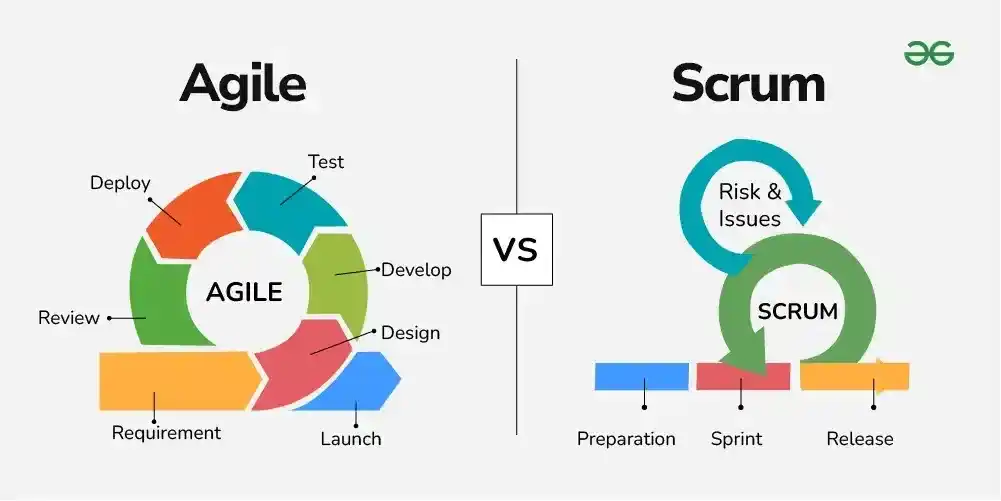
The following image provides a quick visual comparison between Agile and Scrum to help understand their key differences.