Product Owner is one of the three key roles in Agile methodology, acting as a bridge between stakeholders and the development team. Responsible for defining product vision and priorities, the Product Owner ensures development remains transparent, customer-focused, and value-driven throughout the lifecycle.
Defines and communicates the product vision and goals
Manages and prioritizes the product backlog
Ensures the product delivers maximum value and meets customer needs
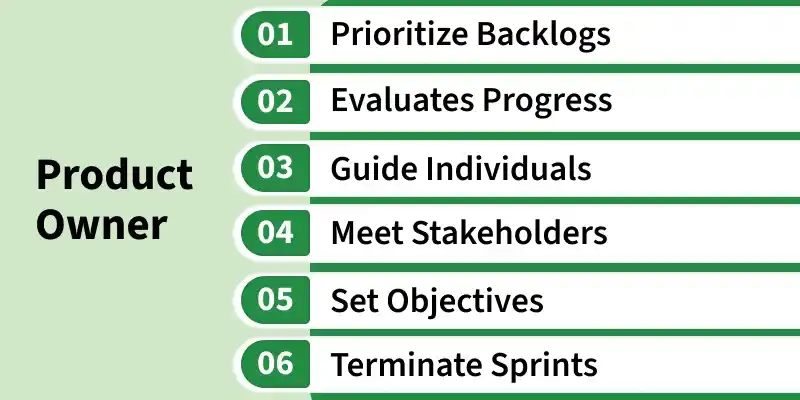
Product owner is responsible for the following aspects:
Set Objectives: Defines clear goals and direction for the product based on business needs.
Meet Stakeholders: Communicates with stakeholders to understand requirements and gather feedback.
Prioritize Backlogs: Organizes and prioritizes tasks so the team focuses on the most important work.
Evaluates Progress: Tracks the team’s progress and ensures the work is moving in the right direction.
Guide Individuals: Supports and helps team members by resolving issues and providing clarity.
Manage/Close Sprints (Terminate Sprints): Reviews completed work at the end of each sprint and ensures goals are achieved.
Proxy Product Owner
An individual appointed by the Product Owner to manage responsibilities in their absence ensures that development and communication activities continue smoothly. This role involves coordinating with the team, handling updates, and supporting ongoing work.
Similar responsibilities may be carried out, including interacting with stakeholders and making necessary decisions when required. However, the overall accountability and final decision-making authority remain with the Product Owner. This role is less common in small organizations but can be useful in larger teams or complex projects where additional support is needed.
Common Myths about Product Owner
Some common misconceptions about the Product Owner role are:
Creates all requirements and performs acceptance testing alone
Has complete control over the product
Is responsible for all failures
Only manages deadlines
Is solely responsible for writing user stories
Qualities of an Ideal Product Owner
Here are the following qualities of an ideal Product owner:
Excellent Communication: Communicates clearly with both stakeholders and the team, ensuring better understanding and maximizing team performance.
Leadership Skills: Acts as a leader who motivates, guides, and builds trust within the team.
Decision-Making Skills: Makes important decisions, especially in prioritizing tasks and managing the product backlog.
Technical Understanding: Has basic knowledge of the technical aspects and development processes to work effectively with team.
Time Management: Ensures work is completed on time and progress is aligned with project goals.
Team Building: Encourages collaboration, recognizes achievements, and maintains a positive team environment.
Transparency: Keeps goals, progress, and backlog visible to ensure trust and clear communication.