
When GPU makers first introduced real-time upscaling in games, it felt like a compromise. You were gaining a few frames, sure, but also accepting the blurriness. Even the early iterations of DLSS are fondly remembered as the "Vaseline" times, owing to just how blurry games looked when using it. Fast-forward seven years, and today, performance gains from DLSS no longer come at the cost of image quality.
Now, to its credit, AMD answered DLSS with its own upscaling suite, FSR, which has evolved rapidly. It has definitely closed gaps that we once considered permanent. And yet, even in 2026, DLSS still holds onto a very real edge where it matters most. When it comes to the most fundamental aspects of delivering more performance while preventing image quality loss, DLSS remains significantly more polished.
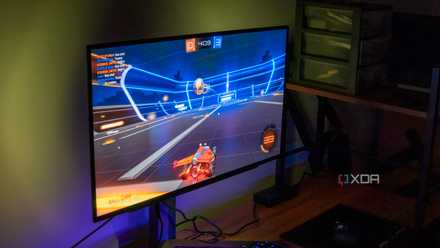
I tried running games at native resolution again, but DLSS 4.5 changed my mind
Even pixel peepers would struggle to justify native rendering at this point
DLSS's image quality remains unmatched
No matter how close FSR gets, DLSS remains a generation ahead
While Nvidia released DLSS back in 2019, AMD launched their answer, FSR, two years later in 2021. That two-year gap was all Nvidia needed to secure a generational head start on Team Red, and ever since, AMD has been playing catch up. The whole point has always been to reduce loss of quality while improving performance, and while DLSS did take a while to "get good," FSR took longer. Today, FSR Redstone (what AMD calls the FSR 4 suite), while technically sharing the same "number" as DLSS 4.5, is simply not up to par.
A blind test conducted by ComputerBase pitted native resolution against AMD's FSR 4 and Nvidia's DLSS 4.5 over six different games, all at 4K. The results showed a clear winner by a mile, and then some — over 48% of the 6,747 votes went to DLSS 4.5, while native resolution and FSR 4 collected 24% and 15% respectively. The average user now prefers DLSS to native resolution, and this is made even more evident by Nvidia themselves stating in early 2025 that over 80% of GeForce RTX users use DLSS in their games.
In 1-to-1 comparisons, DLSS 4.5 manages to reconstruct detail a lot more convincingly, especially in motion. In fact, when it comes to 4K upscaling from the lowest Ultra-Performance preset in both upscalers, DLSS 4.5 has genuinely impressed the masses with its temporal stability even while rendering just 33% of the output resolution. FSR Redstone, and its 4.1 implementation, on the other hand, is nothing short of impressive. It did, after all, collect 15% of the votes in the blind test, and AMD GPU users have reported the leaps in quality that FSR 4.1 made. However, in a head-to-head against DLSS about sheer image quality, there's just no denying that Nvidia has the upper hand.
It's not surprising at all, though. After all, we are talking about a bit of a David v. Goliath situation here, where Nvidia holds around 95% of the consumer GPU market share, and is roughly 9 times bigger than AMD.
AMD's answer to DLSS arrived half-baked, and now nobody's using FSR Redstone
FSR Redstone's second showing has been... unimpressive
Frame Generation magic is DLSS's playground alone
FSR hasn't even begun to catch up
We saw this with real-time upscaling, ray reconstruction, and the first iteration of frame generation that came with DLSS 3 — Nvidia introduces a new technology under the DLSS umbrella, and AMD takes a year to come out with its own version. Team Red has been struggling to keep up, let alone innovate and pave the way for others to follow. The same goes for DLSS 4, which took 2x frame generation and doubled it for the RTX 50 series GPUs.
Sure, it took a while to remove artifacting from DLSS 3, but it was still a full pipeline rethink, pairing AI with optical flow in a way that actually held up mid-motion. Then, multi-frame generation has pushed it even further. With DLSS 4.5, Nvidia took 4x frame generation all the way up to 6x frame generation, landing at dynamic frame generation for the smoothest possible experience. Meanwhile, FSR is still catching its breath. Fluid Motion Frames, AMD's answer to both DLSS Frame Generation and Multi-Frame Generation, is still focusing only on 2x frame generation, with multi-frame generation nowhere close to public release.
Real-time frame generation through AI firmly remains Nvidia's playground with DLSS. You can almost see it already — like clockwork, by the time FSR's multi-frame generation technology arrives, improves, and matures, DLSS 5 would have launched with more improvements for AMD to catch up to.
DLSS 4.5 scales down more gracefully
FSR 4.1, on the other hand, draws a hard line
While we could all pixel-peep for days on end with different opinions at the end of it, the one way DLSS pulls ahead of FSR in a real, palpable manner is how it doesn't abandon older hardware. It officially supports GPUs all the way back to the GeForce RTX 20 series from 2018, and more importantly, it scales intelligently across them. Even with the added VRAM overhead, older RTX cards can drop to lower quality presets while still benefiting from DLSS's defining strength — rock-solid temporal stability. In-house testing from fellow XDA writer Abhinav Raj proved as much. Even the underlying FP16 architecture for both the RTX 20 series and RTX 30 series cards doesn't make DLSS 4.5 unusable, which is a far more forgiving approach than most give it credit for.
Meanwhile, AMD has taken a much stricter route. FSR 4.1, and even its base 4.0 improvements, are officially locked to the Radeon RX 9000 series. Of course, tools like OptiScaler exist, but that's an example of the community stepping in where official support stops. Owners of RX 6000 and RX 7000 cards have every reason to feel shortchanged, and they don't shy away from making their feelings about it known online, either. An Nvidia-like rollout where newer features push forward without abandoning older capable hardware would've gone a long way here.
Nvidia GPUs proving to be more effective at longevity than AMD cards was absolutely not on my 2026 bingo card, but here we are.

With DLSS 5's AI slop, Nvidia just turned it into something DLSS was never meant to be
Remember when DLSS was about image quality and performance improving together?
DLSS shows up in way more games
Nvidia's ecosystem advantage keeps it front and center
There's a reason DLSS keeps showing up in the games people actually talk about. Nvidia first builds the tech, and then proceeds to bankroll its adoption through the latest and greatest AAA titles. Deep partnerships and engineering support lead to studios integrating DLSS early, often alongside features that push rendering forward. We saw it with Cyberpunk 2077 (and are still seeing it), where path tracing became a showcase moment, and again with Alan Wake 2, a title practically built around modern lighting pipelines. We are fully in a world where DLSS is part of the initial pitch when games are built. That's why industry reports reveal that Nvidia's DLSS is available in 97% of the games that support upscaling, while FSR shows up in just 72%. The latter isn't a bad number by any means, but significantly more games supporting DLSS directly translates to more gamers going over to Nvidia. Consequently, Team Green then generates more revenue, and gets to invest more in path-breaking new technologies and developing their DLSS stack further.
Meanwhile, AMD and FSR tend to arrive later, or in a more limited form. In some cases, the gap is practically impossible to ignore, as we saw in both recent AAA titles, Resident Evil Requiem and Pragmata. Both of these games lean heavily on Nvidia's ray tracing stack, with full path tracing pipelines optimized around RTX hardware. That's why players with AMD GPUs are unable to use path tracing in both these games, and have had to resort to community-made workarounds and mods to experience better ray tracing in these games. Path tracing at this level depends on hardware acceleration and denoising pipelines that AMD is still catching up on, and that's as good a time as any to bring up DLSS Ray Reconstruction.
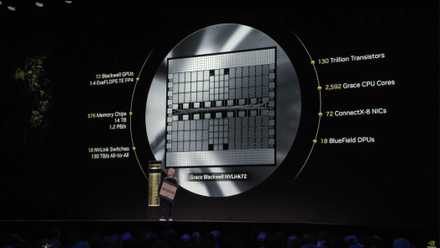
Blackwell's path tracing is 10,000x better than Pascal, claims Nvidia — and future GPUs will be 1,000,000x better
AI will be a big factor in that
Ray Reconstruction vs Ray Regeneration isn't a fair fight
DLSS is refined, while FSR is still finding its footing
Ray Reconstruction is where Nvidia extended its lead beyond upscaling and into the heart of modern rendering. They introduced it back in 2023 with DLSS 3.5, and it replaced traditional denoisers with an AI model that reconstructs ray-traced lighting in a way that's cleaner as well as more stable. In fact, that's what the brochure may have said, but independent analyses show that it's true, too. Ray Reconstruction has consistently reduced "boiling," produced cleaner reflections, and provided remarkably better temporal stability across surfaces in path-traced scenes. With DLSS 4.5, that pipeline got sharper, in some cases even reducing reliance on traditional denoisers outright.
AMD's answer was Ray Regeneration, and I must say it's promising. However, it's also early. The only two titles that have supported it so far are 2025's Call of Duty: Black Ops 7 (only in Multiplayer and Zombies modes) and the recently-released Crimson Desert. The sparse implementation aside, Ray Regeneration is pretty promising, and early comparisons show that it does look competitive in motion, but DLSS still wins in still-frame clarity and overall consistency. So, while DLSS Ray Reconstruction feels like a finished tool developers can rely on, FSR's equivalent still feels like a preview of what could be.
Gigabyte GeForce RTX 5070 Ti Eagle OC Ice SFF
AMD open-sourcing FSR 4 might be the best thing to happen to the GPU market
Dear AMD, please do it.
DLSS sets the pace, but FSR keeps the race alive
FSR has been trying to go pound-for-pound with an opponent from multiple weight classes above.
No matter what way you look at it, Nvidia's DLSS remains ahead because of the momentum it gained early on. Of course, AMD has made significant strides, and it comes pretty close in terms of quality and a lot of its features, but it does feel practically impossible for FSR to surmount DLSS. After all, Nvidia's resources do create a self-serving loop in the market where it supports more game development and thus, more players buy their cards.
It was never a fair fight to begin with, ever since AMD began losing ground over a decade ago. In all honesty, we should be tipping our hats to FSR for still being the arena and trying to go pound-for-pound while fighting an opponent that is multiple weight classes above it. Despite the odds, FSR is still swinging, and even though DLSS may be setting the pace, FSR is the reason the race even exists.