
If you try to point out to perhaps one single year when the GPU market evolved into its current, modern state, it would be 2019. Nvidia, the market leader in the GPU segment, had just launched Deep Learning Super Sampling, their in-house upscaling solution to the ray-tracing tax. Before that, however, we lived in a different era, where a new GPU generation simply meant more raw power and VRAM.
Before 2019, a five-year-old GPU like a GTX 970 couldn't possibly have played modern AAA games released in 2019 like an RTX 3070 would. Today, a GeForce RTX 3070 is half a decade old, but it still doesn't fret too much while playing major new AAA releases. That's thanks to software now taking over much of the rendering load in modern games, which has made older GPUs today age far more gracefully, particularly for Team Green's cards.
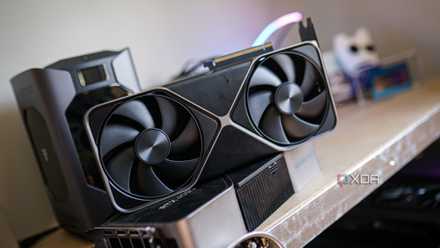
Nvidia's 6x frame generation proves that we've reached the hardware ceiling for GPUs
There's only so much VRAM to go around.
I tested an RTX 3070 at 1440p
Nothing short of impressive, with DLSS, of course
An RTX 3070 for a 1080p display is still a fantastic GPU that can last you until the end of this decade. Of course, a beefy CPU will be needed to help bear the load. However, the best part about this 2020 card is how it's still a veteran beast when it comes to 1440p. In the "obsolescence" argument, pitting a GTX 970 against games five years younger than it led me to apply the same test to the RTX 3070. As such, I tested Resident Evil Requiem, Marathon, Pragmata, and Crimson Desert on it, with a seven-year-old CPU, the Ryzen 5 3600X. This is pretty much the textbook definition of what a "mid-range budget gaming PC" build looked like back in 2020, and truth be told, it could work pretty well even today.
|
Ryzen 5 3600 + GeForce RTX 3070 + 32GB DDR4 RAM |
|||
|
Game |
Graphics Preset |
DLSS Preset |
Avg. FPS |
|
Crimson Desert |
High (RT Off) |
Quality |
63 |
|
Marathon |
High (RT Off) |
Quality |
83 |
|
Pragmata |
Max (RT Off) |
Quality |
79 |
|
Resident Evil Requiem |
Max (RT Off) |
Quality |
80 |
Just being able to cross the 60-fps mark and stay consistently above it in 2026 AAA titles is a pretty impressive feat for a five-year-old card like the RTX 3070, and that too, at 1440p resolution instead of just 1080p. The RTX 3070, however, exceeded my expectations, and that's even before I dropped to DLSS presets like Balanced and Performance, which have now become incredibly impressive in image quality and temporal stability, thanks to DLSS 4.5.
With DLSS Balanced and Performance, I could easily flirt with ray-traced lighting and shadows as well, all while enjoying 60+ fps at 1440p. That's how impressive DLSS 4.5's improvements to overall quality are, even with the added VRAM cost, which is heavier for an RTX 30-series card than for more modern 40-series and 50-series GPUs.

Don't waste your PC upgrade budget until you've fixed these 3 things first
You can't just blindly upgrade your CPU or GPU.
The RTX 3070 benefits greatly from DLSS
AI-based upscaling has genuinely changed GPU longevity forever
This is ultimately the biggest reason the RTX 3070 refuses to fade into obsolescence quietly. Five years ago, aging GPUs survived purely on brute force and lowered settings. Today, cards live a lot longer because software is doing an enormous amount of the heavy lifting. Nvidia seemed to have understood that shift much before the rest of the industry did. DLSS has evolved from a blurry gimmick into something I actively leave enabled in almost every modern game I play, which is a choice over 80% of RTX users make as well. No matter what card you use, DLSS Quality does look nearly indistinguishable from native resolution, and sometimes, it looks even better while improving performance.
This isn't even just about DLSS, either. Even FSR frame generation works surprisingly well when paired with RTX 20-series and 30-series cards, since these cards can't officially use DLSS frame generation. And yet, the 3070 can tap into technologies that aren't even designed with Nvidia hardware in mind. Boot up any game like Cyberpunk 2077, Alan Wake 2, and Black Myth: Wukong, and they will become dramatically more playable once upscaling and frame generation enter the picture. A GPU from 2020 behaves far closer to modern hardware than it realistically should, and that's why we need to acknowledge the dominance of software in rendering today. That's why raw GPU power alone matters less than ever now. We are fully into an era where rendering is increasingly hybridized between silicon and software intelligence, and a GPU like the RTX 3070 may end up being remembered as the exact card that benefited the most from that transition.

I disabled frame generation in three AAA titles, and it proved some games are better off without it
Turns out, frame generation isn't the "magic fix" it's ought to be
An RTX 3070 is still a great card to buy in 2026
The pre-owned market loves this GPU, and rightly so
In 2026, an RTX 3070 feels nothing short of fascinating. On paper, it should've started fading into irrelevance by now, especially with modern AAA titles becoming increasingly demanding. In fact, I'd argue that this GPU was flirting with obsolescence until DLSS 4.5 arrived in January 2026. That's the big change that made a five-year-old card still comfortable handling most modern AAA releases at 1440p. In fact, the RTX 3070 has aged far better than older "mid-range legends" we love talking about.
Take a GTX 970, for example. When the RTX 3070 came out in 2020, a GTX 970 already felt exhausted in newer games, unless you aggressively dropped settings and resolution to what we call "potato graphics," at which stage, there remained no point in running said game. In fact, the card didn't even manage to push past the 30–35fps mark in most major titles like Assassin's Creed Odyssey, Cyberpunk 2077 (the 2021 version), Control, and even an older 2018 game like Shadow of the Tomb Raider. That is how fast a card became outdated before software entered the chat and took over things.
Sure, the RTX 3070 was overbuilt for its class back then, and even its rasterization performance still holds up surprisingly well in 2026. Still, what has changed the most is how modern gaming now depends more on software enhancements rather than brute-force rendering alone. The RTX 5070 offers more VRAM, newer RT cores, and stronger AI hardware, but most of it is in service of enhancing its software-backed performance like multi-frame generation, dynamic super resolution, and other features from the DLSS suite. Not a single RTX 50-series presentation is ever complete without MFG and DLSS being the spotlight, and all the benchmarks provided take that into account as well. That's why the RTX 3070 remains so relevant today. We're simply no longer living in an era where GPUs fall off a cliff after two generations.
NVIDIA GeForce RTX 3070
- Architecture
- Ampere
- Process
- Samsung 8 nm
- Transistors
- 17.4 Billion
- Shader Units
- 5,888
- Ray Accelerators/Cores
- 46
The Nvidia GeForce RTX 3070 may not be the most powerful 30-series GPU out there, but it offers impressive performance for the price.

The RTX 30 series is quietly becoming the best GPU value in 2026
A brilliant GPU generation still punching above its weight
The future of gaming hardware looks very different now
Software has become the great equalizer.
It's rather comforting to realize that hardware won't be adding to landfills just because a newer box appeared on a store shelf. The RTX 3070 represents a longevity unlike anything we've seen before — it isn't because of fantastic optimization by every developer in the world, either. It's just because the philosophy behind rendering has fundamentally changed.
The future of PC gaming does not belong exclusively to the people constantly chasing flagship GPUs and buying bleeding-edge hardware every two years. Software has become the great equalizer now, and older hardware isn't being left behind nearly as quickly.