
Building or upgrading a gaming PC in 2026 feels like walking into a luxury showroom with a midrange budget. The newest cards are priced like halo products, storage and memory costs are still inflated, and even last-generation hardware refuses to come down in any meaningful way. We're firmly in the 50-series era now, yet prices are climbing instead of stabilizing. Somehow, even the 40-series, which is a whole generation old, still carries a premium that feels disconnected from reality. That's exactly why the RTX 30-series matters more than ever.
While newer GPUs seem to mostly be targeted towards AI workloads and flagship margins, Ampere cards are quietly doing something far more useful for actual gamers: becoming affordable. They are becoming genuinely good value, letting you build a capable 1440p or even a 4K machine without selling a kidney. If you're paying attention to the used market right now, RTX 30-series cards are starting to look less like aging hardware and more like the smartest purchase you can make in today's absurd PC economy.
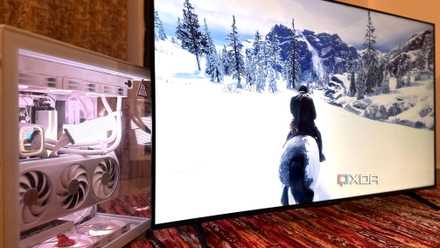
Nvidia just turned my 1440p gaming PC into a 4K capable machine overnight
My RTX GPU is now punching up.
The used market finally makes sense again
For the first time in years, GPU depreciation is behaving like depreciation
We're finally in an era with no more crypto madness, or pandemic-scarcity pricing. Gone are the days we'd see five-year-old cards listed above their original MSRP "because of demand." The used market has finally normalized, and RTX 30 cards are the biggest winners here. RTX 3070s and RTX 3080s are now landing at fractions of their launch price. Cards that once felt untouchable are suddenly popping up everywhere, and they're priced like second-hand hardware instead of family heirlooms people don't want to part with.
What's important here isn't just the affordability, either. It's the performance-per-dollar. Even something like an RTX 3060 Ti still delivers rock-solid raster performance in modern games. Strip away the marketing buzzwords and AI features for a second, and you're left with GPUs that were built during a performance-first generation. Ampere didn't rely on frame generation to look good on charts, is all I'm saying. It brute-forced frames the old-fashioned way, with a little help from DLSS.
|
GPU |
RTX 3070 |
RTX 3080 |
RTX 4070 |
RTX 4080 |
RTX 5070 |
RTX 5080 |
|
Average Used Price |
$250–$300 |
$350–$400 |
$450–$600 |
$800–$1000 |
— |
— |
|
Average Market Price |
— |
— |
$650–$850 |
$1500–$1800 |
$600–$900 |
$1300–$2000 |
In 2026, raw horsepower continues to carry games. Upscaling helps tremendously, but when your base raster performance is strong, everything else becomes icing on the cake. After half a decade of broken GPU economics, RTX 30 cards finally feel like normal products again. That alone makes them incredibly compelling.
DLSS keeps Ampere feeling modern
One of the biggest reasons RTX 30 GPUs refuse to age
DLSS has evolved dramatically since Ampere launched, and those improvements didn't stop at newer cards. RTX 30 owners have continued to benefit from image quality upgrades, improvements in temporal stability, and smarter reconstruction, all without changing hardware.
At this point, you can comfortably run modern games using DLSS Balanced or Performance presets and still walk away with surprisingly clean visuals. The ghosting is largely gone, the fine detail holds together better than it ever did, and motion looks stable. Using DLSS now doesn't feel like a compromise. Instead, it feels like a feature.
It means an RTX 3070 today doesn't behave like a five-year-old GPU at all. With something like DLSS 4.5, it behaves like a modern GPU with mature drivers and incredibly refined upscaling tech. Unlike other generations, Ampere is still actively benefiting from ongoing optimization work. This is where RTX 30 quietly separates itself from older cards. Previous generations aged purely on hardware, and Ampere ages on software too, which is a much slower process.
Even without official frame generation support, DLSS alone stretches these GPUs far beyond what their launch specs would suggest. In real-world gaming, that translates to higher resolutions, better settings, and longer relevance.

With DLSS, XeSS, and FSR, I'm secretly optimistic for the future of PC gaming
From awful to shaping the future
AMD offers more VRAM, but NVIDIA still owns the software
AMD's cards look more tempting, but it's complicated
On paper, AMD's competing cards look tempting with more VRAM and stronger raster performance. Cards like the RX 6800 XT or RX 6900 XT do come close to RTX 3080-level raster performance, even when the NVIDIA card carries 6GB less VRAM. Still, the story doesn't end there, and that's all because of NVIDIA's Deep Learning Super Sampling. DLSS support remains a massive advantage for NVIDIA. The image quality, adoption rate, and overall maturity of DLSS still outpace AMD's alternatives by a wide margin. That matters more every year as developers increasingly design with upscaling in mind.
Then, there's also the pricing reality. At launch, the RTX 3080 undercut the RX 6900 XT by hundreds of dollars, before pandemic pricing and scalpers made a mess of the market. Today, that gap still echoes through the used market. It's the same story with the RTX 3070 versus AMD's RX 6800. There was less VRAM on the NVIDIA side, yes, but better pricing now and vastly better software support makes the Ampere cards incredible value even in 2026.
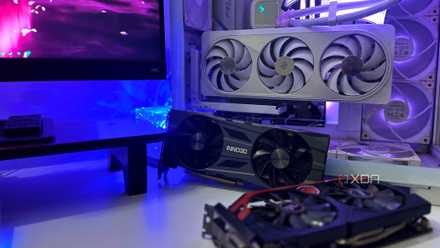
12 years ago, I left AMD for NVIDIA, and AMD has never given me a reason to come back
NVIDIA's ecosystem became about much more than silicon, years ago.
Real-world performance still holds up
Even in new games, RTX 30-series cards don't complain
Here's the part people tend to underestimate, especially in 2026: RTX 30-series cards are still genuinely good gaming GPUs. An RTX 3070 remains a strong 1440p card, and the RTX 3080 still handles 4K respectably with sensible settings. Sure, you're not going to be pushing max settings on a new AAA title, but with the quality of graphics today, that barely matters. A friend I built an RTX 3070 PC for way back in 2020 still manages to happily play Assassin's Creed Shadows at medium-to-high settings with DLSS Balanced, and that's on 6-year-old hardware in 2026.
Ray-tracing is still expensive, of course, and without native frame generation, the RT tax hits harder on Ampere than it does on newer cards. But even that isn't a dead end anymore. With DLSS-to-FSR mods, and some other games supporting FSR 3 frame generation even on NVIDIA cards. That flexibility matters so much today, during a time when a brand-new PC would set you back by thousands of dollars.
RTX 30 cards give you options — you can prioritize visuals, chase framerate, or strike a balance between the two. They're not locked into a single way of playing modern games, and they don't crumble the moment you leave raster-only workloads. For everyday gaming in 2026, Ampere still feels capable, adaptable, and far from obsolete.
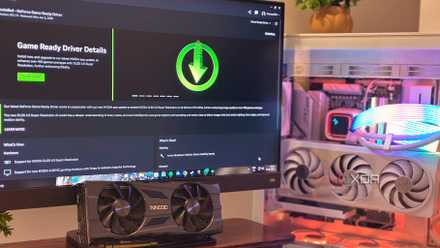
I benchmarked an RTX 20-series GPU with DLSS 4.5, here's what I found
Is DLSS 4.5 a friend or a foe of the Turing family?
RTX 30-series cards are great entry points for new PC gamers
If you're entering PC gaming in 2026, RTX 30 is an ideal starting point
RTX 20-series cards always felt like proof-of-concept hardware. This was a time of early ray tracing, early DLSS with its vaseline-on-the-screen effect, lots of promise, but not enough execution. Ampere was where everything truly clicked, with DLSS 2.0. We got big performance gains, real ray-tracing viability, and DLSS finally worked in harmony with the hardware while making the image on screen look genuinely respectable. That leap, six years on, matters even today.
RTX 30 cards offer mature drivers, massive used availability, and a clean upgrade path from older systems. They're powerful enough to feel modern, affordable enough to be accessible, and common enough that parts, guides, and troubleshooting advice are everywhere. That's what is invaluable to newcomers.
You're not going to be buying into an experimental platform at all. With a used RTX 30-series card to get you started, you'd be stepping into a proven ecosystem with years of refinement behind it with no early-adopter tax to be paid this time. All you'd get is reliable performance and a huge community of users doing exactly what you're doing. In a market dominated by premium pricing and AI-driven hardware priorities, RTX 30 feels refreshingly grounded.
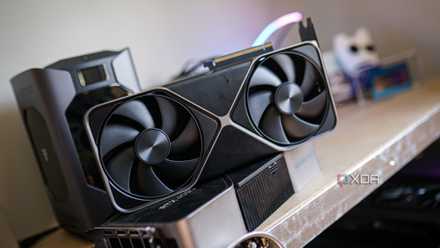
Nvidia's 6x frame generation proves that we've reached the hardware ceiling for GPUs
There's only so much VRAM to go around.
30-series cards feel like rational GPUs in an irrational market
RTX 30-series cards not being exciting anymore is why they're such good value today.
RTX 30-series cards matter right now because... they don't. Hear me out — the fact that they're not exciting anymore is what makes them such good value today. They're now sitting in a rather rare sweet spot, where they're powerful enough for modern games, old enough to escape AI-inflated pricing, and supported enough to remain genuinely relevant.
Ampere cards are continuing to deliver what most gamers actually need, which is dependable performance at prices that make sense. In a hardware landscape defined by excess, the RTX 30-series stands out for being sensible, and right now, that makes it one of the smartest GPU buys you can make.