
In case you didn't notice, it's not a great time for PC upgrades right now. The latest PC hardware crisis started with consumer memory but quickly engulfed graphics cards, too. The GPUs that were selling close to their MSRPs only four months ago are now too overpriced to consider. I was looking for a new RTX 50 series GPU for my second PC, but all things considered, a pre-owned RTX 3080 is looking increasingly better. It will save me a lot of money without sacrificing too much performance, and I can work with the 10GB of VRAM if I tweak the in-game settings. Until the market corrects and I can get a new GPU at a reasonable price, this used RTX 3080 will have justified the investment many times over.

I'm not upgrading my PC in 2026, but I am changing these 5 significant things to make it feel new
No GPUs or RAM, but plenty of room for improvements and upgrades.
Another GPU pricing hell has descended upon us
It's going to be worse than ever
The unprecedented demand for enterprise memory led to a severe DRAM shortage in the last quarter of 2025, sending consumer RAM prices through the roof. It was followed by rising SSD and GPU prices, as manufacturers cut production and prioritized data center SKUs. The best time to upgrade your PC was six months ago, when GPU prices had finally settled down, and RAM & SSDs had shown no signs of impending doom. Of course, hindsight is 20/20, and we couldn't have known what was coming. I should have bought an RTX 50 series GPU when I had the chance to snag one at MSRP.
Today, even the mid-range cards with relatively lower VRAM capacities are selling at inflated prices. Most RTX 5070 models, for instance, are retailing for around $650, a $100 premium over the MSRP. Even AMD's RX 9070 is sitting close to $650 instead of its $550 MSRP. Forget about higher-end SKUs like the RTX 5070 Ti and RTX 5080; the former has virtually disappeared from the market, and the latter can't be found for under $1,400–$1,500 anywhere.
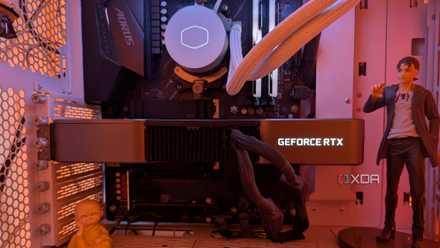
While I would have preferred a current-gen card for the new build I was planning, it's clear I would have to look at the used GPU market for the best value for money. After looking at eBay listings, I realized anything faster than the RTX 3080 wasn't priced reasonably. My existing PC has an RTX 3080 FE, which I have been using for over three years now. It seems the best choice right now would be to use the same card for the second PC I'm building.

My GPU is from 2020, but it's still good enough for AAA games
The RTX 3080 might not be high-end today, but it's far from done
RTX 3080 is still good for high-end 1440p gaming
It's going strong even after 5 years
The RTX 3080 was launched in late 2020, which makes it over five years old. It was one of the fastest cards then, and legitimately one of the best GPUs Nvidia had launched in a while. Even after the RTX 40 and RTX 50 series, we haven't seen a GPU that managed to provide high-end performance without costing a bomb. In 2026, it might not be high-end anymore, but it's still good enough for most titles at 1440p High settings. In terms of raw performance, it sits somewhere between the RTX 5060 Ti and RTX 4070. It says something about the RTX 3080's unique performance tier when a 60-class card from two generations later can't beat it in rasterized performance.
Whether you consider older but demanding AAA titles like Cyberpunk 2077 and Alan Wake 2, or newer heavyweights like Indiana Jones and the Great Circle and Black Myth: Wukong, the RTX 3080 is still capable of smooth 1440p gaming. You will need medium ray tracing settings in some newer titles to break 60 FPS, but that's still impressive for a 5-year-old card, especially considering the rapid rise in hardware requirements of AAA games.
The 10GB of VRAM is a sticking point in 2026, especially at higher resolutions, but you can fiddle with the graphics settings to avoid texture pop-ins and stutters. Unless you can't let go of Ultra settings and maxed-out ray tracing, the RTX 3080 is undoubtedly capable of modern high-end gaming at 1440p. In some titles, you can even manage 4K gaming with decent framerates. And considering the FPS per dollar of a used RTX 3080, it's hard to argue with the proposition.
4 ways I use my GPU for more than just gaming (and no, it isn't AI)
Of late, I've been using my GPU the least for gaming
The used market is highly attractive right now
I'd better act before it's filled with scalpers
Instead of spending over $600 on an RTX 5070, I'd rather spend around $250 on a used RTX 3080. It will give me 90% of the raw performance of the 50 series card at nearly one-third the price. For $250, it's hard to find any other GPU that can come close to the RTX 3080. The pre-owned GPU market has always been a source of great deals, but it's especially useful right now as we're dealing with yet another GPU pricing crisis. Even if you look at other used options like the RX 7800 XT or RTX 4070 for performance similar to the RTX 3080, you'll find them priced higher than the Ampere card. Before the used market starts reflecting the price hikes on the new market, I plan to pick up a decent RTX 3080 for my second PC.
If you're considering buying a used GPU in this market, make sure you're protecting yourself against faulty components. Make sure you get all the information about the card's condition, past usage, and some benchmarks. Buyer protection policies can protect you against fraud, but you can further minimize your risk by trusting reputable sellers and ignoring the deals that are too good to be true.

5 things I wish I knew before buying a used GPU
It's not as risky as it was once made out to be, but buying used GPUs still has its pitfalls.
Don't be afraid of used PC components
There's a valid fear among PC builders about buying used components. You never know what the hardware had been through, or whether the seller is telling the truth. However, if you stick to well-known platforms like eBay, or buy from a seller you know personally, the risk can be minimized. The value for money on older high-end GPUs on the used market is unparalleled, especially in this market. Make sure you don't disregard used GPUs before considering the pros and cons