
It was 2011 when I saw my first-ever discrete GPU. It came and became a part of the family PC thanks to my older brother, who managed to convince our folks that we needed one. It was an ATI Radeon HD 5670, and at the time, it felt like a small miracle. The alternative back then was NVIDIA's GT 240, and on pure raster performance, AMD had the edge. It was cheaper, faster in most games, and felt like the smart choice. Three years later, I went green. It's been twelve years since that decision, and upgrade after upgrade, generation after generation, I've watched NVIDIA steadily pull away while AMD kept trying to claw back lost ground. Not always unsuccessfully, and not without good cards, but never quite enough.

6 things gamers need to know about AMD’s RX 9000 series before building their PC
AMD’s RX 9070 series isn’t just another release — it’s a game-changer, proving that AMD is finally a true recommendable competitor in 2025.
Driver stability quietly pushed gamers away
This one doesn't get talked about enough
For years, AMD drivers carried a reputation for being inconsistent. It was deserved sometimes, and sometimes exaggerated. Still, AMD users dealt with their fair share of black screens, random crashes, and updates that fixed one game and broke another. If you were the kind of player who bought new releases on day one, Radeon ownership, for quite a while there, felt like rolling the dice. Meanwhile, NVIDIA started shipping game-ready drivers before major launches. Not after, not eventually, but before. That's what made me pick NVIDIA's GTX 760 over an R9 270X, even though it was $50 cheaper — I was fairly new to PC-building (but experience with PC gaming), and when seven different vendors in one of the continent's biggest IT markets tell you to avoid AMD for its driver issues, your fifteen-year-old self has no choice but to believe them and listen.
When you're excited to play something new and your system decides today is the day it forgets how to behave, brand loyalty evaporates fast. I watched friends migrate away from AMD not because they hated Radeon hardware, but because they were tired of troubleshooting instead of playing. Over time, that friction added up, only to be exacerbated by YouTubers bashing AMD for their drivers loudly on the internet. That's why I stuck with my GTX 760 until it gave up on me a few years later.
In recent years, there's no doubt that AMD has improved magnificently and massively, but reputations have a bad habit of lingering. Once NVIDIA became synonymous with stability and AMD with unpredictability, the shift was inevitable.
NVIDIA App
Ray tracing completely changed expectations
NVIDIA made it the standard and controlled the narrative
In 2018, NVIDIA changed the face of gaming forever when they introduced real-time ray tracing in games. Then, they also launched dedicated RT hardware, framed their GPUs as the only real solution to the performance overhead of ray tracing, and built an entire marketing cycle around it. AMD entered later, without equivalent hardware acceleration, and it was already on the back foot.
Sure, NVIDIA created the problem and sold the solution — the problem being the "ray tracing tax." But here's the thing: when ray tracing is done right, it's breathtaking. Proper lighting transforms environments, reflections add depth, and global illumination reshapes the very atmosphere in a game. It may have looked like a gimmick in the beginning, but today, it's anything but.
As such, when the time came to build a new PC again, this time in the 2020 market where prices were through the roof, I had to choose between an RTX 2070 Super and an RX 5700 XT. I chose to go with the ray-tracer. It was $100 more expensive, but NVIDIA promised me DLSS and ray tracing magic, which, paired with Cyberpunk 2077's release in 2020, convinced me to stay with Team Green. At the time, the VRAM for both cards was the same, which only made my decision easier, because NVIDIA gave me a clear message: "We're giving you the same hardware, but better software."

Ray tracing has silently become mandatory, but modern GPUs didn't get the memo
Always-on ray tracing needs more powerful GPUs, not software gimmicks
AMD tried to catch up, but they never truly closed the gap. Ray tracing performance on the RX 6700 XT, AMD's competition for something like the RTX 2070 Super, was terrible, even though it matched and exceeded NVIDIA's card in pure raster performance. Slowly, however, more games started adopting ray tracing, and eventually, all AAA titles followed suit. AMD was already incapable of producing RT-capable cards at NVIDIA's level, and they lost even more ground. They came around in the next generation with more RT cores, and by that time, NVIDIA had already moved on to path tracing and advanced reconstruction.
More importantly, NVIDIA convinced the gaming world that ray tracing represented "next-gen." Reviewers benchmarked it, developers targeted it, and players demanded it. Once that expectation was set, AMD was stuck chasing a moving target, which wasn't just a technical loss. This was a complete narrative loss, and those are far harder to recover from.
DLSS, frame generation, and the widening feature gap
Frame generation was my pick over 66% more VRAM
When it launched alongside ray tracing in 2018, DLSS 1.0 was rough, blurry, and inconsistent. This was clearly an experimental technology that looked like someone had rubbed butter all over your screen. However, that problem didn't last long, because DLSS 2.0 changed everything. From that point onward, NVIDIA never really looked back. At the time DLSS 2.0 came out in a significantly improved version, AMD still took another year and three months to come out with their own AI upscaler, FSR, and even then, it felt half-baked and significantly behind DLSS.
Then came frame generation, and the world was never the same again. While NVIDIA showed off frame generation to the world for the first time, AMD took one whole year to catch up with Fluid Motion Frames. One whole year is a lifetime in the tech world where every shiny new piece of technology becomes dated six months down the line.
When the time came for me to move to a next generation card once again and build my best, most powerful PC yet, I was once again faced with a choice: the RTX 4070 Ti or the RX 7900 XT. For an extra hundred dollars, AMD was giving me an extra 8GB VRAM for a total of 20GB, while the 4070 Ti only came with 12GB. And yet, frame generation had been around for 9 months by then, and it was doubling frames like magic, and becoming refined with every update. Picking an RTX 4070 Ti over an RX 7900 XT was a simple pros-and-cons decision. I passed up on AMD's extra 8GB VRAM because DLSS, frame generation, and path tracing were all going to fare better over the long term on NVIDIA's hardware, and today, that choice rings solid and true.
With Fluid Motion Frames, AMD responded, but once again, it felt reactive rather than visionary. Ray reconstruction from NVIDIA only served to widen the gap further, and now, DLSS 4.5 has yet again put Team Green miles ahead, just when we were coming to grips with FSR 4 and DLSS 4.0 being neck and neck in a lot of titles.
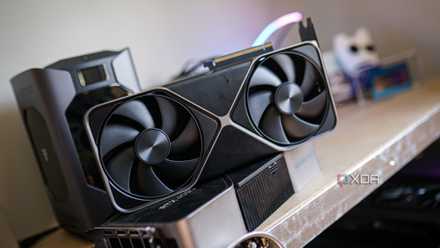
Nvidia's 6x frame generation proves that we've reached the hardware ceiling for GPUs
There's only so much VRAM to go around.
Looking back, NVIDIA GameWorks feels unfair
Everyone knows it, but it worked
With NVIDIA GameWorks, Team Green embedded themselves directly into development pipelines, thus creating a feedback loop. Games ran best on GeForce, reviewers noticed that, and told gamers that. As such, gamers bought GeForce cards, and developers prioritized NVIDIA hardware. Once that loop started spinning, it never really stopped.
Yes, AMD secured massive wins with consoles. The PlayStation, Xbox, and even the Steam Deck run on AMD-made silicon, and that's significant and impressive. However, most console buyers don't know what silicon they're running because they don't run with the enthusiast crowd. PC enthusiasts, who analyze benchmarks, compare features, and chase visual fidelity and frame pacing, migrated towards NVIDIA in droves. Meanwhile, those who buy mid-to-high-range Radeon cards, or even the flagships, constantly find themselves defending their decision, or convincing others more than themselves that ray tracing isn't a priority for them.
AMD keeps chasing yesterday's breakthrough while NVIDIA unveils tomorrow's.
FSR being open-source is philosophically fantastic, and I'm all for it, but DLSS simply looks better in practice. No amount of comparison can ever change two cold, hard facts. First, like ray tracing, AI upscaling has become a part of the gaming industry, and it's never going away. Second, NVIDIA's DLSS has beaten AMD's FSR in visual fidelity and temporal stability year after year, and Team Green holds the crown by a mile. Console partnerships look great on slides, but they didn't translate into Radeon dominance on desktops.
AMD keeps chasing yesterday's breakthrough while NVIDIA unveils tomorrow's, and if you're rooting for competition (which you should), it's been exhausting to watch the past decade. AMD isn't incompetent by any stretch of imagination, but they're just perpetually late to the party every single time, and in tech, being late means losing.
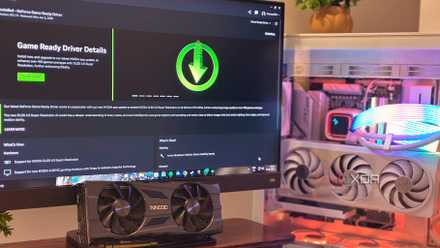
I benchmarked an RTX 20-series GPU with DLSS 4.5, here's what I found
Is DLSS 4.5 a friend or a foe of the Turing family?
NVIDIA stopped selling graphics cards years ago
They've been selling a lifestyle for a while now
For a long time, the raster performance between the Red and Green giants was neck and neck. You could line up AMD and NVIDIA cards in most generations and find them trading blows depending on the game. For the most part, that part of the story hasn't really changed much. What did change, however, is everything around it. NVIDIA suddenly realized that raw frames weren't really the future, but features were. They leaned hard into software suites and platform identity while AMD stayed focused on hardware value. Suddenly, it wasn't just about how fast your card rendered pixels, but about latency reduction, AI upscaling, ray reconstruction, ray tracing, capture tools, and broadcast enhancements as well.
AMD, on the other hand, kept doing what they'd always done: offering more VRAM, better price-to-performance, and solid raster results. On paper, that should've been enough, but VRAM headroom slowly stopped being the differentiator. Software ended up replacing it, along with feature depth. NVIDIA added bells and whistles, yes, but they also made those bells and whistles feel essential.
Marketing absolutely played a role here. "RTX On" became a cultural moment whether we liked it or not. But the uncomfortable truth is that once those features matured, they weren't snake oil. They genuinely improved how games looked and felt.
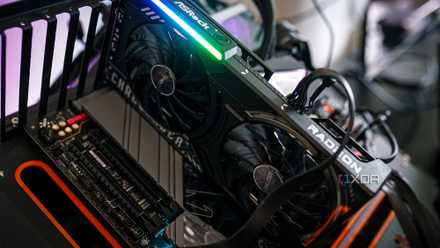
AMD's FSR 4 beats DLSS 4 in one surprising way
For the first time ever, AMD's FSR 4 can properly compete with DLSS 4.
It's been a decade of small victories
Gaming just isn't about silicon anymore.
NVIDIA have built their domination in the gaming GPU market slowly, methodically, and above all, relentlessly. They built ecosystems while AMD built hardware, sold experiences while AMD sold specs, and shaped expectations while AMD reacted to them. Over time, those small advantages stacked into something overwhelming.
AMD still makes good cards, and some great ones, too. Sadly, gaming just isn't about silicon anymore, and is now veering into the territory of software, polish, developer alignment, and trust. That battle was lost years ago, and AMD just hasn't been able to give me a reason to come back. This was death by a thousand cuts, and AMD has been dripping Red in all the wrong ways.