
You probably know what goes into buying a new GPU. You need to know what kind of games you'll play, what resolution you'll play at, and how much you want to spend before you can make a good purchase decision. However, you should also know what not to do. While you might be focused on GPU specs, it's also critical to avoid some buying mistakes that can come back to bite you. I learned the hard way not to get bogged down by brands, variants, and unimportant specs when upgrading my graphics card. Here's why you should avoid these GPU buying mistakes.

6 rules of thumb PC newbies should know about the GPU market in 2025
AMD & Intel are back in the game, and advertised prices are a scam
5 Overvaluing expensive AIB models
The diminishing returns are strong with this one
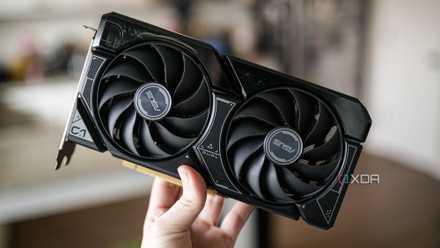
While the reference cards from Nvidia and AMD are fine for most people in terms of performance, thermals, noise, and esthetics, AIB partner cards have their place on the market. If you want a cooler and more silent card that clocks higher and looks better, opting for one of the AIB models can be worth it. However, the problem is feeling the compulsion to overspend on the top-tier AIB models with insane markups over the MSRP.
The performance and value you get from your GPU don't scale in sync with the price. Sure, a Gigabyte Aero OC or Asus ROG Strix model will look fancier than a Founder's Edition card, but it won't perform too differently. The thermals and noise levels will be better, but not radically. Paying extra for a specific design or because you can't find a reference model is understandable. Assuming that the more expensive variants are always better and "more powerful" than the cheaper ones is senseless.
Nvidia RTX 5070 Founder's Edition
- Brand
- Nvidia
- Cooling Method
- Dual-fan
- Interface
- PCIe 5.0 x16
- Memory
- 12GB GDDR7
The RTX 5070 offers around 20% more performance than the RTX 4070, and if you can find it in stock, the Founder's Edition is a good-looking card with enough performance for your gaming rig.

5 PC components that can easily hijack your gaming PC budget
Avoid overspending on these 5 components when maximizing the performance of your gaming PC build
4 Prioritizing brand loyalty over real value
Choosing the familiar is easy but dangerous
Many consumers can spend decades buying GPUs from the same brand without even considering other options. I understand the allure of familiarity that you build with a certain feature set and software suite, but it's worth considering competing offerings every time you're up for a GPU upgrade. Avoiding AMD, Nvidia, or Intel simply because it feels "wrong" or due to pre-conceived notions is harmful to no one but yourself.
For instance, ray tracing might be a high-priority feature for you, due to which you always buy an Nvidia GPU. However, checking up on the market every generation will tell you that AMD's ray tracing performance has grown a lot, thanks to the RX 9000 series. It might not be able to beat Nvidia yet, but the level of performance might be enough for your needs. Similarly, those valuing sufficient VRAM and performance-per-dollar might never look away from AMD, but Intel's Battlemage GPUs will surprise them.
You'll never know what has changed in the market unless you assess what's new. And you don't have to do this that often. Simply tune in when you want to upgrade your GPU, and check what's available and what's about to launch in the next few months. Brand loyalty isn't rewarding you in any way; it's only lining the pockets of billion-dollar companies that don't care about you.
ASRock Radeon RX 9070 XT Steel Legend
- Memory Clock Speed
- 2518 MHz
- Architecture
- RDNA 4
- Process
- 5 nm
- Shader Units
- 128
AMD's RX 9700 XT is the most affordable 4K gaming GPU on the market. Thanks to advanced ray tracing, upscaling, and frame generation features, the 9070 XT offers great performance per dollar (if you can find it at MSRP). And it also packs in 16GB of VRAM.

7 worst habits PC enthusiasts need to abandon ASAP
The PC community tends to overdo some of its negative traits
3 Spending less on the GPU than the CPU
A cardinal sin
You might already know that the graphics card is the most important component on a gaming PC. A high-end CPU might make sense on a professional setup or for productivity enthusiasts, but it's mostly irrelevant for a gaming rig. That's why the biggest chunk of your PC budget should be reserved for the graphics card. Flipping the script by purchasing a more expensive CPU than the GPU is an unforgivable mistake. This is relevant to those building a new PC, but it can also guide your GPU upgrade as far as the right CPU-GPU combo is concerned.
Unless you have no choice due to adverse market conditions, always aim for the best graphics card you can afford by making smart decisions involving the other components. A 6-core CPU is enough for gaming even in 2025, and you don't need to buy high-end motherboards, 8,000MT/s RAM, Gen5 SSDs, or 1600W power supplies for your high-end PC. Smartly saving money in all other areas will allow you to extract the most gaming performance where it counts — the heart of your build, i.e., the graphics card.

5 PC hardware purchases I regret the most
You shouldn't judge your past self harshly, but these mistakes deserve some regret
2 Confusing more VRAM with more performance
VRAM matters, but only when it counts
Over the last few years, especially after the launch of the RTX 30 series, the conversation around VRAM has grown stronger. Insufficient VRAM, mainly on Nvidia GPUs, has been the culprit behind poor performance, badly loaded textures, and game crashes, even at 1080p. Nvidia is still launching 8GB VRAM GPUs for around $400, while AMD and Intel have accepted 16GB VRAM as the standard (above a certain price point).
That said, you shouldn't look at VRAM as a silver bullet for gaming performance. VRAM will do nothing to save a GPU that's too weak to utilize the entire framebuffer. Only when a GPU is capable of delivering high framerates at high resolutions does VRAM come into play. This is why the RTX 3060 with 12GB of VRAM isn't a high-end GPU, and the RTX 3070 with 8GB of VRAM is an otherwise powerful GPU crippled by inadequate VRAM.
All other things being equal, more VRAM is always preferable, but you shouldn't make a purchase decision based simply on the "GBs" on a graphics card. Many uninformed consumers still compare GPUs based on the VRAM alone, leading to high expectations and eventual disappointment.

5 ways more VRAM doesn't always mean more FPS
Extra VRAM isn't a magical solution for more FPS
1 Ignoring reviews before making the purchase
Third-party reviews reveal the reality
You might be used to consuming GPU reviews whenever a new model drops, but many consumers still make purchase decisions based on gut feeling and the initial hype created by companies like Nvidia and AMD. Manufacturers like to promise the world, boasting huge numbers, but third-party reviews shine light on the real-world performance of graphics cards. If you're ignoring reviews because they're "too technical" or you're "too busy," you're doing yourself a disservice.
Reviews not only help you see a GPU's actual performance in a variety of games, but they also compare it to the competing offerings on the market. Reviews are how you get to know that the RTX 5070 isn't the same as the RTX 4090, and how the RTX 5060 Ti 8GB is dead on arrival. If you're simply relying on experience and word-of-mouth to guide your purchase decisions, you'll probably end up with a bad deal.
Nearly 10% of PC gamers use this GPU, and I finally understand why
The most popular GPU among PC gamers is blistering.
Don't buy the wrong GPU
Buying a new graphics card is probably the most exciting part of owning a gaming PC. The days leading up to clicking that "Buy Now" button or driving to your nearest store are brimming with anticipation. You might, however, ruin your perfect moment with some flawed buying decisions if you aren't careful. Knowing where to save and where to spend, valuing real performance over brand loyalty, and consuming reviews before making the purchase will allow you to make the best decision.