
The Steam Machine might quietly end up being one of the smartest PC gaming purchases of the coming year, but only for a specific kind of player. If you're completely new to PC gaming, or still clinging to genuinely ancient hardware, Valve's console-style box suddenly makes a lot of sense. It does promise a streamlined, living-room-friendly experience without Windows nonsense, driver roulette, or background services nibbling away at your performance.
For everyone else, however, it's a different story. Even if you're sitting on a halfway decent GPU, the Steam Machine proves to be little more than a mid-range PC in console clothing. It's not going to perform miracles, and if your system already lives near the performance bracket of Valve's new black box, then buying one would be less of an upgrade, and more of a lateral move (or worse, a downgrade).

Steam says a lot of games aren't compatible with Proton, but you can sometimes make them work anyway
Just a couple of hoops to hop through.
The Steam Machine is an RX 7600-class PC
It isn't trying to ride the bleeding edge
On paper, the Steam Machine's closest equivalent lands right around AMD's RDNA 3-based RX 7600M. The semi-custom RDNA 3 chip is closest in power to a laptop RX 7600. However, Valve has mentioned a 4K 60 FPS experience as something they wish to deliver with the Steam Machine, backed by FSR 2 and FSR 3. There's still no word on FSR 4, and that matters more than people realize. The elephant in the room here is the 8GB VRAM limit disclosed by Valve. VRAM has been a rather contentious issue in PC gaming circles, and an 8GB card in this era is already being pushed at 1440p, let alone 4K with ray tracing layered on top. For that to be the VRAM limit of a new 2026 PC is difficult not to be concerned about.
Add to that the fact that superior upscalers like AMD's FSR 4 and NVIDIA's DLSS 4.5 aren't expected on the Steam Machine, and suddenly, the Steam Machine looks like it'll struggle to keep up with the latest releases even before this decade is over.
If you already own an RX 7600 XT or anything comparable, you're effectively already sitting on the same class of performance, except your current PC gives you the option of potential CPU upgrades, storage swaps, RAM expansion, and total platform freedom. A Steam Machine here would just trade flexibility for convenience.
RTX 3070 and above: you're already ahead of the curve
Anyone running a 3070 or better is comfortable beyond Steam Machine territory
Over on Team Green's side of things, if you're on something like an RTX 3070, you're already running medium-to-high settings in games at 1440p. DLSS 4.5 just made the entire deal sweeter with lower presets like DLSS Balanced and Performance still looking great while delivering great visual quality. Even medium ray-tracing is doable without dipping below the 60 FPS mark on a 3070.
An RTX 3060 or 3060 Ti sits closer to the Steam Machine's GPU class, which means that those users might want to consider the switch, but only if escaping Windows altogether is the goal. And yet, DLSS 4.5 remains the supreme upscaler in the PC gaming landscape right now, and it even works remarkably well on older cards like the RTX 2070 Super. As such, anyone on RTX 20-series hardware already has access to smarter upscaling, cleaner image reconstruction, and frame pacing improvements that the Steam Machine with FSR 3 might not be able to match from day one.
Bottom line? If you're on a mid-30-series card or higher, the Steam Machine is unnecessary. You already have better performance, better feature support, and far more flexibility. The RTX 3080 boasts 10GB of VRAM, and it even manages to occasionally serve as a respectable 4K GPU. And the RTX 3090 with its 24GB VRAM is a behemoth against the Steam Machine's semi-custom silicon. As such, you wouldn't gain anything by moving to Valve's box, except maybe a smaller footprint under your TV.
Owners of the AMD RX 7600 XT and above need not worry
On AMD's side, anything north of the RX 7600 XT is good enough
Over on Team Red, any card better than the RX 7600 XT should keep you golden even without the Steam Machine in the house. Now, on paper, there are cards like the older RX 6650 XT, RX 6700 XT and the RX 6750 XT that are more powerful than an RX 7600, but they are also RDNA 2 cards instead of RDNA 3. Technically, RDNA 2 cards also come with FSR 3 support, but AMD's upscaler does show better results and image stability on the faster-computing RDNA 3 cards.
A Steam Machine for anyone with an RX 7600 XT would make no sense, except on the off chance that your GPU is running in tandem with an ancient CPU. If it's got 6 cores and 12 threads, or even just a tad below that, you're out of the "Steam Machine will be an upgrade" territory. In other words, you already own the better version of what Valve is selling, minus the branding, the locked-down design, and the hundreds of dollars your wallet will feel lighter by. Moreover, if your gaming PC already has an RX 7700, RX 7800, or RX 7900-family card housed in it, the Steam Machine shouldn't particularly be on your wishlist.

AMD's UDNA is going to be even better than RDNA 4, and here's everything we know so far
RDNA4 was excellent, but AMD's next generation of GPUs looks to be even better.
RTX 40-series and RX 9000 owners don't even need to read this
Let's be blunt here, shall we?
If you're on RTX 40-series hardware, this conversation doesn't even apply to you. Yes, that includes RTX 4060 owners as well. On the RTX 40-series, not only do you get improved ray tracing pipelines and DLSS 4.5, but you also get a game-changer — frame generation. Neither the Steam Machine nor the PS5 and Xbox consoles — its competition — boast frame generation, which is available only on RTX 40-series cards and above. Pair that with cleaner reconstruction and vastly better RT performance, and the Steam Machine simply can't compete.
The same goes for AMD's RX 9000 series from the very beginning. Now, we know that in strictly technical terms, AMD's FSR 4 upscaler is usable on RDNA 3 and RDNA 2 cards, despite what AMD's official brochure says. Still, the Radeon RX 9000 series cards are the only ones that officially support FSR 4 — the two RX 9060 cards and the RX 9070 family of three GPUs.
I don't even need to mention cards like the RTX 50-series, do I? Even the entry-level RTX 5050 is capable of going toe-to-toe with the Steam Machine's graphics card, and that's before it calls in backup with 4x to 6x multi-frame-generation and DLSS 4.5 upscaling.
The Steam Machine makes sense, but for a very particular customer
Credit must be given where it's due
SteamOS is lighter than Windows, and genuinely impressive for a Linux-based gaming OS. It clearly benefits from Valve's experience with the Steam Deck, too. Without massive background services chewing up resources like they otherwise do on Windows, games can feel snappier and more consistent on the Steam Machine, especially on its mid-range hardware.
RTX 3060 Ti or RX 7600 owners would be better off simply moving their gaming to a Linux-based gaming OS like Bazzite. Alternatively, they could install SteamOS if they're on Team Red already. It'll be quieter, leaner, and more focused. For people who just want to sit down and play, that can and will matter.
However, if your PC already does have modern graphics cards that you bought in the last three or four years, there's nary a reason to give the Steam Machine a second glance. And yet, it is impressive nevertheless. After all, the Steam Machine is a notable, respectable attempt at a product that serves as a viable and cheap entry into PC gaming. With it, the average user won't have to source multiple PC parts and put them together. Instead, they'll be able to get into PC gaming with a single purchase, as gamers have done for decades with the likes of the PlayStation or the Xbox.
For those with tiny apartments, the Steam Machine makes sense too, seeing how it's smaller than a Series X console. It's the kind of thing you could buy as a holiday gift, plug into a TV, and have someone join the PC ecosystem without fear or friction, and that's honestly kind of beautiful.
Steam Machine
- CPU
- AMD 6-core Zen 4 x86, up to 4.8 GHz, 30W TDP
- Graphics
- Semi-custom AMD RDNA3 28CU (8GB GDDR6, 2.45GHz max sustained clock, 110W TDP)
- Memory
- 16GB DDR5 SODIMMs
- Storage
- 512GB or 2TB models, microSD card slot
- Ports
- DisplayPort 1.4, HDMI 2.0, Ethernet (1Gbps), USB Type-C 3.2 Gen 2, 2x USB Type-A Gen 3 (front), 2x USB Type-A Gen 2 (rear)
- Operating System
- SteamOS
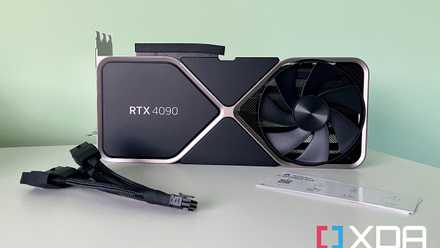
7 older GPUs that still hold their own against the RTX 50 series
Most gamers are considering upgrading, but only those without these GPUs.
Valve is simplifying entry into PC gaming with the Steam Machine
The Steam Machine could either be one of the best gaming PCs, or fail to succeed like its predecessor.
The Steam Machine isn't trying to replace high-end PCs in the first place. Instead, it's merely trying to simplify entry into PC gaming while bolstering Valve's Windows-free gaming ecosystem. For newcomers and players stuck on outdated hardware, that mission actually lands. But if you already own a modern mid-range or better GPU, you're not really its target audience.
You already have the power and the features, if not more. Even more importantly, you already have the freedom. Depending on the price tag the Steam Machine comes out with, it could either become one of the best gaming PCs we've ever seen, or another hit-or-miss product like its predecessor before it with the same name.