|
VOOZH | about |
|
VOOZH | about |
Humans can identify new objects with fewer examples. However, machines would require thousands of samples to identify the objects. Learning from a limited sample would be challenging in machine learning. Despite these challenges, recent advances in machine learning have introduced new concepts such as zero shot learning, which aim to identify data with smaller samples or even zero samples. In zero-shot learning, computers learn to recognize new objects by understanding similarities between known and unknown categories, making educated guesses based on learned attributes. This approach enables machines to adapt and recognize new objects with limited or no prior examples, akin to human intuition. In this article you will, get to know all about the zero shot learning , how it works, its differnce and Importance.
This article was published as a part of the Data Science Blogathon.
Zero-shot learning is a machine learning pattern where a pre-trained deep learning model is made to generalize on a category of samples. The idea behind Zero-shot learning is how humans can naturally find similarities between data classes, in the same way, training the machine to identify.
For example, let’s say we have seen a horse but never seen a zebra. If someone tells you that a zebra looks like a horse but has black and white stripes, you will probably recognize a zebra when you see it.
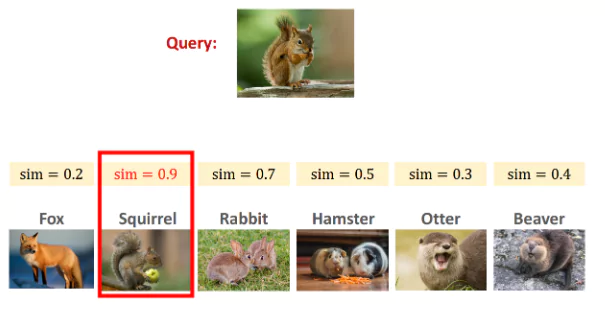
Here is how Zero Shot Learning Works:
Overall, zero-shot learning is like teaching a computer to understand the essence of things, so it can make educated guesses about new things it encounters. It’s useful when we can’t show the computer every possible example during training, and we want it to be able to learn and adapt to new situations on its own.
Checkout this article about the Techniques for Deep Learning
Few-shot learning refers to feeding models with very minimal data, contrary to the practice of feeding large amounts of data. Few shot learning is the best example of a meta-learning shot where it is trained on several related tasks during the meta-training phase, so it can generalize well on unseen data with very few examples.
One Shot learning is a machine learning algorithm that requires very little database to identify or access the similarities between the objects. These are more helpful in deep learning models. In one-shot learning for machine learning algorithms, only one instance or doesn’t require many examples for each category to feed to the model for training, the best examples for One-shot learning are computer vision images and facial recognition.
1. Data labeling is a labor-intensive job. It can be used when training data is lacking for a specific class.
2. Zero-shot learning can be deployed in scenarios where the model has to learn new tasks without re-learning previously learned ones.
3. To Improve the generalization ability of a machine learning model.
4. Zero shot could be a more effective way of learning new information than traditional methods, such as learning through trial and error
5. In Image classification and Object Detection, Zero shot is additionally helpful in finding the visuals
6. Zero shot is more supportive in developing several deep work frameworks like Image generation, Image Retrieval
Now that we have a fair understanding of Few shot, One shot, Zero shot Learnings, despite having a few drawbacks with these learning, it generates benefits in making predictions with limited or no data.
The main takeaway is
Zero-Shot Learning: It’s like teaching a computer to guess things it has never seen before. For example, I showed it pictures of cats and dogs and later asked it to identify a giraffe, even though it had never seen one before.
Unsupervised Learning: A computer tries to find patterns in information without being told what to look for specifically. It’s like letting the computer explore and discover things on its own.
Zero-shot learning is a type of machine learning where a model learns to recognize classes it has never seen during training. This means it can identify objects or concepts it wasn’t specifically taught to recognize.
Zero-Shot Learning: Think of teaching a computer to recognize things it has never seen by giving it a general idea. For instance, training it on various fruits and then asking it to identify a fruit it has never encountered.
One-Shot Learning: This is like teaching a computer about something using only one example. If you show it a single picture of a rare bird, it learns to recognize that bird even though it hasn’t seen many pictures of it.
Zero-shot learning with Language Model (LLM) involves using natural language processing models, like GPT (Generative Pre-trained Transformer), to perform zero-shot learning tasks. These models can understand and generate human-like text, making them useful for tasks like text classification even for classes they haven’t seen before.
An example of zero-shot learning is a computer vision model trained on a dataset containing images of various animals, but it has never seen an image of a specific rare species like a quokka during training. Despite this, if the model has learned
GPT-4 vs. Llama 3.1 – Which Model is Better?
Llama-3.1-Storm-8B: The 8B LLM Powerhouse Surpa...
A Comprehensive Guide to Building Agentic RAG S...
Top 10 Machine Learning Algorithms in 2026
45 Questions to Test a Data Scientist on Basics...
90+ Python Interview Questions and Answers (202...
8 Easy Ways to Access ChatGPT for Free
Prompt Engineering: Definition, Examples, Tips ...
What is LangChain?
What is Retrieval-Augmented Generation (RAG)?
Edit
Resend OTP
Resend OTP in 45s