|
VOOZH | about |
|
VOOZH | about |
CSS is used to style and layout web pages, controlling the appearance of HTML elements. It allows developers to create visually appealing designs and ensure a consistent look across a website.
CSS can be implemented in three different ways:
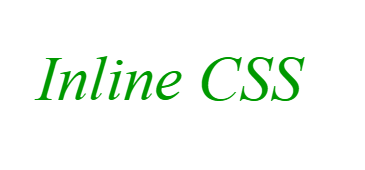
Inline CSS involves applying styles directly to individual HTML elements using the style attribute. This method allows for specific styling of elements within the HTML document, overriding any external or internal styles.
Now, let us understand with the help of the example:
Output
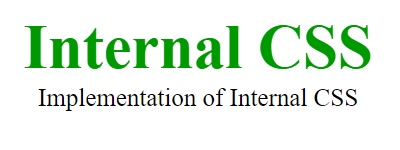
Internal or Embedded CSS is defined within the HTML document's <style> element. It applies styles to specified HTML elements. The CSS rule set should be within the HTML file in the head section, i.e. the CSS is embedded within the <style> tag inside the head section of the HTML file.
Now, let us understand with the help of the example:
Output
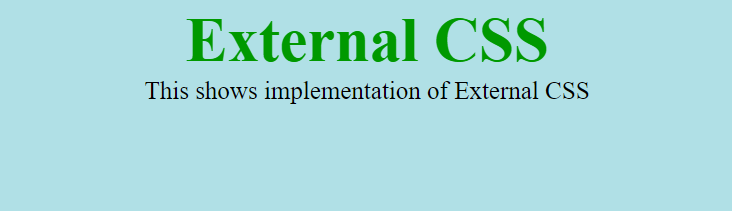
External CSS contains separate CSS files that contain only style properties with the help of tag attributes (For example class, id, heading, ... etc). CSS property is written in a separate file with a .css extension and should be linked to the HTML document using a link tag. It means that, for each element, style can be set only once and will be applied across web pages.
Now, let us understand with the help of the example:
Output
External CSS is the most efficient way to style multiple web pages. It ensures:
Each CSS type has its advantages and use cases. While inline CSS is great for quick changes, it lacks reusability. Internal CSS is better for single-page websites but becomes inefficient for larger projects. External CSS is the preferred approach for modern web development due to its scalability, maintainability, and performance benefits.