|
VOOZH | about |
|
VOOZH | about |
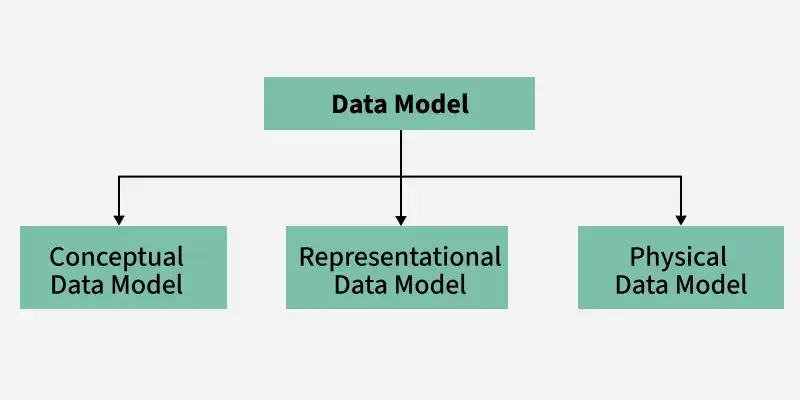
A Data Model in Database Management System (DBMS) is the concept of tools that are developed to summarize the description of the database. Data Models provide us with a transparent picture of data which helps us in creating an actual database. It shows us from the design of the data to its proper implementation of data.
It is basically classified into 3 types:-
The conceptual data model describes the database at a very high level and is useful to understand the needs or requirements of the database. It is this model, that is used in the requirement-gathering process i.e. before the Database Designers start making a particular database. One such popular model is the entity/relationship model (ER model). The E/R model specializes in entities, relationships, and even attributes that are used by database designers. In terms of this concept, a discussion can be made even with non-computer science(non-technical) users and stakeholders, and their requirements can be understood.
Entity-Relationship Model( ER Model): It is a high-level data model which is used to define the data and the relationships between them. It is basically a conceptual design of any database which is easy to design the view of data.
Components of ER Model:
Conceptual data models known as Domain models create a common vocabulary for all stakeholders by establishing basic concepts and scope
This type of data model is used to represent only the logical part of the database and does not represent the physical structure of the database. The representational data model allows us to focus primarily, on the design part of the database. A popular representational model is a Relational model. The relational Model consists of Relational Algebra and Relational Calculus. In the Relational Model, we basically use tables to represent our data and the relationships between them. It is a theoretical concept whose practical implementation is done in Physical Data Model.
The advantage of using a Representational data model is to provide a foundation to form the base for the Physical model.
The physical Data Model is used to practically implement Relational Data Model. Ultimately, all data in a database is stored physically on a secondary storage device such as discs and tapes. This is stored in the form of files, records, and certain other data structures. It has all the information on the format in which the files are present and the structure of the databases, the presence of external data structures, and their relation to each other. Here, we basically save tables in memory so they can be accessed efficiently. In order to come up with a good physical model, we have to work on the relational model in a better way. Structured Query Language (SQL) is used to practically implement Relational Algebra.
This Data Model describes HOW the system will be implemented using a specific DBMS system. This model is typically created by DBA and developers. The purpose is actual implementation of the database.
The hierarchical Model is one of the oldest models in the data model which was developed by IBM, in the 1950s. In a hierarchical model, data are viewed as a collection of tables, or we can say segments that form a hierarchical relation. In this, the data is organized into a tree-like structure where each record consists of one parent record and many children. Even if the segments are connected as a chain-like structure by logical associations, then the instant structure can be a fan structure with multiple branches. We call the illogical associations as directional associations.
The Network Model was formalized by the Database Task group in the 1960s. This model is the generalization of the hierarchical model. This model can consist of multiple parent segments and these segments are grouped as levels but there exists a logical association between the segments belonging to any level. Mostly, there exists a many-to-many logical association between any of the two segments.
In the Object-Oriented Data Model, data and their relationships are contained in a single structure which is referred to as an object in this data model. In this, real-world problems are represented as objects with different attributes. All objects have multiple relationships between them. Basically, it is a combination of Object Oriented programming and a Relational Database Model.
The float data model basically consists of a two-dimensional array of data models that do not contain any duplicate elements in the array. This data model has one drawback it cannot store a large amount of data that is the tables can not be of large size.
The Context data model is simply a data model which consists of more than one data model. For example, the Context data model consists of ER Model, Object-Oriented Data Model, etc. This model allows users to do more than one thing which each individual data model can do.
Semi-Structured data models deal with the data in a flexible way. Some entities may have extra attributes and some entities may have some missing attributes. Basically, you can represent data here in a flexible way.