|
VOOZH | about |
|
VOOZH | about |
Compliance management systems are like the backbone of organizations, ensuring they stick to the rules, meet industry standards, and stay true to their internal policies. They're the unsung heroes in the background, keeping everything in check and ensuring the trustworthiness of the company in the eyes of stakeholders.
But behind every efficient compliance management system lies a well-designed database. It's the powerhouse that stores, organizes, and analyzes all the compliance-related data, making sure nothing falls through the cracks. Let's dive into the nitty-gritty of how to craft a database tailored specifically for these systems.
Designing a database for a compliance management system requires careful consideration of regulatory requirements, data sources, compliance frameworks, reporting needs, and audit trails. A robust database schema supports key functionalities such as policy management, risk assessment, control testing, issue tracking, and reporting.
Compliance management systems typically include the following features, each of which relies on a well-designed database:
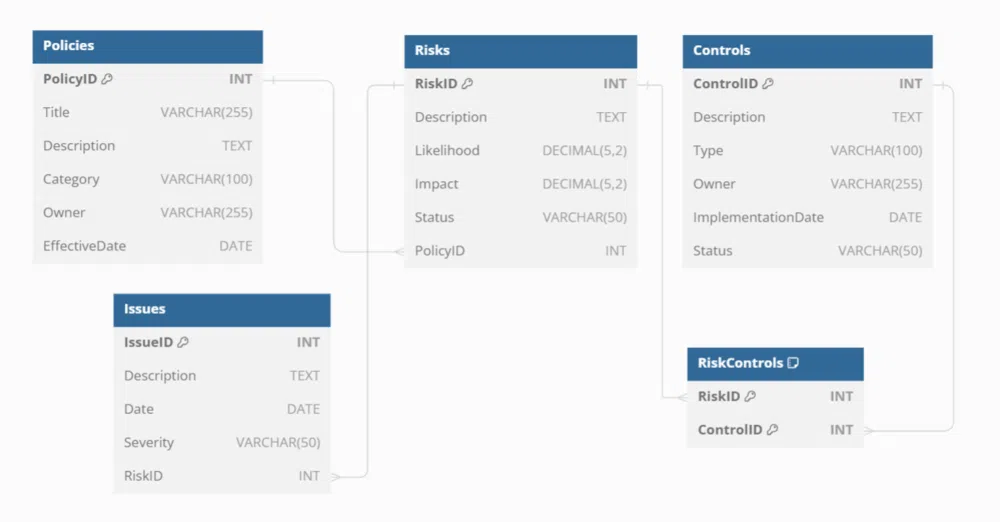
In database design for compliance management, common entities and their attributes include:
In relational databases, entities are interconnected through relationships that define how data in one entity is related to data in another:
Here's how the entities mentioned above can be structured in SQL format:
CREATE TABLE Policies (
 PolicyID INT PRIMARY KEY,
 Title VARCHAR(255),
 Description TEXT,
 Category VARCHAR(100),
 Owner VARCHAR(255),
 EffectiveDate DATE
);

CREATE TABLE Risks (
 RiskID INT PRIMARY KEY,
 Description TEXT,
 Likelihood DECIMAL(5, 2),
 Impact DECIMAL(5, 2),
 Status VARCHAR(50),
 PolicyID INT,
 FOREIGN KEY (PolicyID) REFERENCES Policies(PolicyID)
);

CREATE TABLE Controls (
 ControlID INT PRIMARY KEY,
 Description TEXT,
 Type VARCHAR(100),
 Owner VARCHAR(255),
 ImplementationDate DATE,
 Status VARCHAR(50)
);

CREATE TABLE RiskControls (
 RiskID INT,
 ControlID INT,
 PRIMARY KEY (RiskID, ControlID),
 FOREIGN KEY (RiskID) REFERENCES Risks(RiskID),
 FOREIGN KEY (ControlID) REFERENCES Controls(ControlID)
);

CREATE TABLE Issues (
 IssueID INT PRIMARY KEY,
 Description TEXT,
 Date DATE,
 Severity VARCHAR(50),
 RiskID INT,
 FOREIGN KEY (RiskID) REFERENCES Risks(RiskID)
);
The database model for a compliance management system revolves around efficiently managing policies, risks, controls, issues, and relationships between them. By structuring data in a clear and organized manner, organizations can effectively manage compliance obligations, identify and mitigate risks, and demonstrate adherence to regulatory requirements.
Designing a database for a compliance management system requires thoughtful consideration of data structure, relationships, and optimization techniques. By following best practices and leveraging SQL effectively, organizations can create a robust and scalable database schema to support various compliance management functionalities. A well-designed database not only facilitates efficient compliance monitoring and risk mitigation but also helps organizations demonstrate commitment to compliance, integrity, and accountability in today's highly regulated business environment.