A perpendicular bisector is a line that intersects a line segment at its midpoint, divides it into two equal parts, and forms a right angle (90°) with it at the point of intersection.
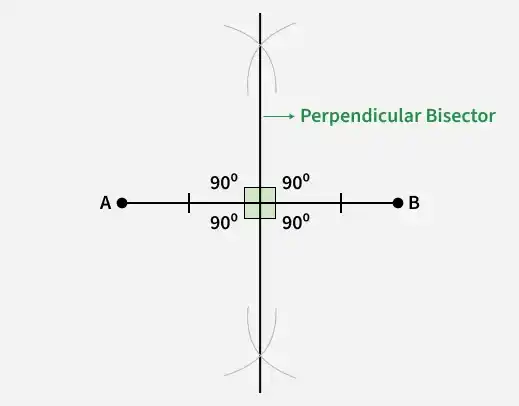
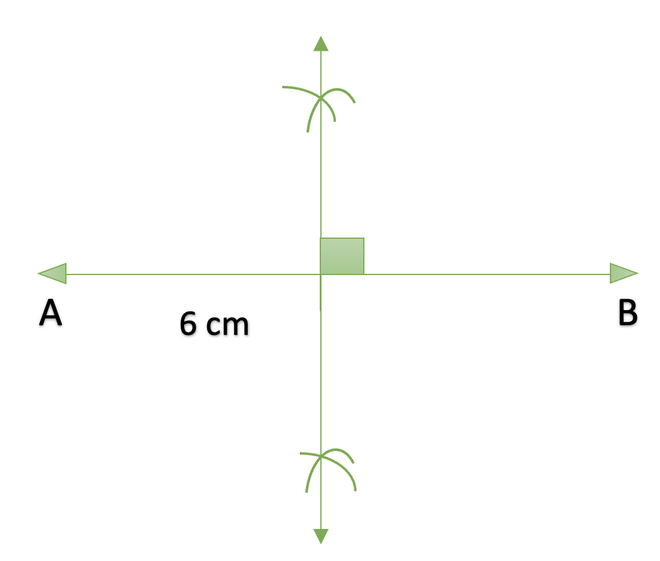
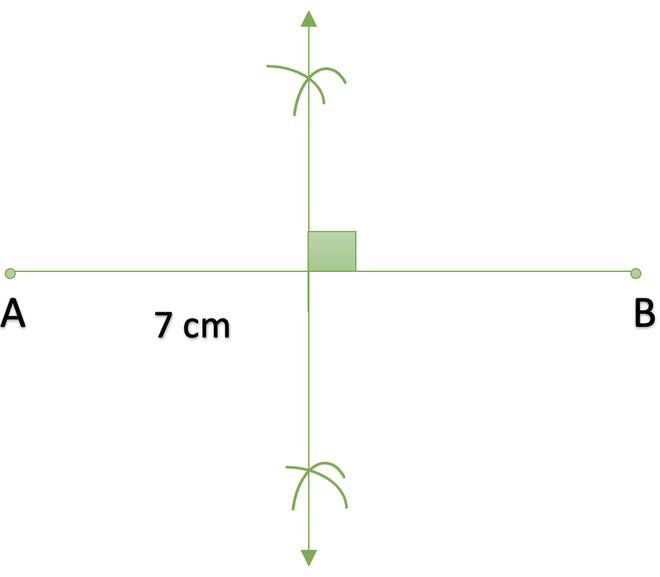
In the figure shown below, the perpendicular bisector divides the line segment AB into two halves at its midpoint.
A perpendicular bisector divides a line segment into two equal parts at its midpoint.
It intersects the line segment at a right angle (90°).
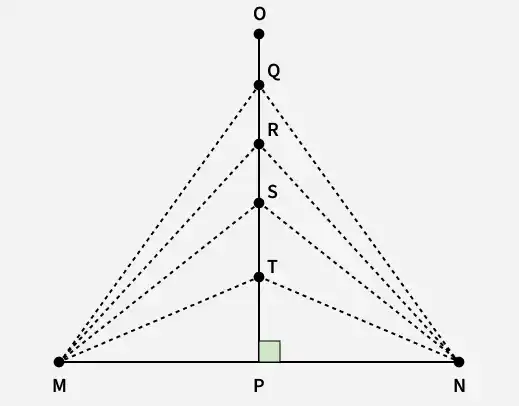
Every point on the perpendicular bisector is equidistant from the endpoints of the segment.
It passes precisely through the midpoint of the line segment.
For a given line segment, there exists a unique perpendicular bisector.
Construction of a Perpendicular Bisector
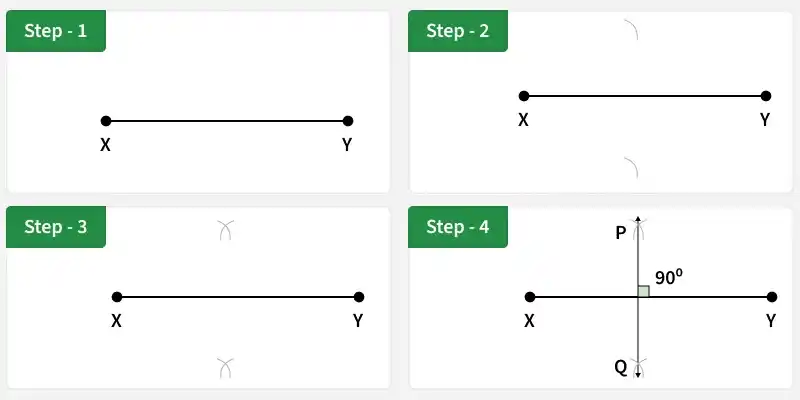
A perpendicular bisector of a line segment can be constructed using a ruler and a compass. It divides the given line segment into two equal parts at its midpoint and forms a right angle (90°) with it.
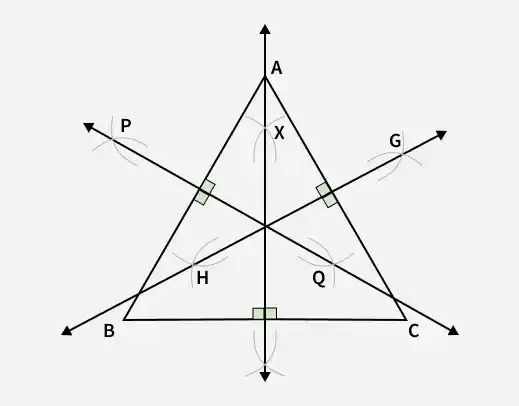
A perpendicular bisector of a triangle is a line that divides a side into two equal parts at its midpoint and is perpendicular (90°) to it. Each triangle has three such bisectors, one for each side. These bisectors intersect at a single point called the circumcenter, which is equidistant from all three vertices and acts as the centre of the circumcircle.