Simple interest is a type of interest calculated only on the initial principal amount of a loan or investment, without considering any additional interest that may accumulate over time. The formula used to calculate simple interest is given by:
S.I. = (P × R × T) / 100
This formula calculates the interest earned or paid on the principal amount over a specific period.
Applications of Simple Interest in Real-Life
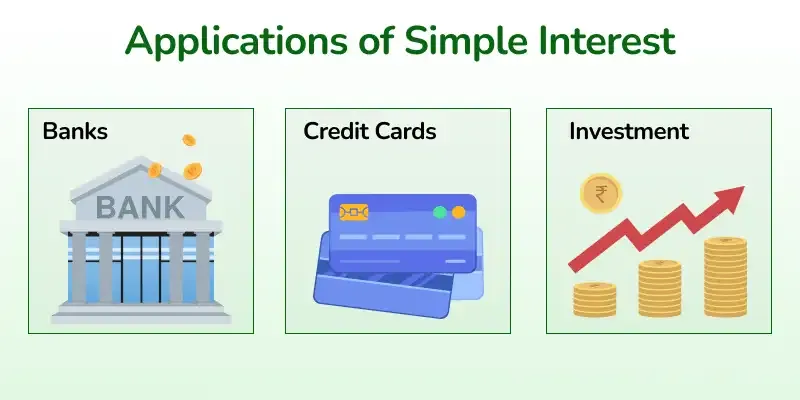
Simple interest is commonly used for short-term loans or investments, where the interest does not compound, meaning it does not accumulate on previously earned interest. It is straightforward to calculate and is often used for loans like car loans, short-term personal loans, and some types of savings accounts.
Some savings accounts offer simple interest on deposited funds. The account holder earns interest on the initial deposit without any compounding.
Loans
Simple interest is commonly used for short-term loans, such as personal loans and car loans. Borrowers repay the principal amount plus the calculated simple interest over the loan term.
Investments
Certain investment products, such as bonds and fixed-income securities, may offer simple interest payments to investors at regular intervals.
Merchant Cash Advances
In business financing, merchant cash advances often use a simple interest model. Merchants receive funds upfront and repay the principal plus interest from future sales.
Invoice Financing
Simple interest may be applied in invoice financing arrangements, where businesses receive immediate funds against outstanding invoices and repay the advance plus interest over time.
Short-term Financial Instruments
Certificates of deposit (CDs) and treasury bills are examples of financial instruments that may offer simple interest returns over relatively short investment periods.
Student Loans
Some student loans accrue simple interest during the repayment period, where borrowers repay the initial loan amount plus the accrued interest.
Credit Cards
While most credit cards compound interest, some may calculate interest based on simple interest methods for specific transactions or promotional offers.
Short-Term Loans: Simple interest is often used in short-term loans, such as working capital loans or bridge financing. Businesses may borrow money to cover immediate expenses or capitalize on growth opportunities, repaying the principal amount plus interest over a relatively short period. Simple interest calculations help businesses estimate the total cost of borrowing and plan their repayment schedules.
Accounts Receivable Financing: In accounts receivable financing, businesses may sell their accounts receivable (unpaid invoices) to a financial institution or factor in exchange for immediate cash. The financing agreement typically involves simple interest on the advanced funds, with the business repaying the principal plus interest when the invoices are collected. Simple interest calculations help determine the cost of financing and assess the profitability of the arrangement.
Merchant Cash Advances: Merchant cash advances provide businesses with upfront cash in exchange for a percentage of future credit card sales. The repayment structure often involves simple interest, where the business repays the advance plus a fixed fee or interest rate based on the initial amount borrowed. Simple interest calculations help businesses understand the total cost of the advance and evaluate its affordability.
Equipment Financing: Simple interest may be used in equipment financing arrangements, where businesses borrow money to purchase or lease equipment. The loan or lease agreement typically involves fixed interest payments based on the initial equipment cost, with the business repaying the principal plus interest over the term of the financing. Simple interest calculations help businesses assess the cost-effectiveness of equipment financing options.
Trade Credit: Simple interest may be applied in trade credit arrangements, where suppliers offer credit terms to businesses for purchasing goods or services. The credit terms often specify a due date for payment and may include a simple interest charge for late payments. Simple interest calculations help businesses manage their accounts payable and prioritize payments to suppliers to avoid additional interest charges.