|
VOOZH | about |
|
VOOZH | about |
The atmosphere is a layer of gases that surrounds the Earth. The atmosphere is made up of different layers, such as the Troposphere, Stratosphere, Mesosphere, Thermosphere, and Exosphere. It consists of gases such as nitrogen, oxygen, carbon dioxide, argon, etc.
It makes life possible by giving us air to breathe, protecting us from harmful UV rays from the Sun, trapping heat to keep the planet warm, and preventing extreme temperature changes between day and night. Without the atmosphere, Earth's temperatures would be freezing everywhere.
Here, we are going to discuss what the atmosphere is, its composition, the various layers that make it up, atmospheric pressure, and the important role the atmosphere plays in sustaining life on Earth.
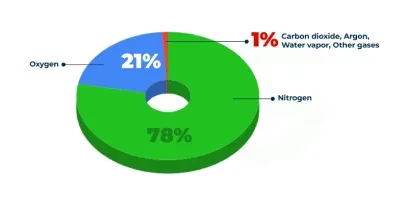
Atmosphere is also called a "blanket of gases". The composition of the gases present in the atmosphere is nitrogen which is 78 %, oxygen is 21 %, argon is 0.93 %, carbon dioxide is 0.04 %, and other gases are present in very small amounts.
It helps in the regulation of various processes such as the water cycle, regulation of temperature and many other natural process. It maintains the weather of the earth.
"The layer of gases that surrounds a planet or moon, held in place by gravity. Earth's atmosphere is composed primarily of nitrogen (78%) and oxygen (21%), with trace amounts of other gases, including carbon dioxide, argon, and water vapor. It plays a vital role in supporting life by providing breathable air, regulating temperature, and protecting the surface from harmful solar radiation."
~National Aeronautics and Space Administration (NASA)
There are different layers of atmosphere present on earth. These layers protects us from direct radiation of Sun (UV rays) and other harmful cancer causing radiations.
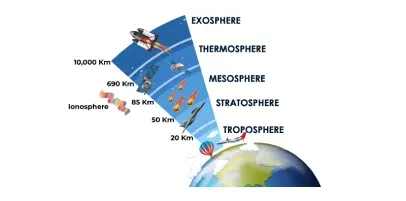
There are five layers of atmosphere namely:
1. Troposphere
The troposphere is the lowest layer of Earth's atmosphere, reaching from the surface to around 10 km (6.2 miles) above sea level. This is where we live and where most weather phenomena, such as clouds and storms, take place. It is also the densest layer, holding about 75-80% of the atmosphere's total mass.
2. Stratosphere
The stratosphere is the second layer of Earth's atmosphere, situated above the troposphere and below the mesosphere. This layer extends up to 50 kilometers from the ground and is above troposphere. The ozone layer is present in the stratosphere.
This layer is known for having a stable temperature, where the temperature gets warmer as you go higher. It also contains the ozone layer, which helps protect life on Earth by blocking harmful ultraviolet rays from the Sun.
3. Mesosphere
Mesosphere is present just above the Stratosphere. This is the middle layer of atmosphere. Mesosphere extends from about 50 kilometers to the 85 kilometers above the Earth's surface.
This is the coldest layer of atmosphere as temperature decreases with increase in altitude. The average temperature in mesosphere is about -85 ℃. The ozone concentration in this layer is less than as compared to Stratosphere.
4. Thermosphere
Thermosphere lies above the mesosphere. The "thermos" in thermosphere stands for heat, due to its high temperature. The thermosphere extends from about 85 kilometers to the outer edges of the atmosphere to about 700 km above the Earth's surface. This layer is also known as upper atmosphere.
This layer is very hot with a high temperature range that lies between 500℃ - 2000℃. This layer absorbs the energetic ultraviolet rays emitting from the sun which results in high temperature of this layer. The air density is extremely low in this layer.
5. Exosphere
Exosphere is the outermost layer of atmosphere. It separates the other layers from the outer space. There is no upper boundary of this layer as it merges out in the space. This layer is about 10,000 km thick. It is also known as the first layer to shield the Earth from meteors, asteroids, and cosmic rays.
Many satellites orbit within the exosphere or below. The pressure in the exosphere is created by solar wind storms that compress it. The air density in this layer is very low because hydrogen is present in this layer and it is the lightest element on earth.
❖Ionosphere
Ionosphere is a part of upper atmosphere but it is not characterized as a distinct layer of atmosphere. Ionosphere extends from about 80km - 1000km above the earth's surface and includes thermosphere, and the parts of mesosphere and exosphere.
This ionized region extends from about 50 to 1000 kilometers above the Earth's surface and overlaps with the mesosphere, thermosphere, and exosphere.
Do You Know?
Earth's atmosphere is constantly in motion, with winds and weather patterns that help distribute heat and moisture around the planet.
The different layers of the atmosphere provides the structure of the earth's atmosphere. The tabular representation of all layers of earth is given below:
Structure of Atmosphere | |||
|---|---|---|---|
Layer of Atmosphere | Altitude | Temperature | Characteristics |
Troposphere | 0km - 12km | -50o C to 200C |
|
Stratosphere | 12km- 50km | -50oC to 0oC |
|
Mesosphere | 50km- 85 km | -85oC to -2o C |
|
Thermosphere | 85km - 700 km | 500oC to 2000oC |
|
Exosphere | 700km - 10,000 km | Ranges from 0oC to 1200oC |
|
There are several gases present in atmosphere such as nitrogen, oxygen, carbon dioxide, argon, helium, neon, xenon, methane etc. The major composition of gases in atmosphere are:
Apart from these, there are traces of other gases, dust particles, water vapours, etc in the atmosphere. Different gases perform different function. The salient features of few important gases of atmosphere are described below:
Nitrogen
Oxygen
Argon
Carbon Dioxide
Read More; Composition of Atmosphere
Atmosphere is very important part of a planet. The key features of atmosphere are:
The Earth's atmosphere is a layer of gases that surrounds the planet, making life possible. It is mainly made up of nitrogen and oxygen and is kept in place by Earth's gravity. The atmosphere shields us from harmful solar radiation, helps regulate the planet's temperature, influences weather patterns, and plays a key role in the water cycle.