|
VOOZH | about |
|
VOOZH | about |
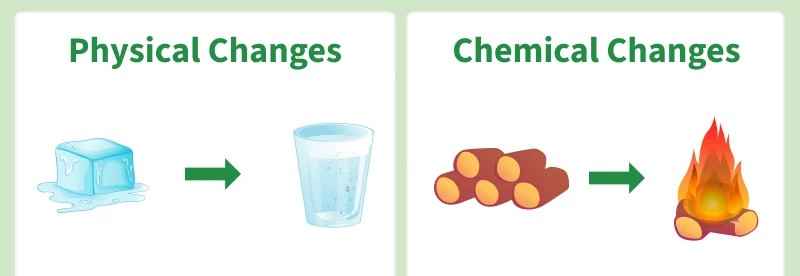
A physical change is a change in which only the physical properties of a substance, such as shape, size, or state, are altered and a chemical change is a change in which the chemical composition of a substance changes, resulting in the formation of one or more new substances with different properties.
👁 changes1Example:
- Physical changes: melting of ice, boiling of water, cutting paper
- Chemical changes: rusting of iron, burning of wood, cooking of food
A physical change is a change in which only the physical properties of a substance (such as shape, size, or state) change, and no new substance is formed.
Example:
- Melting of ice
- Boiling of water
- Freezing of water
- Cutting or tearing of paper
- Breaking of glass
The important characteristics of a physical change are:
A chemical change is a change in which one or more new substances are formed with different chemical properties due to a change in the chemical composition of the original substance.
Example:
- Rusting of iron
- Burning of wood
- Cooking of food
- Curd formation from milk
The main characteristics of a chemical change are:
| Physical Change | Chemical Change |
|---|---|
| A physical change is a change in which only the physical properties of a substance change. | A chemical change is a change in which a new substance is formed. |
| No new substance is produced. | New substance with different properties is produced. |
| The composition of the substance remains the same. | The composition of the substance changes. |
| Usually reversible in nature. | Usually irreversible in nature. |
Involves small energy change. | Involves significant energy change. |
No chemical reaction occurs. | A chemical reaction takes place. |
Only arrangement of particles changes. | New bonds are formed and old bonds are broken. |
| Example: melting of ice, cutting paper. | Example: rusting of iron, burning of wood. |