VOOZH about

URL: https://www.geeksforgeeks.org/physics/what-is-a-heat-sink/

⇱ What is a Heat Sink? - GeeksforGeeks


  • Courses
  • Tutorials
  • Interview Prep

What is a Heat Sink?

Last Updated : 20 Apr, 2026

A heat sink is a passive cooling device, usually made of high thermal conductivity materials such as aluminum or copper, that absorbs heat from electronic components like CPUs, GPUs, power transistors, or LEDs and dissipates it into the surrounding air or liquid.

👁 heatsink

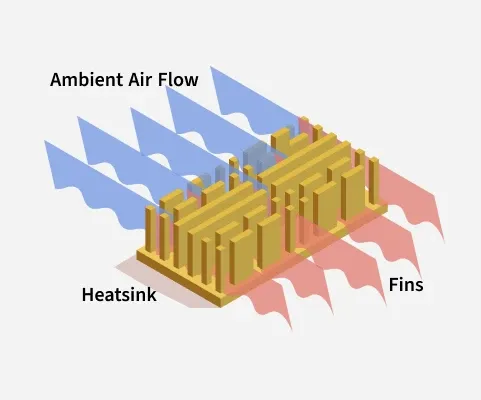
By providing a large surface area, often using fins, it transfers heat efficiently through conduction, convection, and radiation, keeping components within safe operating temperatures and preventing damage.

The Performance of Heat Sink depends on multiple parameters, including

  1. Geometry
  2. Material
  3. Air Velocity
  4. Interface with device (Air gap / Thermal Paste)

Working of Heat Sink

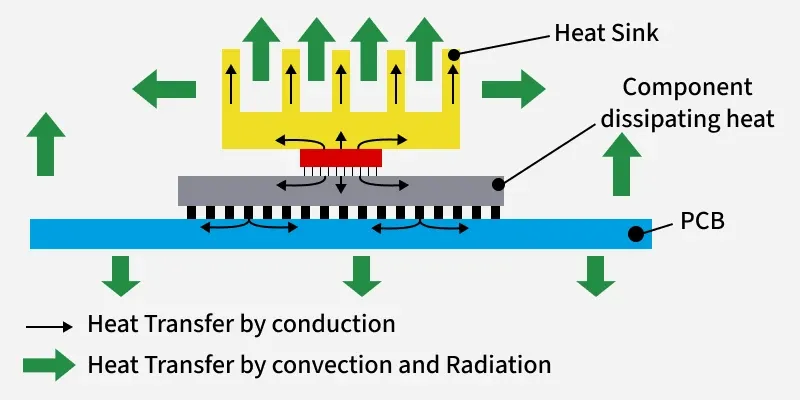
A heat sink works by absorbing heat from a hot component and releasing it into the surroundings. The process happens in simple steps:

👁 heat_sink

1. Heat absorption (Conduction)

  • The electronic component (like a CPU) generates heat.
  • Heat flows from the component to the heat sink through direct contact or thermal paste.

2. Heat spreading

  • The heat sink, made of aluminum or copper, spreads the heat throughout its body.

3. Heat dissipation (Convection)

  • The large surface area and fins increase contact with air.
  • Heat is transferred from the heat sink to the surrounding air.

4. Heat loss (Radiation)

  • A small amount of heat is also released as thermal radiation.

Importance

Heat sinks play a crucial role in maintaining the reliability and performance of electronic systems.

1. Prevents Overheating

  • Without a heat sink, components like CPUs can overheat, leading to system crashes or permanent damage.

2. Maintains Performance

  • Excessive heat can cause thermal throttling, where the processor slows down. A heat sink ensures stable and efficient performance.

3. Increases Component Lifespan

  • Lower operating temperatures reduce wear and tear, extending the life of electronic components.

4. Supports Overclocking

  • Overclocking increases heat output. Efficient heat sinks help manage the additional heat safely.

Materials Used in a Heat Sink

  • Aluminum: Lightweight, affordable, good thermal conductivity
  • Copper: Excellent thermal conductivity, used in high-performance systems

Types of Heat Sinks

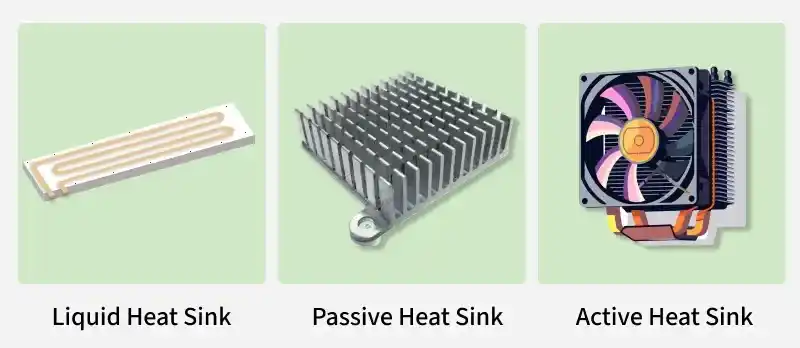
Heat sinks come in various shapes and forms, each designed to cater to different cooling needs and system configurations.

👁 heat_sinks

1. Passive Heat Sinks

Passive heat sinks have no moving parts. They rely on natural airflow to dissipate heat and are used in low-power devices.

  • Basic desktop computers, some TV set-top boxes

2. Active Heat Sinks

Active heat sinks use fans to force air over the fins, improving heat dissipation.

  • Gaming PCs, high-performance workstation

3. Liquid Cooling Systems

These systems use a liquid coolant to absorb and transfer heat to a radiator, where it is released into the air.

  • High-end gaming PCs, servers
Comment
Article Tags:
Article Tags:

Explore