Scrum is a widely used Agile framework for developing complex products, introduced by Ken Schwaber and Jeff Sutherland. It enables teams to self-organize, collaborate effectively, and deliver high-value products through an iterative and incremental approach, while adapting to changing requirements. Its key features are:
Lightweight and simple to understand framework
Emphasizes self-organization and teamwork
Promotes collaboration and continuous improvement
Supports iterative and incremental development
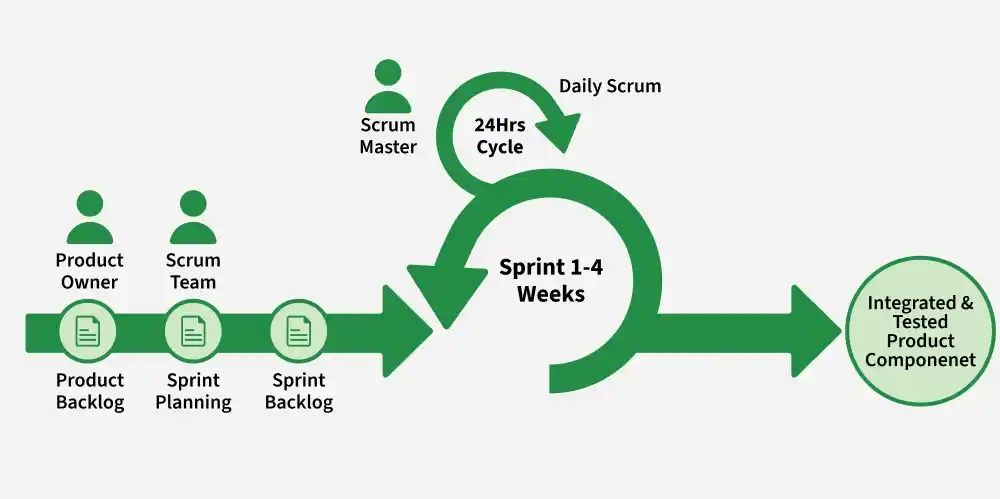
👁 scrum_cycle Scrum sprint cycle from planning to tested product delivery.
Key Components of the Scrum Lifecycle
Following points explain the key stages and components of the Scrum lifecycle as illustrated in the above diagram.
Sprint: A time-boxed period of one month or less during which a product increment is developed is known as a Sprint, and a new sprint begins immediately after the previous one ends.
Release: Usable product increment can be delivered based on requirements, which is referred to as a Release in Scrum.
Sprint Review: Completed work is presented to stakeholders for feedback and future improvements during the Sprint Review.
Sprint Retrospective: Continuous improvement in processes and team performance is achieved through the Sprint Retrospective, where the team reflects on the sprint.
Product Backlog: All features, enhancements, and requirements are organized and prioritized in the Product Backlog.
Sprint Backlog: Selected items from the Product Backlog, along with a plan to complete them during the sprint, make up the Sprint Backlog.
Advantage
Fast-paced and cost-efficient development approach
Breaks large projects into smaller, manageable parts (divide and conquer)
Strong focus on customer satisfaction through continuous feedback
Highly adaptive due to short and iterative sprints
Improves product quality with regular reviews and feedback
Disadvantage
Changes during a sprint are generally discouraged once it begins