
Highlights from spaceflight in 2015[a] | |
| Orbital launches | |
|---|---|
| First | 10 January |
| Last | 28 December |
| Total | 87 |
| Successes | 82 |
| Failures | 4 |
| Partial failures | 1 |
| Catalogued | 83[b] |
| National firsts | |
| Satellite | 👁 Image Turkmenistan 👁 Image Laos |
| Space traveller | 👁 Image Denmark 👁 Image Kazakhstan |
| Rockets | |
| Maiden flights | |
| Retirements | Dnepr-1 |
| Crewed flights | |
| Orbital | 4 |
| Total travellers | 12 |
| EVAs | 7 |
.jpg)


.jpg)
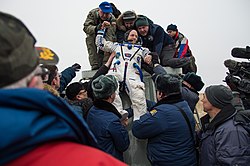


In 2015, the maiden spaceflights of the Chinese Long March 6 and Long March 11 launch vehicles took place.
A total of 87 orbital launches were attempted in 2015, of which 82 were successful, one was partially successful and four were failures. The year also saw seven EVAs by ISS astronauts. The majority of the year's orbital launches were conducted by Russia, the United States and China, with 27, 20 and 19 launches respectively.
Overview
[edit]In February 2015, the European Space Agency's experimental lifting body spacecraft, the Intermediate eXperimental Vehicle, successfully conducted its first test flight.
In March 2015, Ceres became the first dwarf planet to be visited by a spacecraft when Dawn entered orbit. In July 2015, New Horizons visited the Pluto-Charon system after a 9-year voyage, returning a trove of pictures and information about the former "ninth planet" (now classified as a dwarf planet). Meanwhile, the MESSENGER probe was deliberately crashed into Mercury after 4 years of in-orbit observations.
On 23 November 2015, the Blue Origin New Shepard suborbital rocket achieved its first powered soft landing near the launch site, paving the way for full reuse of its propulsion stage. On 21 December, the maiden flight of the SpaceX Falcon 9 Full Thrust took place, ending with a successful landing of its first stage.
Two old weather satellites, NOAA-16 and DMSP 5D-2/F13, broke up in 2015, creating several hundred pieces of space debris. In both cases, a battery explosion is suspected as the root cause.
Orbital launches
[edit]


Suborbital flights
[edit]| Date and time (UTC) | Rocket | Flight number | Launch site | LSP | |||
|---|---|---|---|---|---|---|---|
| Payload (⚀ = CubeSat) |
Operator | Orbit | Function | Decay (UTC) | Outcome | ||
| Remarks | |||||||
| 26 January 09:13 |
👁 United States Terrier-Improved Malemute |
👁 United States Poker Flat |
👁 United States NASA | ||||
| 👁 United States M-TEX |
Alaska | Suborbital | Auroral | 26 January | Successful | ||
| Apogee: ~160 kilometres (99 mi)? | |||||||
| 26 January 09:14 |
👁 United States Terrier-Orion |
👁 United States Poker Flat |
👁 United States NASA | ||||
| 👁 United States MIST |
Clemson | Suborbital | Auroral | 26 January | Successful | ||
| Apogee: ~130 kilometres (81 mi)? | |||||||
| 26 January 09:46 |
👁 United States Terrier-Improved Malemute |
👁 United States Poker Flat |
👁 United States NASA | ||||
| 👁 United States M-TEX |
Alaska | Suborbital | Auroral | 26 January | Successful | ||
| Apogee: ~160 kilometres (99 mi)? | |||||||
| 26 January 09:47 |
👁 United States Terrier-Orion |
👁 United States Poker Flat |
👁 United States NASA | ||||
| 👁 United States MIST |
Clemson | Suborbital | Auroral | 26 January | Successful | ||
| Apogee: ~130 kilometres (81 mi)? | |||||||
| 28 January 10:41 |
👁 United States Talos Terrier Oriole Nihka |
👁 United States Poker Flat |
👁 United States NASA | ||||
| 👁 United States ASSP |
USU | Suborbital | Auroral | 28 January | Successful | ||
| Apogee: ~590 kilometres (370 mi)? | |||||||
| 31 January 02:36:00[47] |
👁 India Agni V |
👁 India Integrated Test Range Launch Complex IV |
👁 India DRDO | ||||
| DRDO | Suborbital | Missile test | 31 January | Successful | |||
| Apogee: ~800 kilometres (500 mi) | |||||||
| 19 February | 👁 India Prithvi II |
👁 India Integrated Test Range Launch Complex 3 |
👁 India DRDO | ||||
| DRDO | Suborbital | Missile test | 19 February | Successful | |||
| Apogee: ~100 kilometres (62 mi) | |||||||
| 19 February 22:06 |
👁 Brazil 👁 United States VS-30/Improved Orion |
👁 Norway Andøya |
👁 Norway Andøya | ||||
| 👁 Sweden 👁 Norway ICI-4 (CanoRock 4) |
Oslo/Andøya | Suborbital | Technology | 19 February | Successful | ||
| Apogee: 365 kilometres (227 mi) | |||||||
| 22 February 07:52 |
👁 Brazil VSB-30 |
👁 Sweden Esrange |
👁 France CNES | ||||
| 👁 France Cryofenix |
CNES | Suborbital | Microgravity | 22 February | Successful | ||
| Apogee: 265 kilometres (165 mi) | |||||||
| 22 February | 👁 United States UGM-133 Trident II D5 |
👁 United States Submarine, Pacific Ocean |
👁 United States US Navy | ||||
| US Navy | Suborbital | Missile test | 22 February | Successful | |||
| 22 February | 👁 United States UGM-133 Trident II D5 |
👁 United States Submarine, Pacific Ocean |
👁 United States US Navy | ||||
| US Navy | Suborbital | Missile test | 22 February | Successful | |||
| 24 February 07:30 |
👁 United States Terrier-Oriole |
👁 United States Wallops Island |
👁 United States TBD | ||||
| DOD | Suborbital | Missile Defense Test | 24 February | Successful | |||
| FTX-19 target, apogee: ~150 kilometres (93 mi)? | |||||||
| 24 February 07:30 |
👁 United States Terrier-Oriole |
👁 United States Wallops Island |
👁 United States TBD | ||||
| DOD | Suborbital | Missile Defense Test | 24 February | Successful | |||
| FTX-19 target, apogee: ~150 kilometres (93 mi)? | |||||||
| 24 February 07:30 |
👁 United States Terrier-Oriole |
👁 United States Wallops Island |
👁 United States TBD | ||||
| DOD | Suborbital | Missile Defense Test | 24 February | Successful | |||
| FTX-19 target, apogee: ~150 kilometres (93 mi)? | |||||||
| 25 February 12:26 |
👁 Canada Black Brant IX |
👁 United States White Sands |
👁 United States NASA | ||||
| 👁 United States MOSC 2 |
AFRL | Suborbital | Ionospheric research | 25 February | Successful | ||
| Apogee: 300 kilometres (190 mi)? | |||||||
| 26 February | 👁 Russia UR-100NU |
👁 Russia Yasniy |
👁 Russia RVSN | ||||
| RVSN | Suborbital | Missile test | 26 February | Launch failure[48] | |||
| Yu-71 Hypersonic Vehicle Test | |||||||
| 1 March[49] | 👁 North Korea Hwasong-6 |
👁 North Korea Nampo |
👁 North Korea Korean People's Army Strategic Force | ||||
| 👁 North Korea |
Korean People's Army Strategic Force | Suborbital | Missile test | 1 March | Successful | ||
| Apogee: 134 kilometres (83 mi). 1 of 2. | |||||||
| 1 March[49] | 👁 North Korea Hwasong-6 |
👁 North Korea Nampo |
👁 North Korea Korean People's Army Strategic Force | ||||
| 👁 North Korea |
Korean People's Army Strategic Force | Suborbital | Missile test | 1 March | Successful | ||
| Apogee: 134 kilometres (83 mi). 2 of 2. | |||||||
| 5 March 01:44 |
👁 Brazil VS-30 |
👁 Norway Andøya |
👁 Germany DLR | ||||
| 👁 Germany WADIS-2 |
DLR | Suborbital | Atmospheric | 5 March | Successful | ||
| Apogee: 126 kilometres (78 mi), 13 Super Loki meteorological rockets were also launched | |||||||
| 9 March | 👁 Pakistan Shaheen-III |
👁 Pakistan Sonmiani |
👁 Pakistan ASFC | ||||
| ASFC | Suborbital | Missile test | 9 March | Successful | |||
| Apogee: 500 kilometres (310 mi)? | |||||||
| 18 March | 👁 Russia RS-26 Rubezh |
👁 Russia Kapustin Yar |
👁 Russia RVSN | ||||
| RVSN | Suborbital | Missile test | 18 March | Successful | |||
| 23 March 10:36 |
👁 United States LGM-30G Minuteman III |
👁 United States Vandenberg LF-10 |
👁 United States US Air Force | ||||
| US Air Force | Suborbital | Test flight | 23 March | Successful | |||
| GT214GM, Apogee: ~1,300 kilometres (810 mi) ? | |||||||
| 27 March 10:54 |
👁 United States LGM-30G Minuteman III |
👁 United States Vandenberg LF-04 |
👁 United States US Air Force | ||||
| US Air Force | Suborbital | Test flight | 27 March | Successful | |||
| GT215GM, Apogee: ~1,300 kilometres (810 mi) ? | |||||||
| 30 March | 👁 Brazil VSB-30 |
👁 Norway Andøya |
👁 Australia DSTO | ||||
| 👁 Australia HiFire-7 |
DSTO | Suborbital | Technology demonstration | 30 March | Successful | ||
| 9 April | 👁 India Dhanush |
👁 India Ship, Indian Ocean |
👁 India DRDO | ||||
| DRDO | Suborbital | Target | 9 April | Successful | |||
| Apogee: ~100 kilometres (62 mi) | |||||||
| 15 April | 👁 Pakistan Ghauri |
👁 Pakistan Tilla |
👁 Pakistan Army of Pakistan | ||||
| 👁 Pakistan Haft-5 |
Army of Pakistan | Suborbital | Missile test | 15 April | Successful | ||
| Apogee: 100 kilometres (62 mi) | |||||||
| 16 April 04:22 |
👁 India Agni-III |
👁 India ITR IC-4 |
👁 India Indian Army | ||||
| Indian Army | Suborbital | Missile test | 16 April | Successful | |||
| Apogee: 350 kilometres (220 mi) | |||||||
| 18 April 11:01 |
👁 United States Terrier-Improved Malemute |
👁 United States Wallops Island |
👁 United States NASA | ||||
| 👁 United States Rocksat-X |
University of Colorado Boulder | Suborbital | Student Research | 18 April | Successful | ||
| Apogee: ~174 kilometres (108 mi) | |||||||
| 23 April 07:35 |
👁 Brazil VSB-30 |
👁 Sweden Esrange |
👁 Europe EuroLaunch | ||||
| 👁 Germany /👁 Image TEXUS-51 |
DLR/ESA | Suborbital | Microgravity | 23 April | Successful | ||
| Apogee: 261 kilometres (162 mi) | |||||||
| 27 April 04:55 |
👁 Brazil VSB-30 |
👁 Sweden Esrange |
👁 Europe EuroLaunch | ||||
| 👁 Germany /👁 Image TEXUS-52 |
DLR/ESA | Suborbital | Microgravity | 27 April | Successful | ||
| Apogee: 255 kilometres (158 mi) | |||||||
| 2 May 08:30:01 |
👁 Canada Black Brant IX |
👁 United States White Sands |
👁 United States NASA | ||||
| 👁 United States OGRESS |
University of Iowa | Suborbital | X-Ray Astronomy | 2 May | Successful | ||
| Apogee: 272 kilometres (169 mi) | |||||||
| 20 May 10:37 |
👁 United States LGM-30G Minuteman III |
👁 United States Vandenberg LF-09 |
👁 United States US Air Force | ||||
| US Air Force | Suborbital | Test flight | 20 May | Successful | |||
| GT212GM, Apogee: ~1,300 kilometres (810 mi) ? | |||||||
| 21 May 19:15 |
👁 Canada Black Brant IX |
👁 United States White Sands |
👁 United States NASA | ||||
| 👁 United States EVE |
CU Boulder | Suborbital | SDO calibration | 21 May | Launch failure | ||
| Second stage failure, flight was terminated safety officials about four seconds into the second stage burn after data showed the vehicle was flying off-course. The payload carrying the experiment separated from the rocket and descended via parachute. | |||||||
| 6 June | 👁 United States SM-3-IIA |
👁 United States San Nicolas Island |
👁 United States US Navy | ||||
| US Navy | Suborbital | ABM test | 6 June | Successful | |||
| Maiden flight of SM-3 Block IIA Cooperative Development Controlled Test Vehicle-01 (SCD CTV-01) | |||||||
| 25 June 10:00 |
👁 United States Terrier-Improved Orion |
👁 United States Wallops Island |
👁 United States NASA | ||||
| 👁 United States RockOn |
CU Boulder | Suborbital | Student experiments | 25 June | Successful | ||
| Apogee: 118 kilometres (73 mi) | |||||||
| 26 June | 👁 United States ARAV ? |
👁 United States Kauai |
👁 United States MDA | ||||
| MDA | Suborbital | ABM target | 26 June | Launch failure | |||
| Aegis radar target | |||||||
| 30 June 04:55 |
👁 Brazil VSB-30 |
👁 Sweden Esrange |
👁 Europe EuroLaunch | ||||
| 👁 Germany MAPHEUS-5 |
DLR | Suborbital | Technology demonstration | 30 June | Successful | ||
| Apogee: 252 kilometres (157 mi) | |||||||
| 7 July 10:15 |
👁 United States Black Brant IX |
👁 United States Wallops Island |
👁 United States NASA | ||||
| 👁 United States SOAREX-8 |
NASA | Suborbital | Technology demonstration | 7 July | Successful | ||
| Apogee: 350 kilometres (220 mi) | |||||||
| 29 July 08:30 |
👁 United States ARAV ? |
MMW E1 | 👁 United States Kauai |
👁 United States MDA | |||
| MDA | Suborbital | ABM target | 29 July | Successful | |||
| Apogee: 100 kilometres (62 mi)?, Aegis MMW E1 target, successful intercept by SM-6 Dual I missile | |||||||
| 30 July 06:15 |
👁 United States ARAV ? |
MMW E2 | 👁 United States Kauai |
👁 United States MDA | |||
| MDA | Suborbital | ABM target | 30 July | Successful | |||
| Apogee: 100 kilometres (62 mi)?, Aegis MMW E2 target, successful intercept by SM-2 Block IV missile | |||||||
| 12 August 10:14 |
👁 United States Terrier-Improved Malemute |
👁 United States Wallops Island |
👁 United States NASA | ||||
| 👁 United States Rocksat-X |
Various universities | Suborbital | Student Research | 12 August | Successful | ||
| Apogee: ~156km (97 miles).[50] | |||||||
| 19 August 10:03 |
👁 United States LGM-30G Minuteman III |
👁 United States Vandenberg LF-10 |
👁 United States US Air Force | ||||
| US Air Force | Suborbital | Test flight | 19 August | Successful | |||
| GT213GM, Apogee: ~1,300 kilometres (810 mi) ? | |||||||
| 22 August 15:13 |
👁 Russia RS-12M Topol |
👁 Russia Kapustin Yar |
👁 Russia RVSN | ||||
| RVSN | Suborbital | Missile test | 22 August | Successful | |||
| 27 August 17:45 |
👁 Canada Black Brant IX |
👁 United States White Sands |
👁 United States NASA | ||||
| 👁 United States MOSES-2 |
MSU | Suborbital | Solar astronomy | 27 August | Successful | ||
| Apogee: 185 miles (298 km)[51] | |||||||
| 3 September 17:01 |
👁 Canada Black Brant IX |
👁 United States White Sands |
👁 United States NASA | ||||
| 👁 United States 👁 Japan 👁 Spain 👁 Norway 👁 France CLASP |
NASA / JAXA / IAC / IAS | Suborbital | Solar astronomy | 3 September | Successful | ||
| Apogee: 167 miles (269 km)[52] | |||||||
| 11 September 11:00:00 |
👁 Japan S-520 |
👁 Japan Uchinoura |
👁 Japan JAXA | ||||
| 👁 Japan |
HU/UT/TU/JAXA | Suborbital | Microgravity | 11 September | Successful | ||
| Apogee: 312 km[53] | |||||||
| 16 September 19:06 |
👁 Canada Black Brant XI |
👁 Norway Andøya |
👁 United States NASA | ||||
| 👁 United States CARE II |
NRL | Suborbital | Aeronomy | 16 September | Successful | ||
| Apogee: 299 kilometres (186 mi) | |||||||
| 30 September 08:28 |
👁 France M51 |
👁 France Landes |
👁 France DGA/Marine nationale | ||||
| DGA/Marine nationale | Suborbital | Test flight | 30 September | Successful | |||
| Apogee: 500 kilometres (310 mi), apparently launched from the land test pad, rather than from a submarine. | |||||||
| 2 October 05:39:00 |
👁 Brazil /👁 United States VSB-30/Improved Orion |
👁 Sweden Esrange |
👁 Sweden Swedish Space Corporation | ||||
| 👁 Sweden O-STATES 1 |
SNSB | Suborbital | Atmospheric Research | 2 October | Successful | ||
| Apogee: 246 kilometres (153 mi) | |||||||
| 7 October 23:07:00 |
👁 United States Black Brant IX |
👁 United States Wallops Island |
👁 United States NASA | ||||
| 👁 United States Technology Test Flight |
NASA GSFC | Suborbital | Rocket motor test | 7 October | Successful | ||
| 👁 United States LEO-1 |
Orbital ATK | Suborbital | Materials Testing | 7 October | Successful | ||
| 👁 United States NNS |
NASA | Suborbital | Materials Testing | 7 October | Successful | ||
| Apogee: 257.5 kilometers (160mi).[54] Test flight of the new Black Brant Mk4 sustainer motor. Other payloads included a cloud of barium and strontium, which was deployed to test the rocket's payload ejection system and was visible for miles along the East Coast of the United States. | |||||||
| 19 October 14:09:00 |
👁 Brazil /👁 United States VSB-30/Improved Orion |
👁 Sweden Esrange |
👁 Sweden Swedish Space Corporation | ||||
| 👁 Sweden O-STATES 2 |
SNSB | Suborbital | Atmospheric Research | 19 October | Successful | ||
| Apogee: 244 kilometres (152 mi) | |||||||
| 20 October | 👁 United States Terrier-Orion |
ADS-15 E2 | 👁 United Kingdom South Uist, Hebrides |
👁 United States MDA | |||
| DOD | Suborbital | Target | 20 October | Successful | |||
| SM-3 Target, apogee: ~100 kilometres (62 mi)? | |||||||
| 20 October | 👁 United States SM-3 |
ADS-15 E2 | 👁 United States USS Ross (DDG-71), Hebrides Range |
👁 United States US Navy | |||
| US Navy | Suborbital | ABM test | 20 October | Successful | |||
| First Aegis-Test in the North Atlantic, successful intercept, apogee: ~100 kilometres (62 mi)? | |||||||
| 21 October 12:45:00 |
👁 United States LGM-30G Minuteman III |
👁 United States Vandenberg LF-04 |
👁 United States US Air Force | ||||
| US Air Force | Suborbital | Test flight | 21 October | Successful | |||
| GT216GM, Apogee: ~1,300 kilometres (810 mi) ? | |||||||
| 28 October 11:30 |
👁 Russia RS-24 Yars |
👁 Russia Plesetsk |
👁 Russia RVSN | ||||
| RVSN | Suborbital | Missile test | 28 October | Successful | |||
| 30 October | 👁 Russia RS-12M Topol |
👁 Russia Plesetsk |
👁 Russia RVSN | ||||
| RVSN | Suborbital | Missile test | 30 October | Successful | |||
| 30 October | 👁 Russia R-29RMU Sineva |
👁 Russia K-117 Bryansk, Barents Sea |
👁 Russia VMF | ||||
| VMF | Suborbital | Missile test | 30 October | Successful | |||
| 30 October | 👁 Russia R-29R Volna |
👁 Russia K-223 Podolsk, Sea of Okhotsk |
👁 Russia VMF | ||||
| VMF | Suborbital | Missile test | 30 October | Successful | |||
| 31 October 23:00 ? |
👁 China B-611 |
👁 China Shuangchengzi |
👁 China PLA | ||||
| PLA | Suborbital | ABM target | 31 October | Successful | |||
| Target | |||||||
| 31 October 23:00 ? |
👁 China SC-19 |
👁 China Korla |
👁 China PLA | ||||
| PLA | Suborbital | ABM test | 31 October | Successful | |||
| Interceptor, successful intercept | |||||||
| 1 November 03:05 |
👁 United States SRALT |
FTO-02 E2a | 👁 United States C-17, Pacific Ocean |
👁 United States MDA | |||
| MDA | Suborbital | THAAD target | 1 November | Successful | |||
| Apogee: 300 kilometres (190 mi), successful intercepted | |||||||
| 1 November 03:07 |
👁 United States THAAD |
FTO-02 E2a | 👁 United States Wake Island |
👁 United States US Army | |||
| 👁 United States |
US Army/MDA | Suborbital | ABM test | 1 November | Successful | ||
| Intercepted target missile, apogee: 100 kilometres (62 mi) | |||||||
| 1 November 03:10 |
👁 United States eMRBM |
FTO-02 E2a | 👁 United States C-17, Pacific Ocean |
👁 United States MDA | |||
| 👁 United States |
MDA | Suborbital | THAAD target | 1 November | Successful | ||
| Apogee: 300 kilometres (190 mi), successful intercepted | |||||||
| 1 November 03:12 |
👁 United States THAAD |
FTO-02 E2a | 👁 United States Wake Island |
👁 United States US Army | |||
| 👁 United States |
US Army/MDA | Suborbital | ABM test | 1 November | Successful | ||
| Intercepted target missile, apogee: 100 kilometres (62 mi) | |||||||
| 6 November 15:01 |
👁 United States SpaceLoft XL |
👁 United States Spaceport America |
👁 United States UP Aerospace | ||||
| 👁 United States FOP-4 |
NASA | Suborbital | Four technology demonstration experiments | 6 November | Successful | ||
| Mission SL-10, Apogee: 120.7 kilometers (74.98 miles). First private suborbital rocket to demonstrate ejection of recoverable payloads.[55] | |||||||
| 8 November 02:00 |
👁 United States UGM-133 Trident II D5 |
👁 United States USS Kentucky, Pacific Ocean |
👁 United States US Navy | ||||
| US Navy | Suborbital | Missile test | 8 November | Successful | |||
| Demonstration and Shakedown Operation 26 (DASO-26) | |||||||
| 9 November 04:15 |
👁 India Agni-IV |
👁 India Integrated Test Range |
👁 India DRDO | ||||
| DRDO | Suborbital | Missile Test | 9 November | Successful | |||
| Apogee: ~850 kilometres (530 mi)? | |||||||
| 9 November 20:00 |
👁 United States UGM-133 Trident II D5 |
👁 United States USS Kentucky, Pacific Ocean |
👁 United States US Navy | ||||
| US Navy | Suborbital | Missile test | 9 November | Successful | |||
| Demonstration and Shakedown Operation 26 (DASO-26) | |||||||
| 14 November | 👁 Russia RSM-56 Bulava |
👁 Russia K-551 Vladimir Monomakh, White Sea |
👁 Russia VMF | ||||
| VMF | Suborbital | Missile test | 14 November | Successful | |||
| 14 November | 👁 Russia RSM-56 Bulava |
👁 Russia K-551 Vladimir Monomakh, White Sea |
👁 Russia VMF | ||||
| VMF | Suborbital | Missile test | 14 November | Successful | |||
| Missile did not hit its targets at the Kura test site. The warheads did reach the Kamchatka region, but the miss was fairly large, but that was still not significant enough to abort the flight | |||||||
| 17 November 12:12 |
👁 Russia RS-12M Topol |
👁 Russia Kapustin Yar |
👁 Russia RVSN | ||||
| RVSN | Suborbital | Missile test | 17 November | Successful | |||
| 21 November | 👁 Iran Ghadr-1 |
👁 Iran Semnan ? |
👁 Iran IRGC | ||||
| 👁 Iran |
IGRC | Suborbital | Missile test | 21 November | Successful | ||
| apogee: 150 kilometres (93 mi) | |||||||
| 23 November 17:21 |
👁 United States New Shepard |
👁 United States Corn Ranch |
👁 United States Blue Origin | ||||
| 👁 United States New Shepard |
Blue Origin | Suborbital | Test flight | 23 November | Successful | ||
| Apogee: 100.5 kilometres (62.4 mi). Second test flight of the New Shepard launch system, first to cross the Kármán line, and first to achieve a powered landing of its propulsion stage. | |||||||
| 25 November 04:17 |
👁 Canada Black Brant IX |
👁 United States White Sands |
👁 United States NASA | ||||
| 👁 United States PICTURE-B |
UMass | Suborbital | Astronomy | 25 November | Successful | ||
| apogee: 217 kilometres (135 mi) | |||||||
| 30 November 07:25 |
👁 United States Talos Terrier Oriole Nihka |
👁 Norway Andøya |
👁 United States NASA | ||||
| 👁 United States CAPER |
Dartmouth College | Suborbital | Auroral research | 30 November | Launch failure | ||
| Third stage failure, payload recovered | |||||||
| 1 December 05:00 |
👁 Brazil VSB-30 |
👁 Sweden Esrange |
👁 Europe EuroLaunch | ||||
| 👁 Sweden MASER-13 |
SSC | Suborbital | Microgravity | 1 December | Successful | ||
| apogee: 270 kilometres (170 mi) | |||||||
| 5 December 04:45 |
👁 Canada Black Brant IX |
👁 United States White Sands |
👁 United States NASA | ||||
| 👁 United States DXL-2 |
U of M | Suborbital | Astronomy | 5 December | Successful | ||
| apogee: 224 kilometres (139 mi) | |||||||
| 8 December | 👁 United States SM-3-IIA |
👁 United States San Nicolas Island |
👁 United States US Navy | ||||
| US Navy | Suborbital | ABM test | 8 December | Successful | |||
| Second flight of SM-3 Block IIA Cooperative Development Controlled Test Vehicle-02 (SCD CTV-02) | |||||||
| 10 December 06:12 |
👁 Israel Silver Sparrow |
👁 Israel F-15 Eagle, Israel |
👁 Israel IAF | ||||
| IAI/IDF | Suborbital | ABM target | 10 December | Successful | |||
| Arrow-3 target, successfully intercepted, apogee: ~150 kilometres (93 mi) | |||||||
| 10 December 06:15 |
👁 Israel Arrow III |
👁 Israel Negev |
👁 Israel IAF | ||||
| IAI/IDF | Suborbital | ABM Test | 10 December | Successful | |||
| First test of the Arrow-III against a target, successful intercept over the Mediterranean | |||||||
| 10 December | 👁 United States SRALT |
FTO-02 E1a | 👁 United States C-17, Pacific Ocean |
👁 United States MDA | |||
| MDA | Suborbital | SM-3-IB target | 10 December | Successful | |||
| Apogee: 300 kilometres (190 mi), successful intercepted | |||||||
| 10 December | 👁 United States SM-3-IB |
FTO-02 E1a | 👁 United States Kauai |
👁 United States US Navy | |||
| US Navy | Suborbital | ABM test | 10 December | Successful | |||
| First intercept flight test of a land-based Aegis Ballistic Missile Defense (BMD) weapon system | |||||||
| 10 December 13:55 |
👁 United States Juno |
👁 United States Fort Wingate LC-96 |
👁 United States US Army | ||||
| US Army | Suborbital | Target | 10 December | Successful | |||
| Target for MIM-104 Patriot PAC-3 MSE test, successfully intercepted | |||||||
| 11 December | 👁 Pakistan Shaheen-III |
👁 Pakistan Sonmiani |
👁 Pakistan ASFC | ||||
| ASFC | Suborbital | Missile test | 11 December | Successful | |||
| Apogee: 500 kilometres (310 mi)? | |||||||
| 12 December | 👁 Russia R-29RMU Sineva |
👁 Russia K-51 Verkhoturye, Barents Sea |
👁 Russia VMF | ||||
| VMF | Suborbital | Missile test | 12 December | Successful | |||
| 13 December 04:32 |
👁 Canada Black Brant XIIA |
👁 Norway Andøya |
👁 United States NASA | ||||
| 👁 United States RENU 2 |
New Hampshire | Suborbital | Geospace | 13 December | Successful | ||
| Apogee: 447 kilometres (278 mi) | |||||||
| 15 December | 👁 Pakistan Shaheen-IA |
👁 Pakistan Sonmiani |
👁 Pakistan ASFC | ||||
| ASFC | Suborbital | Missile test | 15 December | Successful | |||
| 18 December 06:52 |
👁 Canada Black Brant IX |
👁 United States White Sands |
👁 United States NASA | ||||
| 👁 United States FORTIS |
JHU | Suborbital | UV Astronomy | 18 December | Successful | ||
| apogee: 282 kilometres (175 mi) | |||||||
| 24 December 17:55 |
👁 Russia RS-12M Topol |
👁 Russia Kapustin Yar |
👁 Russia RVSN | ||||
| RVSN | Suborbital | Missile test | 24 December | Successful | |||


Deep space rendezvous
[edit]| Date (GMT) | Spacecraft | Event | Remarks |
|---|---|---|---|
| 10 January | Chang'e 5-T1 | Injection into Selenocentric orbit | Departed from Earth–Moon L2 on 4 January. |
| 11 January[56] | Cassini | 109th flyby of Titan | Closest approach: 970 kilometres (603 mi). |
| 12 February | Cassini | 110th flyby of Titan | Closest approach: 1,200 kilometres (746 mi). |
| 6 March[57] | Dawn | Enters orbit of Ceres | 1st visit to a dwarf planet. |
| 16 March | Cassini | 111th flyby of Titan | Closest approach: 2,275 kilometres (1,413 mi). |
| 30 April | MESSENGER | Impact to Mercury[58] | The crash occurred on the side of the planet not visible from Earth. |
| 7 May | Cassini | 112th flyby of Titan | Closest approach: 2,722 kilometres (1,691 mi). |
| 16 June | Cassini | 4th flyby of Dione | Closest approach: 516 kilometres (321 mi). |
| 7 July | Cassini | 113th flyby of Titan | Closest approach: 10,953 kilometres (6,806 mi). |
| 14 July | New Horizons | First flyby of Pluto and Charon | 2nd visit to a dwarf planet. Closest approach: 12,500 km (7,800 mi). |
| 17 August | Cassini | 5th flyby of Dione | Closest approach: 474 kilometres (295 mi). |
| 28 September | Cassini | 114th flyby of Titan | Closest approach: 1,036 kilometres (643 mi). |
| 14 October | Cassini | Flyby of Enceladus | Closest approach: 1,839 kilometres (1,142 mi). |
| 28 October | Cassini | Flyby of Enceladus | Closest approach: 49 kilometres (30 mi). |
| 12 November | Cassini | 115th flyby of Titan | Closest approach: 11,920 kilometres (7,407 mi). |
| 3 December[59] | Hayabusa2 | Flyby of Earth | Gravity assist |
| 3 December[60] | PROCYON | Flyby of Earth | Gravity assist en route to cancelled asteroid flyby. |
| 4 December[61] | Shin'en 2 | Flyby of Earth | Gravity assist |
| 7 December[62] | Akatsuki | Venus orbit insertion | Akatsuki's 2nd flyby of Venus and 2nd (successful) attempt at orbit insertion. |
| 19 December | Cassini | Flyby of Enceladus | Closest approach: 4,999 kilometres (3,106 mi). |
Extra-Vehicular Activities (EVAs)
[edit]| Start date/time | Duration | End time | Spacecraft | Crew | Remarks |
|---|---|---|---|---|---|
| 21 February 12:45 |
6 hours 41 minutes |
19:26 | Expedition 42/43 | 👁 United States Barry E. Wilmore |
Rigged and routed power and data cables at the forward end of the Harmony module as part of preparations for the installation of the International Docking Adapter at PMA-2.[63] |
| 25 February 11:51 |
6 hours 43 minutes |
18:34 | Expedition 42/43 | 👁 United States Barry E. Wilmore |
Completed power and data cable routing at the forward end of the Harmony module. Removed launch locks from forward and aft berthing ports of Tranquility to prepare for relocation of the Permanent Multipurpose Module and the installation of the Bigelow Expandable Activity Module. Lubricated end effector of Canadarm2.[64][65] |
| 1 March 11:52 |
5 hours 38 minutes |
17:30 | Expedition 42/43 | 👁 United States Terry W. Virts |
Finished cable routing, antenna and retro-reflector installation on both sides of the ISS truss and on other modules in preparation for the installation of the International Docking Adapter at PMA-2 and 3.[66][67] |
| 10 August 14:20 |
5 hours 31 minutes |
19:51 | Expedition 44/45 | 👁 Russia Gennady Padalka |
Installed gap spanners on the hull of the station for facilitating movement of crew members on future spacewalks, cleaned windows of the Zvezda Service Module, install fasteners on communications antennas, replaced an aging docking antenna, photographed various locations and hardware on Zvezda and nearby modules, and retrieved a space environment experiment.[68][69] |
| 28 October 12:03 |
7 hours 16 minutes |
19:19 | Expedition 45 | 👁 United States Scott Kelly |
Prepared a Main Bus Switching Unit for repair, installed a thermal cover on the Alpha Magnetic Spectrometer, lubricated elements of the Space Station Remote Manipulator System, and routed data and power cables to prepare for the installation of the International Docking Adaptor at PMA-2 and 3.[70] |
| 6 November 11:22 |
7 hours 48 minutes |
19:10 | Expedition 45 | 👁 United States Scott Kelly |
Worked to restore a portion of the ISS's cooling system to its primary configuration, returning ammonia coolant levels to normal in the primary and backup radiator arrays.[71] |
| 21 December 13:45 |
3 hours 16 minutes |
16:01 | Expedition 46 | 👁 United States Scott Kelly |
Released a brake on the Mobile Servicing System to allow it to be properly stowed prior to the arrival of a visiting Progress vehicle. Routed cables in preparation for the installation of the Nauka module and the International Docking Adapter, and retrieved tools from a toolbox.[72] |
Space debris events
[edit]| Date/Time (UTC) | Source object | Event type | Pieces tracked | Remarks |
|---|---|---|---|---|
| 3 February 17:40[73] | DMSP 5D-2/F13 (USA-109) | Satellite breakup | 159[74] | The breakup was most likely caused by a battery explosion.[73][75] This satellite had been launched in 1995. Another satellite from the same series, DMSP 5D-2/F11, had broken up in 2004.[73] Debris are expected to remain in orbit for decades.[76] |
| 25 November 7:20[77] | NOAA-16 | Satellite breakup | 275[78] | As this weather satellite, launched in 2000, had a similar construction to the DMSP satellite which broke up in February 2015, the same cause is suspected (battery overheating and explosion).[79] |
| 22 December 16:00[80] | Briz-M upper stage | Booster explosion | 9[80] | A Briz-M upper-stage booster, having subsisted in geosynchronous transfer orbit since launching the Canadian Nimiq 6 commsat in 2012, was seen to have broken up into 9 pieces as of 26 January 2016. Orbital analysis of the debris allowed to time the explosion within one minute of 16:00 UTC on 22 December 2015.[80] Three other Briz-M upper stages had exploded earlier in 2007, 2010 and 2012.[81] |
Orbital launch statistics
[edit]By country
[edit]For the purposes of this section, the yearly tally of orbital launches by country assigns each flight to the country of origin of the rocket, not to the launch services provider or the spaceport. For example, Soyuz launches by Arianespace in Kourou are counted under Russia because Soyuz-2 is a Russian rocket.
| Country | Launches | Successes | Failures | Partial failures | |
|---|---|---|---|---|---|
| 👁 Image China |
19 | 19 | 0 | 0 | |
| 👁 Image France |
6 | 6 | 0 | 0 | |
| 👁 Image India |
5 | 5 | 0 | 0 | |
| 👁 Image Iran |
1 | 1 | 0 | 0 | |
| 👁 Image Italy |
3 | 3 | 0 | 0 | |
| 👁 Image Japan |
4 | 4 | 0 | 0 | |
| 👁 Image Russia |
27[c] | 24 | 2 | 1 | |
| 👁 Image Ukraine |
2[d] | 2 | 0 | 0 | |
| 👁 Image United States |
20 | 18 | 2 | 0 | |
| World | 87 | 82 | 4 | 1 | |

By rocket
[edit]By family
[edit]| Family | Country | Launches | Successes | Failures | Partial failures | Remarks |
|---|---|---|---|---|---|---|
| Ariane | 👁 Image France |
6 | 6 | 0 | 0 | |
| Atlas | 👁 Image United States |
9 | 9 | 0 | 0 | |
| Delta | 👁 Image United States |
3 | 3 | 0 | 0 | |
| Falcon | 👁 Image United States |
7 | 6 | 1 | 0 | |
| GSLV | 👁 Image India |
1 | 1 | 0 | 0 | |
| H-II | 👁 Image Japan |
4 | 4 | 0 | 0 | |
| Long March | 👁 Image China |
19 | 19 | 0 | 0 | |
| PSLV | 👁 Image India |
4 | 4 | 0 | 0 | |
| R-7 | 👁 Image Russia |
17 | 15 | 1 | 1 | |
| R-36 | 👁 Image Ukraine |
1 | 1 | 0 | 0 | |
| Safir | 👁 Image Iran |
1 | 1 | 0 | 0 | |
| Strypi | 👁 Image United States |
1 | 0 | 1 | 0 | |
| Universal Rocket | 👁 Image Russia |
10 | 9 | 1 | 0 | |
| Vega | 👁 Image Italy |
3 | 3 | 0 | 0 | |
| Zenit | 👁 Image Ukraine |
1 | 1 | 0 | 0 |
By type
[edit]| Rocket | Country | Family | Launches | Successes | Failures | Partial failures | Remarks |
|---|---|---|---|---|---|---|---|
| Ariane 5 | 👁 Image France |
Ariane | 6 | 6 | 0 | 0 | |
| Atlas V | 👁 Image United States |
Atlas | 9 | 9 | 0 | 0 | |
| Delta II | 👁 Image United States |
Delta | 1 | 1 | 0 | 0 | |
| Delta IV | 👁 Image United States |
Delta | 2 | 2 | 0 | 0 | |
| Dnepr | 👁 Image Ukraine |
R-36 | 1 | 1 | 0 | 0 | Final flight |
| Falcon 9 | 👁 Image United States |
Falcon | 7 | 6 | 1 | 0 | |
| GSLV | 👁 Image India |
GSLV | 1 | 1 | 0 | 0 | |
| H-IIA | 👁 Image Japan |
H-II | 3 | 3 | 0 | 0 | |
| H-IIB | 👁 Image Japan |
H-II | 1 | 1 | 0 | 0 | |
| Long March 2 | 👁 Image China |
Long March | 4 | 4 | 0 | 0 | |
| Long March 3 | 👁 Image China |
Long March | 9 | 9 | 0 | 0 | |
| Long March 4 | 👁 Image China |
Long March | 4 | 4 | 0 | 0 | |
| Long March 6 | 👁 Image China |
Long March | 1 | 1 | 0 | 0 | Maiden flight |
| Long March 11 | 👁 Image China |
Long March | 1 | 1 | 0 | 0 | Maiden flight |
| Proton | 👁 Image Russia |
Universal Rocket | 8 | 7 | 1 | 0 | |
| PSLV | 👁 Image India |
PSLV | 4 | 4 | 0 | 0 | |
| Safir | 👁 Image Iran |
Safir | 1 | 1 | 0 | 0 | |
| Soyuz | 👁 Image Russia |
R-7 | 7 | 7 | 0 | 0 | |
| Soyuz-2 | 👁 Image Russia |
R-7 | 10 | 8 | 1 | 1 | |
| Super Strypi | 👁 Image United States |
Strypi | 1 | 0 | 1 | 0 | Maiden flight |
| UR-100 | 👁 Image Russia |
Universal Rocket | 2 | 2 | 0 | 0 | |
| Vega | 👁 Image Italy |
Vega | 3 | 3 | 0 | 0 | |
| Zenit | 👁 Image Ukraine |
Zenit | 1 | 1 | 0 | 0 |
By configuration
[edit]| Rocket | Country | Type | Launches | Successes | Failures | Partial failures | Remarks |
|---|---|---|---|---|---|---|---|
| Ariane 5 ECA | 👁 Image France |
Ariane 5 | 6 | 6 | 0 | 0 | |
| Atlas V 401 | 👁 Image United States |
Atlas V | 4 | 4 | 0 | 0 | |
| Atlas V 421 | 👁 Image United States |
Atlas V | 2 | 2 | 0 | 0 | |
| Atlas V 501 | 👁 Image United States |
Atlas V | 1 | 1 | 0 | 0 | |
| Atlas V 551 | 👁 Image United States |
Atlas V | 2 | 2 | 0 | 0 | |
| Delta II 7320 | 👁 Image United States |
Delta II | 1 | 1 | 0 | 0 | |
| Delta IV Medium+ (4,2) | 👁 Image United States |
Delta IV | 1 | 1 | 0 | 0 | |
| Delta IV Medium+ (5,4) | 👁 Image United States |
Delta IV | 1 | 1 | 0 | 0 | |
| Dnepr | 👁 Image Ukraine |
R-36 | 1 | 1 | 0 | 0 | Final flight |
| Falcon 9 v1.1 | 👁 Image United States |
Falcon 9 | 6 | 5 | 1 | 0 | |
| Falcon 9 Full Thrust | 👁 Image United States |
Falcon 9 | 1 | 1 | 0 | 0 | Maiden flight |
| GSLV Mk II | 👁 Image India |
GSLV | 1 | 1 | 0 | 0 | |
| H-IIA 202 | 👁 Image Japan |
H-IIA | 2 | 2 | 0 | 0 | |
| H-IIA 204 | 👁 Image Japan |
H-IIA | 1 | 1 | 0 | 0 | |
| H-IIB | 👁 Image Japan |
H-IIB | 1 | 1 | 0 | 0 | |
| Long March 2D | 👁 Image China |
Long March 2 | 4 | 4 | 0 | 0 | |
| Long March 3B/E | 👁 Image China |
Long March 3 | 7 | 7 | 0 | 0 | |
| Long March 3B / YZ-1 | 👁 Image China |
Long March 3 | 1 | 1 | 0 | 0 | Maiden flight |
| Long March 3C/E / YZ-1 | 👁 Image China |
Long March 3 | 1 | 1 | 0 | 0 | Maiden flight |
| Long March 4B | 👁 Image China |
Long March 4 | 2 | 2 | 0 | 0 | |
| Long March 4C | 👁 Image China |
Long March 4 | 2 | 2 | 0 | 0 | |
| Long March 6 | 👁 Image China |
Long March 5 | 1 | 1 | 0 | 0 | Maiden flight |
| Long March 11 | 👁 Image China |
Long March 11 | 1 | 1 | 0 | 0 | Maiden flight |
| Proton-M / Blok DM-03 | 👁 Image Russia |
Proton | 1 | 1 | 0 | 0 | |
| Proton-M / Briz-M | 👁 Image Russia |
Proton | 7 | 6 | 1 | 0 | |
| PSLV-CA | 👁 Image India |
PSLV | 1 | 1 | 0 | 0 | |
| PSLV-XL | 👁 Image India |
PSLV | 3 | 3 | 0 | 0 | |
| Rokot / Briz-KM | 👁 Image Russia |
UR-100 | 2 | 2 | 0 | 0 | |
| Safir-1B | 👁 Image Iran |
Safir | 1 | 1 | 0 | 0 | |
| Soyuz-2.1a | 👁 Image Russia |
Soyuz-2 | 4 | 3 | 1 | 0 | |
| Soyuz-2.1b | 👁 Image Russia |
Soyuz-2 | 1 | 1 | 0 | 0 | |
| Soyuz-2.1b / Fregat-M | 👁 Image Russia |
Soyuz-2 | 1 | 1 | 0 | 0 | |
| Soyuz ST-B / Fregat-MT | 👁 Image Russia |
Soyuz-2 | 3 | 3 | 0 | 0 | |
| Soyuz-2-1v / Volga | 👁 Image Russia |
Soyuz-2 | 1 | 0 | 0 | 1 | |
| Soyuz-FG | 👁 Image Russia |
Soyuz | 4 | 4 | 0 | 0 | |
| Soyuz-U | 👁 Image Russia |
Soyuz | 3 | 3 | 0 | 0 | |
| Super Strypi | 👁 Image United States |
Strypi | 1 | 0 | 1 | 0 | Maiden flight |
| Vega | 👁 Image Italy |
Vega | 3 | 3 | 0 | 0 | |
| Zenit-3F | 👁 Image Ukraine |
Zenit | 1 | 1 | 0 | 0 |
By spaceport
[edit]| Site | Country | Launches | Successes | Failures | Partial failures | Remarks |
|---|---|---|---|---|---|---|
| Baikonur | 👁 Image Kazakhstan |
18 | 16 | 2 | 0 | |
| Barking Sands | 👁 Image United States |
1 | 0 | 1 | 0 | |
| Cape Canaveral | 👁 Image United States |
17 | 16 | 1 | 0 | |
| Dombarovsky | 👁 Image Russia |
1 | 1 | 0 | 0 | |
| Kourou | 👁 Image France |
12 | 12 | 0 | 0 | |
| Jiuquan | 👁 Image China |
5 | 5 | 0 | 0 | |
| Plesetsk | 👁 Image Russia |
7 | 6 | 0 | 1 | |
| Satish Dhawan | 👁 Image India |
5 | 5 | 0 | 0 | |
| Semnan | 👁 Image Iran |
1 | 1 | 0 | 0 | |
| Taiyuan | 👁 Image China |
5 | 5 | 0 | 0 | |
| Tanegashima | 👁 Image Japan |
4 | 4 | 0 | 0 | |
| Vandenberg | 👁 Image United States |
2 | 2 | 0 | 0 | |
| Xichang | 👁 Image China |
9 | 9 | 0 | 0 | |
| Total | 87 | 82 | 4 | 1 | ||
By orbit
[edit]- Transatmospheric
- Low Earth
- Low Earth (ISS)
- Low Earth (SSO)
- Low Earth (retrograde)
- Geosychronous
(transfer) - Medium Earth
- High Earth
- Heliocentric
| Orbital regime | Launches | Achieved | Not achieved | Accidentally achieved |
Remarks |
|---|---|---|---|---|---|
| Transatmospheric | 1 | 1 | 0 | 0 | |
| Low Earth | 45 | 42 | 2 | 1 | 14 to ISS (1 launch failure, 1 failure post-separation) |
| Geosynchronous/transfer | 32 | 31 | 1 | 0 | |
| Medium Earth | 7 | 7 | 0 | 0 | |
| High Earth | 2 | 2 | 0 | 0 | |
| Total | 87 | 83 | 3 | 1 |
Gallery
[edit]-
👁 Soyuz TMA-16M launches carrying ISS year long mission crew members Scott Kelly and Mikhail Korniyenko and Soyuz commander Gennady Padalka.Soyuz TMA-16M launches carrying ISS year long mission crew members Scott Kelly and Mikhail Korniyenko and Soyuz commander Gennady Padalka.
-
Photo of Ceres taken by the Dawn spacecraft at a distance of 13,600 km (8,500 mi).
-
First stage of the Falcon 9 Flight 20 rocket immediately before touching down at Landing Zone 1.
-
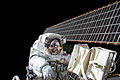
Scott Kelly working outside of the International Space Station
.jpg)


.jpg)

_Scott_Kelly.jpg)
Notes
[edit]- ^ Clockwise from top:
- The first ever vertical landing of an orbital-class launch vehicle, during the Falcon 9's twentieth flight in December. The vehicle landed at Cape Canaveral LZ-1.
- A close-up view of one of many high albedo regions on the dwarf planet Ceres spotted by the Dawn spacecraft upon its arrival in March. Ceres was the second world to be visited by Dawn after the main belt asteroid 4 Vesta.
- Commander Scott Kelly is pulled from the Soyuz TMA-M Eridan following its landing in Kazakhstan in March. The landing signalled the conclusion of Kelly's and Mikhail Kornienko's year in space.
- A true colour view of Pluto, photographed by the New Horizons spacecraft during its historic flyby in July. Launched in 2006, the spacecraft traversed a distance of nearly 5 billion kilometres (3.1 billion miles) before performing the first ever reconnaissance of a Kuiper belt object (KBO).
- ^ The European experimental spaceplane IXV was briefly in orbit but did not receive a COSPAR catalog number.
- ^ Includes three European Soyuz launches from Kourou, French Guiana by Arianespace
- ^ Zenit and Dnepr rockets were launched from Russia and/or Kazakhstan
References
[edit]- ^ @elonmusk (10 January 2015). "Rocket made it to drone spaceport ship, but landed hard. Close, but no cigar this time. Bodes well for the future tho" (Tweet). Retrieved 4 April 2015 – via Twitter.
- ^ "Brazilian AESP-14 CubeSat was deployed from Kibo". JAXA. 5 February 2015. Retrieved 17 September 2015.
- ^ "Flock-1, -1b, -1c, -1d, -1d', -1e, -1f, -2, -2b, -2c, -2d, -2e". space.skyrocket.de. Retrieved 17 September 2015.
- ^ "FIREBIRD 3". N2YO.com. 2 August 2023. Retrieved 2 December 2023.
- ^ "FIREBIRD 4". N2YO.com. 2 August 2023. Retrieved 2 December 2023.
- ^ 情報収集衛星レーダ予備機の運用終了について (PDF) (in Japanese). CSICE. 31 July 2024. Retrieved 3 August 2024.
- ^ Elon Musk at Twitter: "Ascent successful. Dragon enroute to Space Station. Rocket landed on droneship, but too hard for survival."
- ^ "РОСКОСМОС: "ПРОГРЕСС М-27М" - ОПРЕДЕЛЕНА ПРИЧИНА АВАРИИ (ROSCOSMOS: "Progress M-27M" - cause of accident determined)" (in Russian). Roscosmos. 1 June 2015. Archived from the original on 11 June 2015. Retrieved 1 June 2015.
- ^ Hout, Dan (30 April 2015). "Progress 59 Update Apr. 30, 2015". NASA Blogs: Space Station. NASA. Archived from the original on 16 May 2021. Retrieved 16 May 2021.
- ^ "Russian spacecraft Progress M-27M 'out of control'". BBC News. British Broadcasting Company. 29 April 2015. Retrieved 30 April 2015.
- ^ "РОСКОСМОС: НАЗВАНА ПРИЧИНА АВАРИИ РН "ПРОТОН-М" (ROSCOSMOS: Named cause of the accident "Proton-M")" (in Russian). Roscosmos. 29 May 2015. Archived from the original on 30 May 2015. Retrieved 30 May 2015.
- ^ Ray, Justin (7 May 2017). "X-37B spaceplane returns to Earth and makes autopilot landing in Florida". Spaceflight Now. Retrieved 7 May 2017.
- ^ "AEROCUBE 8A". N2YO.com. Retrieved 27 October 2021.
- ^ "AEROCUBE 8B - Norad 40660U". Satview. Retrieved 8 October 2021.
- ^ "CRS-7 INVESTIGATION UPDATE". SpaceX. 20 July 2015. Archived from the original on 26 March 2017. Retrieved 28 July 2015.
- ^ @planet4589 (27 June 2015). "Dragon also will carry eight @planetlabs Flock-1f imaging cubesats which will be stored on ISS for later deployment" (Tweet) – via Twitter.
- ^ "ISS Daily Summary Report – 10/7/15". NASA. 7 October 2015. Retrieved 26 October 2015.
- ^ "Stork Set to Make Special Space Station Delivery". NASA. 14 August 2015.
- ^ "GomSpace - GOMX-3 mission completed and de-orbited according to plan" (PDF). 21 October 2016. Archived from the original (PDF) on 20 December 2016. Retrieved 8 December 2016.
- ^ 千葉工業大学 惑星探査研究センター (in Japanese). 24 November 2016. Retrieved 8 December 2016.
- ^ "Brightman steps down from station flight". spaceflightnow.com. 13 May 2015.
- ^ Jeff Foust (22 June 2015). "Kazakh Cosmonaut To Take Brightman's Place On Soyuz Flight". SpaceNews.com.
- ^ ESA. "Andreas Mogensen's mission name links cosmos and Earth". Retrieved 22 June 2015.
- ^ "NUDT-PHONESAT". N2YO.com. 29 March 2023. Retrieved 31 March 2023.
- ^ "XW-2A". N2YO.com. 25 April 2023. Retrieved 15 January 2024.
- ^ "TIANWANG 1A (TW-1A)". N2YO.com. 30 December 2022. Retrieved 9 January 2023.
- ^ "TIANWANG 1B (TW-1B)". N2YO.com. 31 March 2021. Retrieved 27 October 2021.
- ^ "TIANWANG 1C (TW-1C)". N2YO.com. 27 February 2021. Retrieved 27 October 2021.
- ^ Krebs, Gunter. "Jilin-1 Smart Verfication [sic] Satellite". Gunter's Space Page. Retrieved 10 January 2019.
- ^ Krebs, Gunter. "Jilin-1 Optical-A, B". Gunter's Space Page. Retrieved 10 January 2019.
- ^ a b Krebs, Gunter. "Jilin-1 Video-01, 02 (Lingqiao 1-01, 02)". Gunter's Space Page. Retrieved 10 January 2019.
- ^ Bergin, Chris; Graham, William (17 November 2015). "Soyuz 2-1B launches EKS-1 to upgrade Russian Early Warning System". NASASpaceflight.com. Archived from the original on 16 May 2021. Retrieved 16 May 2021.
- ^ "Russia's 1st EKS Missile Warning Satellite enters surprising Orbit". 18 November 2015. Retrieved 20 November 2015.
- ^ "Новейший спутник Минобороны РФ вышел на связь и работает нормально РИА Новости". РИА Новости. 17 November 2015. Retrieved 17 November 2015.
- ^ Clark, Stephen. "China launches first satellite for Laos". Spaceflight Now. Retrieved 27 November 2015.
- ^ "Russian Military Satellite Suffers Launch Failure, Will Crash Soon". Space.com. 7 December 2015.
- ^ "Russian Soyuz-2.1v launch a partial failure - SpaceFlight Insider". www.spaceflightinsider.com. 7 December 2015.
- ^ "Private Cargo Spacecraft Gets New Rocket Ride After Accident". Space.com. 9 December 2014. Retrieved 4 April 2015.
- ^ "The Miniature X-ray Solar Spectrometer (MinXSS)". University of Colorado Boulder. Retrieved 19 April 2018.
- ^ "SIMPL". N2YO.com. 26 July 2022. Retrieved 18 August 2022.
- ^ "FLOCK 2E-8". N2YO.com. 25 July 2017. Retrieved 20 October 2023.
- ^ "FLOCK 2E-8". N2YO.com. 14 August 2018. Retrieved 20 October 2023.
- ^ "CADRE". N2YO.com. Retrieved 19 August 2019.
- ^ "MINXSS". N2YO.com. Retrieved 19 August 2019.
- ^ "NODES 2". N2YO.com. Retrieved 19 August 2019.
- ^ "STMSAT 1". N2YO.com. Retrieved 19 August 2019.
- ^ "Agni-V's maiden canister trial successful | Zee News". Zeenews.india.com. 31 January 2015. Retrieved 4 April 2015.
- ^ Podvig, Pavel (26 February 2015). "Flight test of a Project 4202 vehicle". Russian Strategic Nuclear Forces.
- ^ a b "The CNS North Korea Missile Test Database". Nuclear Threat Initiative. Retrieved 17 January 2025.
- ^ Black, Patrick (12 August 2015). "NASA Launches Student Experiments from Wallops". NASA.
- ^ Frazier, Sarah (28 August 2015). "NASA-Funded MOSES-2 Sounding Rocket to Investigate Coronal Heating / Update". NASA. Retrieved 18 September 2015.
- ^ "NASA's 'CLASP' Mission Set to Gauge Upper Solar Chromosphere's Magnetic Field / Update - Sept. 4, 2015". 4 September 2015. Retrieved 18 September 2015.
- ^ 観測ロケットS-520-30号機 打上げ結果について (in Japanese). JAXA. 16 September 2015. Retrieved 18 September 2015.
- ^ Latrell, Joe (8 October 2015). "NASA Launches Student Experiments from Wallops". Spaceflight Insider.
- ^ "Spaceport America's 24th Launch – an UP Aerospace SpaceLoft Rocket Demonstrated the Capability to Eject Separate Payloads Requiring Independent Re-entry". Spaceport America. 6 November 2015. Retrieved 14 November 2015.
{{cite web}}: CS1 maint: deprecated archival service (link) - ^ "Cassini Solstice Mission: Saturn Tour Dates: 2015". Cassini Solstice Mission. Archived from the original on 18 May 2015.
- ^ "Dawn Spacecraft Begins Approach to Dwarf Planet Ceres". NASA. 29 December 2014.
- ^ "From Mercury orbit, MESSENGER watches a lunar eclipse". Planetary Society. 10 October 2014.
- ^ "Asteroid Explorer "Hayabusa2" Topics". JAXA. 2 November 2015.
- ^ Emily Lakdawalla (13 April 2015). "PROCYON update: Asteroid 2000 DP107 target selected, ion engine stopped". The Planetary Society.
- ^ "Keiichi Okuyama-Lab". Kyushu Institute of Technology.
- ^ "Crippled space probe bound for second chance at Venus". Spaceflight Now. Retrieved 21 November 2011.
- ^ "First of Three Spacewalks Complete | Space Station". Blogs.nasa.gov. 21 February 2015. Retrieved 4 April 2015.
- ^ "Wilmore and Virts Begin Their Second Spacewalk". NASA. 25 February 2015. Retrieved 25 February 2015.
- ^ Pete Harding (25 February 2015). "EVA-30 concluded latest ISS commercial crew preparations". NASASpaceflight.com. Retrieved 25 February 2015.
- ^ "Spacewalkers Install C2V2 Cables". NASA. 1 March 2015. Retrieved 1 March 2015.
- ^ Chris Bergin (1 March 2015). "Spacewalkers install new comms system for future vehicles". NASASpaceflight.com. Retrieved 1 March 2015.
- ^ "Cosmonauts Complete Russian Spacewalk". NASA. 10 August 2015. Archived from the original on 23 April 2019. Retrieved 11 August 2015.
- ^ David Štula (10 August 2015). "RS-41: Cosmonaut duo complete the only Russian spacewalk of 2015". NASASpaceflight.com. Retrieved 11 August 2015.
- ^ "NASA Astronauts Complete Their First Spacewalk – Space Station". blogs.nasa.gov. Archived from the original on 2 June 2020. Retrieved 29 October 2015.
- ^ "Pair of NASA Astronauts Wrap Up Second Spacewalk – Space Station". blogs.nasa.gov. Archived from the original on 2 June 2020. Retrieved 10 November 2015.
- ^ "Astronauts Make Quick Work of Short Spacewalk – Space Station". blogs.nasa.gov. Archived from the original on 19 October 2019. Retrieved 21 December 2015.
- ^ a b c "Recent Breakup of a DMSP Satellite" (PDF). Orbital Debris Quarterly News. 19 (2). NASA. April 2015. Archived from the original (PDF) on 3 May 2015. Retrieved 8 February 2016.
- ^ T.S. Kelso, CelesTrak (11 June 2015). "We have TLEs for 10 more pieces of debris from DMSP 5D-2 F13, which brings the total to 159 so far". Retrieved 8 February 2016.
- ^ Berger, Brian; Gruss, Mike (27 February 2015). "20-year-old Military Weather Satellite Apparently Exploded in Orbit". Space News. Retrieved 28 February 2015.
- ^ Gruss, Mike (6 May 2015). "DMSP-F13 Debris To Stay On Orbit for Decades". Space News. Retrieved 7 May 2015.
- ^ T.S. Kelso [@TSKelso] (5 December 2015). "Preliminary analysis of initial TLEs for NOAA 16 debris suggests an event time of 2015 Nov 25 @ ~0720 UTC" (Tweet). Retrieved 8 February 2016 – via Twitter.
- ^ T.S. Kelso, CelesTrak [@TSKelso] (26 March 2016). "That brings the total so far for the NOAA 16 debris event to 275 pieces, with none having decayed from orbit" (Tweet). Retrieved 28 March 2016 – via Twitter.
- ^ "NOAA Weather Satellite suffers in-orbit Breakup". 25 November 2015. Retrieved 8 February 2016.
- ^ a b c Joint Space Operations Center [@JSpOC] (26 January 2016). "JSpOC confirms breakup of BREEZE-M R/B (#38343). Analysis shows it occurred Dec 22, 2015, 1600Z +/-1 min. 9 associated pieces. #38343Breakup" (Tweet). Retrieved 28 March 2016 – via Twitter.
- ^ Clark, Stephen (24 October 2012). "Rocket explosion raises worries over space debris". Spaceflight Now. Retrieved 28 March 2016.
External links
[edit]- Bergin, Chris. "NASASpaceFlight.com".
- Clark, Stephen. "Spaceflight Now".
- Kelso, T.S. "Satellite Catalog (SATCAT)". CelesTrak.
- Krebs, Gunter. "Chronology of Space Launches".
- Kyle, Ed. "Space Launch Report". Archived from the original on 5 October 2009. Retrieved 13 August 2022.
- McDowell, Jonathan. "GCAT Orbital Launch Log".
- Pietrobon, Steven. "Steven Pietrobon's Space Archive".
- Wade, Mark. "Encyclopedia Astronautica".
- Webb, Brian. "Southwest Space Archive".
- Zak, Anatoly. "Russian Space Web".
- "ISS Calendar". Spaceflight 101.
- "NSSDCA Master Catalog". NASA Space Science Data Coordinated Archive. NASA Goddard Space Flight Center.
- "Хроника освоения космоса" [Chronicle of space exploration]. CosmoWorld (in Russian).
- "Rocket Launch Manifest". Next Spaceflight.
- "Space Launch Plans". Novosti Kosmonavtiki.
- "Space Satellite Tracking". N2YO.


- CS1 uses Japanese-language script (ja)
- CS1 Japanese-language sources (ja)
- CS1 Russian-language sources (ru)
- CS1 maint: deprecated archival service
- Articles with short description
- Short description is different from Wikidata
- Use British English from September 2014
- All Wikipedia articles written in British English
- Use dmy dates from September 2014