VOOZH about

URL: https://en.wikipedia.org/wiki/Portal:Palestine

⇱ Portal:Palestine - Wikipedia


Jump to content
From Wikipedia, the free encyclopedia
Wikimedia portal
πŸ‘ Image
Portal maintenance status: (October 2020)
  • This portal's subpages have been checked by an editor, and are needed.
Please take care when editing, especially if using automated editing software. Learn how to update the maintenance information here.
β€’ Project β€’ Resources
πŸ‘ Image

Palestine, officially the State of Palestine, is a country in West Asia. It encompasses the Israeli-occupied West Bank, including East Jerusalem, and the Gaza Strip, collectively known as the Palestinian territories, or occupied Palestinian territory. The territories share the vast majority of their borders with Israel, with the West Bank bordering Jordan to the east and the Gaza Strip bordering Egypt to the southwest. It has a total land area of 6,020 square kilometers (2,320 sq mi) while its population exceeds five million. Its proclaimed capital is Jerusalem, while Ramallah serves as its de facto administrative center. Gaza was its largest city prior to evacuations in 2023.

Situated at a continental crossroad, the Palestine region was ruled by various empires and experienced various demographic changes from antiquity to the modern era. It was treading ground for the Nile and Mesopotamian armies and merchants from North Africa, China and India. The region has religious significance. The ongoing Israeli–Palestinian conflict dates back to the rise of the Zionist movement, supported by the United Kingdom during World War I. The war saw Britain occupying Palestine from the Ottoman Empire, where it set up Mandatory Palestine under the auspices of the League of Nations. Increased Jewish immigration led to intercommunal conflict between Jews and Palestinian Arabs, which escalated into a civil war in 1947 after a proposed partitioning by the United Nations was rejected by the Palestinians and other Arab nations.

The 1948 Palestine war saw the forcible displacement of a majority of the Arab population, and consequently the establishment of Israel; these events are referred to by Palestinians as the Nakba ('catastrophe'). In the Six-Day War in 1967, Israel occupied the West Bank and the Gaza Strip, which had been held by Jordan and Egypt respectively. The Palestine Liberation Organization (PLO) declared independence in 1988. In 1993, the PLO signed the Oslo Accords with Israel, creating limited PLO governance in the West Bank and Gaza Strip through the Palestinian Authority (PA). Israel withdrew from Gaza in its unilateral disengagement in 2005, but the territory is still considered to be under military occupation and has been blockaded by Israel. In 2007, internal divisions between political factions led to a takeover of Gaza by Hamas. Since then, the West Bank has been governed in part by the Fatah-led PA, while the Gaza Strip has remained under the control of Hamas.

Israel has constructed large settlements in the occupied West Bank and East Jerusalem since 1967, which currently house more than 737,000 Israeli settlers, which are illegal under international law. In 2023, Hamas launched the October 7 attacks against Israel, citing Israel's blockade of Gaza, Israeli occupation, and violence against Palestinians. In response, Israel launched a military campaign in Gaza, which has caused large-scale loss of life, mass population displacement, a humanitarian crisis, and a famine in the Gaza Strip, and claims of genocide against the Palestinian people during its ongoing invasion and bombing of the Gaza Strip. (Full article...)

Selected article

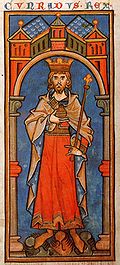
The Second Crusade was the second major crusade launched from Europe, called in 1145 in response to the fall of the County of Edessa the previous year. Edessa was the first of the Crusader states to have been founded during the First Crusade, and was the first to fall. The Second Crusade was announced by Pope Eugenius III, and was the first of the crusades to be led by European kings, namely Louis VII of France and Conrad III of Germany. The armies of the two kings marched separately across Europe and were separately defeated by the Seljuk Turks. Louis and Conrad and the remnants of their armies reached Jerusalem and in 1148 participated in an ill-advised attack on Damascus. The crusade in the east was a failure for the crusaders and a great victory for the Muslims. It would ultimately lead to the fall of Jerusalem and the Third Crusade at the end of the 12th century. The only success came on the opposite end of the Mediterranean, where English crusaders, on the way by ship to the Holy Land, fortuitously stopped and helped capture Lisbon in 1147.

Selected picture

πŸ‘ Tanzanians protesting the 2008-2009 Gaza bombardment
Tanzanians protesting the 2008-2009 Gaza bombardment
Credit: Muhammad Mahdi Karim

Tanzanians protesting the 2008-2009 Gaza bombardment.

Did you know...

Selected quote

Our basic aim is to liberate the land from the Mediterranean Seas to the Jordan River. We are not concerned with what took place in June 1967 or in eliminating the consequences of the June war. The Palestinian revolution's basic concern is the uprooting of the Zionist entity from our land and liberating it.
β€” Yasser Arafat

WikiProjects

πŸ‘ Image
You are invited to participate in WikiProject Palestine, a WikiProject dedicated to developing and improving articles about Palestine.
Parent projects
Asia β€’ Countering systemic bias β€’ Western Asia β€’ Arab World β€’ Countries β€’
Main project
WikiProject Palestine
Sub-projects
Middle Eastern military history
Related projects
Geography β€’ Egypt β€’ Iraq β€’ Israel β€’ Jordan β€’ Lebanon β€’ Islam β€’ Syria


What are WikiProjects?

Selected biography

Arafat in 1996

Yasser Arafat (c. August 1929 – 11 November 2004), also popularly known by his kunya Abu Ammar, was a Palestinian political leader. He was chairman of the Palestine Liberation Organization (PLO) from 1969 to 2004, President of Palestine from 1989 to 2004 and President of the Palestinian Authority (PNA) from 1994 to 2004. Ideologically an Arab nationalist and a socialist, Arafat was a founding member of the Fatah political party, which he led from 1959 until 2004.

Arafat was born to Palestinian parents in Cairo, Egypt, where he spent most of his youth. He studied at the University of King Fuad I. While a student, he embraced Arab nationalist and anti-Zionist ideas. Opposed to the 1948 creation of the State of Israel, he fought alongside the Muslim Brotherhood during the 1948 Arab–Israeli War. Following the defeat of Arab forces, Arafat returned to Cairo and served as president of the General Union of Palestinian Students from 1952 to 1956. (Full article...)

Categories

To display all subcategories click on the "β–Ί":


Category Palestinian territories not found

Featured content

πŸ‘ Image
This is a list of recognized content, updated weekly by JL-Bot (talk Β· contribs) (typically on Saturdays). There is no need to edit the list yourself. If an article is missing from the list, make sure it is tagged (e.g. {{WikiProject Palestine}}) or categorized correctly and wait for the next update. See WP:RECOG for configuration options.

Featured articles

Featured lists

Good articles

Did you know? articles

Featured pictures

In the News articles

Main page featured articles

Main page featured lists

Picture of the day pictures


Topics

Demographics: Definitions Β· State of Palestine Β· History Β· Name Β· People Β· Diaspora  Β· Refugee camps Β· Arab citizens of Israel

Politics: Arab Higher Committee Β· All-Palestine Gov-t Β· PLO Β· PFLP Β· Depopulated villages

Today: Fatah Β· Hamas Β· Islamic Jihad Β· Political parties Β· PNA Β· Hamas gov-t Β· Governorates Β· Governorates Β· Cities Β· Arab localities in Israel Β· PNC Β· PLC Β·

General: Flag Β· Law

Palestine: West Bank Β· Gaza Strip Β· E. Jerusalem

Religion: Islam Β· Christianity Β· Judaism Β· Dome of the Rock Β· Al-Aqsa Mosque Β· Great Mosque of Gaza Β· Cave of the Patriarchs Β· Church of the Holy Sepulchre Β· Basilica of the Annunciation Β· Church of the Nativity Β· Joseph's Tomb Β· Rachel's Tomb Β· Lot's Tomb Β· Nabi Samwil

Culture: Art Β· Traditional costumes Β· Cinema Β· Cuisine Β· Dance Β· Handicrafts Β· Language Β· Literature Β· Music

Related portals

Associated Wikimedia

The following Wikimedia Foundation sister projects provide more on this subject:

Discover Wikipedia using portals