

|
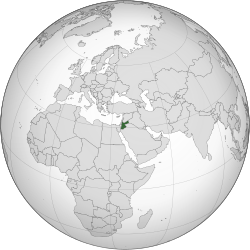
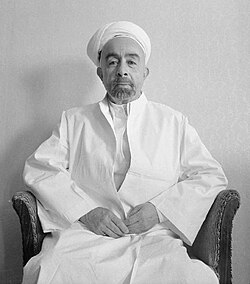
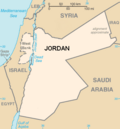
Jordan, officially the Hashemite Kingdom of Jordan, is a country in the Southern Levant region of West Asia. Jordan is bordered by Syria to the north, Iraq to the east, Saudi Arabia to the south, and both Israel and Palestine (West Bank) to the west. The Jordan River, flowing into the Dead Sea, is located along the country's western border within the Jordan Rift Valley. Jordan has a small coastline along the Red Sea in its southwest, separated by the Gulf of Aqaba from Egypt. Amman is the country's capital and largest city, as well as the most populous city in the Levant. Inhabited by humans since the Paleolithic period, three kingdoms developed in Transjordan during the Iron Age: Ammon, Moab and Edom. In the third century BC, the Arab Nabataeans established their kingdom centered in Petra. The Greco-Roman period saw the establishment of several cities in Transjordan that comprised the Decapolis. After the end of Byzantine rule, the region became part of the Islamic caliphates of the Rashidun, Umayyad, Abbasid, and the Ottoman. Following the 1916 Great Arab Revolt during World War I, former Ottoman Syria was partitioned, leading to the establishment of the Emirate of Transjordan in 1921, which became a British protectorate. In 1946, Jordan gained independence and became officially known as the Hashemite Kingdom of Jordan. Jordan captured and annexed the West Bank during the 1948 Palestine war until it was occupied by Israel in 1967. Jordan renounced its claim to the territory to the Palestinians in 1988 and signed a peace treaty with Israel in 1994. Jordan is a semi-arid country, covering an area of 89,342 km2 (34,495 sq mi) with a population of 11.5 million, making it the eleventh-most populous Arab country. The dominant majority, or around 95% of the country's population, is Sunni Muslim, with the rest being mostly Arab Christian. Jordan was mostly unscathed by the violence that swept the region following the Arab Spring in 2010. From as early as 1948, Jordan has accepted refugees from multiple neighbouring countries in conflict. An estimated 2.1 million Palestinian refugees, most of whom hold Jordanian citizenship, as well as 1.4 million Syrian refugees, were residing in Jordan in 2015. The kingdom is also a refuge for thousands of Christian Iraqis fleeing persecution. While Jordan continues to accept refugees, the large Syrian influx during the 2010s has placed substantial strain on national resources and infrastructure. The sovereign state is a constitutional monarchy, but the king holds wide executive and legislative powers. Jordan is a founding member of the Arab League and the Organisation of Islamic Cooperation. Jordan has a high Human Development Index, ranking 100th, and is considered a lower middle income economy. The Jordanian economy, one of the smallest economies in the region, is attractive to foreign investors based upon a skilled workforce. Jordan is a major tourist destination, also attracting medical tourism with its well-developed health sector. Nonetheless, a lack of natural resources, large flow of refugees, and regional turmoil have hampered economic growth. (Full article...) Selected article - show anotherWater supply and sanitation in Jordan is characterized by severe water scarcity, which has been exacerbated by forced immigration as a result of the 1948 Arab–Israeli War, the Six-Day War in 1967, the Gulf War of 1990, the Iraq War of 2003 and the Syrian Civil War since 2011. Jordan is considered one of the ten most water scarce countries in the world. High population growth, the depletion of groundwater reserves and the impacts of climate change are likely to aggravate the situation in the future. The country's major surface water resources, the Jordan River and the Yarmouk River, are shared with Israel and Syria who leave only a small amount for Jordan. The Disi Water Conveyance Project from the non-renewable Disi aquifer to the capital Amman, opened in July 2013, increases available resources by about 12%. It is planned to bridge the remaining gap between demand and supply through increased use of reclaimed water and desalinated sea water to be provided through the Red Sea-Dead Sea canal. (Full article...) Selected biography - show anotherAbdullah I (Abdullah bin Hussein; 2 February 1882 – 20 July 1951) was the ruler of Jordan from 11 April 1921 until his assassination in 1951. He was the Emir of Transjordan, a British protectorate, until 25 May 1946, after which he was king of an independent Jordan. As a member of the Hashemite dynasty, the royal family of Jordan since 1921, Abdullah was a 38th-generation direct descendant of Muhammad. Born in Mecca, Hejaz, Ottoman Empire, Abdullah was the second of four sons of Hussein bin Ali, Sharif of Mecca, and his first wife, Abdiyya bint Abdullah. He was educated in Istanbul and Hejaz. From 1909 to 1914, Abdullah sat in the Ottoman legislature, as deputy for Mecca, but allied with Britain during the First World War. During the war, he played a key role in secret negotiations with the United Kingdom that led to the Arab Revolt against Ottoman rule that was led by his father Sharif Hussein. Abdullah personally led guerrilla raids on garrisons. (Full article...) WikiProjectFor editor resources and to collaborate with other editors on improving Wikipedia's Jordan-related articles, see WikiProject Jordan. General images - load new batchThe following are images from various Jordan-related articles on Wikipedia.
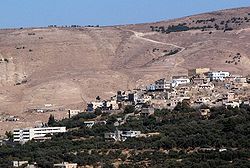
Selected city - show anotherTafilah (Arabic: الطفيلة, romanized: 'aṭ-Ṭafīlah, [atˤ.tˤa.fiː.la]), also spelled Tafila, is a city with a population of 27,559 people in southwestern Jordan, located 183 kilometers (114 mi) southwest of Amman. It is the capital of Tafilah Governorate. It is well known for having green gardens which contain olive and fig trees, and grape-vines. Tafilah was first built by the Edomites and was called Tophel. There are more than 360 natural springs in the Tafilah nahia, including the natural reservoir of Dana and hot natural springs at Afra and Burbeita. There are two phosphate and limestones mines in the Tafilah nahia, which are one of the country's main income sources. (Full article...)
See also: List of cities in Jordan
Related portalsReligions in Jordan Arab states Other countries Recognized content
Featured articlesFeatured listsGood articles
TopicsSelected topic overview - show another
CategoriesSelected picture - show anotherCredit: U.S. Department of State An aerial view of part of the Zaatari refugee camp, which houses Syrian refugees, in July 2013. Associated WikimediaThe following Wikimedia Foundation sister projects provide more on this subject:
SourcesDiscover Wikipedia using portals |
 |
VOOZH | about |
.svg)



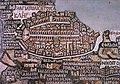



_(cropped).jpg)
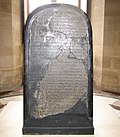

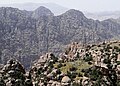




_-_Sheik_of_Adwan_outside_his_tent_at_Shunet_Nimrin_LOC_matpc.19018_(cropped).jpg)












.svg)


