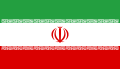
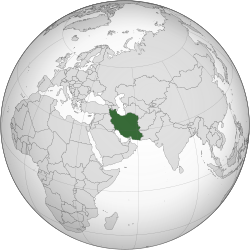
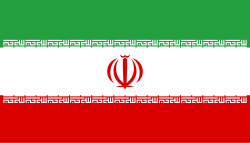
Iran has one of the oldest histories in the world, extending more than 5000 years, and throughout history, Iran has been of geostrategic importance because of its central location in Eurasia and Western Asia. Iran is a founding member of the UN, NAM, OIC, OPEC, and ECO. Iran as a major regional power occupies an important position in the world economy due to its substantial reserves of petroleum and natural gas, and has considerable regional influence in Western Asia. The name Iran is a cognate of Aryan and literally means "Land of the Aryans." (Full article...)
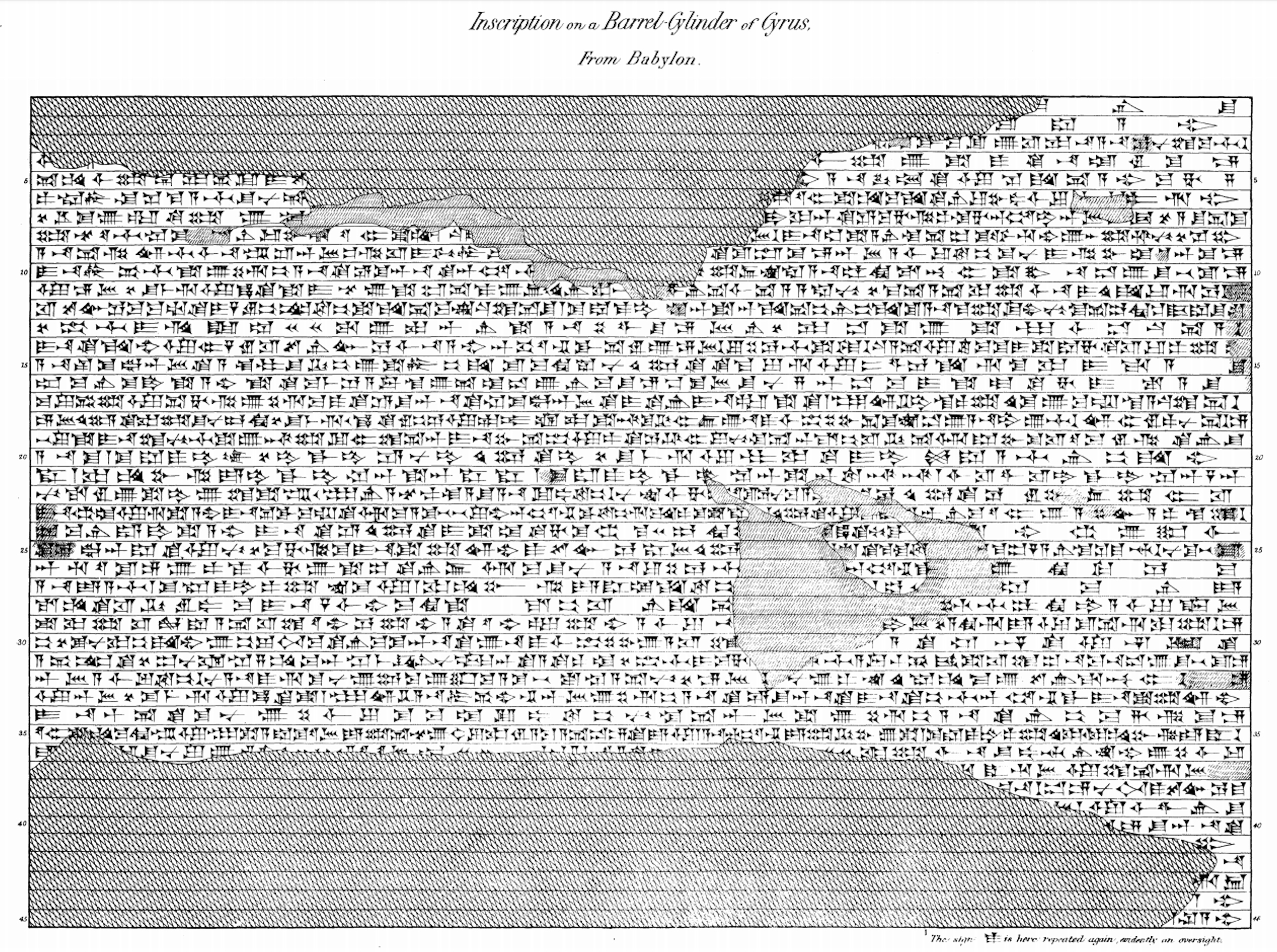
The text on the Cylinder praises Cyrus, sets out his genealogy and portrays him as a king from a line of kings. The Babylonian king Nabonidus, who was defeated and deposed by Cyrus, is denounced as an impious oppressor of the people of Babylonia and his low-born origins are implicitly contrasted to Cyrus' kingly heritage. The victorious Cyrus is portrayed as having been chosen by the chief Babylonian god Marduk to restore peace and order to the Babylonians. The text states that Cyrus was welcomed by the people of Babylon as their new ruler and entered the city in peace. It appeals to Marduk to protect and help Cyrus and his son Cambyses. It extols Cyrus as a benefactor of the citizens of Babylonia who improved their lives, repatriated displaced people and restored temples and cult sanctuaries across Mesopotamia and elsewhere in the region. It concludes with a description of how Cyrus repaired the city wall of Babylon and found a similar inscription placed there by an earlier king. (Full article...)
Musa (also spelled Mousa), also known as Thea Musa, was a ruling queen of the Parthian Empire from 2 BC to 4 AD. Originally an Italian slave-girl, she was given as a gift to the Parthian monarch Phraates IV (r. 37 BC – 2 BC) by the Roman Emperor Augustus (r. 27 BC – 14 AD). She quickly became queen and a favourite of Phraates IV, giving birth to Phraataces (Phraates V). In 2 BC, she had Phraates IV poisoned and made herself, along with Phraates V, the co-rulers of the empire. Their reign was short-lived; they were forced to flee to Rome after being deposed by the Parthian nobility, who crowned Orodes III as king.
Musa is the first of only three women to rule as monarchs in Iranian history, the others being the two 7th-century Sasanian sisters Boran (r. 630–630, 631–632) and Azarmidokht (r. 630–631). Other female rulers, Rinnu, Ifra Hormizd and Denag, ruled only as regents of their sons and not as full monarchs in their own name. (Full article...)
Though this threat was dealt with relatively quickly, the instability caused by the brief civil war may have made it possible for another official or general, Nabopolassar (r. c. 626 – 605 BC), to rise up and seize power in Babylonia. (Full article...)
At the preceding Battle of Salamis, the allied Greek navy had won an unlikely but decisive victory, preventing the conquest of the Peloponnesus region. Xerxes then retreated with much of his army, leaving his general Mardonius to finish off the Greeks the following year. In the summer of 479BC, the Greeks assembled a huge army and marched out of the Peloponnesus. The Persians retreated to Boeotia and built a fortified camp near Plataea. The Greeks, however, refused to be drawn into the prime terrain for cavalry around the Persian camp, resulting in a stalemate that lasted eleven days. (Full article...)
The documents, written in Imperial Aramaic, likely originated from the historical city of Balkh and all are dated between 353 BC to 324 BC, mostly during the reign of Artaxerxes III. The most recent of the documents was written during the early part of Alexander the Great's reign in the region. These letters use in Aramaic the original Greek form Alexandros (spelled Lksndrs) instead of the Eastern variant Iskandar (spelled Lksndr). The collection also includes eighteen tally sticks recording transfers of goods during the reign of Darius III. The collection's letters, administrative records, and military documents are significant for the linguistic study of the Official Aramaic language and of daily life in the Achaemenid empire. (Full article...)
Abd al-Malik I (Persian: عبدالملک; 936 or 944/5 – November 961) was amir of the Samanid Empire from 954 to 961. He was the son and successor of Nuh I (r. 943–954). His reign was marked by internal strife, with the Turkic slave-soldiers (ghulam) increasing in power. He died after falling from his horse during a game of polo at Bukhara. He was succeeded by his brother Mansur I, who was put on the throne by a faction of ghulams led by the Turkic slave-commander, Fa'iq Khassa. (Full article...)
Pacorus I (also spelled Pakoros I; Parthian: 𐭐𐭊𐭅𐭓; died 38 BC) was a Parthian prince, who was the son and heir of Orodes II (r. 57–37 BC). The numismatist David Sellwood deduced that Pacorus ruled in c. 39 BC. It is uncertain whether Pacorus ruled alongside his father, or ruled independently. His wife was an unnamed Armenian princess, who was a sister of the Artaxiad king of Armenia, Artavasdes II (r. 55–34 BC).
Following the Parthian victory against the Romans at the Battle of Carrhae in 53 BC, the Parthians attempted to capture Roman-held territories in Western Asia, with Pacorus acting as one of the leading commanders. Although they were initially successful, they were repelled by the Romans. Pacorus himself was defeated and killed at the Battle of Mount Gindarus by the forces of the Publius Ventidius Bassus. His death spurred a succession crisis in which Orodes II, deeply afflicted by the death of his favourite son, relinquished the throne to his other son Phraates IV (r. 37–2 BC) as his new heir. (Full article...)
Orodes II's portrait on the obverse of a tetradrachm, showing him wearing a beard and a diadem on his head, Mithradatkert mint
Orodes II (also spelled Urud II; Parthian: 𐭅𐭓𐭅𐭃Wērōd), was King of Kings of the Parthian Empire from 57 BC to 37 BC. He was a son of Phraates III, whom he murdered in 57 BC, assisted by his elder brother Mithridates IV. The two brothers quickly fell out and entered into a dynastic struggle, in which Orodes was triumphant.
Meanwhile, the Roman general and triumvirMarcus Licinius Crassus had made an attempt to expand his share of Roman territory by eastward conquest. This attempt proved disastrous, with Crassus meeting his end in 53 BC, at the Battle of Carrhae, by Orodes' general Surena. Orodes himself had invaded Armenia and forced king Artavasdes II (r. 55–34 BC) to submit and abandon his alliance with the Romans. The victory at Carrhae secured for the Parthians the lands east of the Euphrates. Then, the next year they invaded Syria, but with little success. Surena, whose achievements had made him too dangerous, was killed by Orodes, and Pacorus I, the son and heir of the king was defeated by Cassius in 51 BC. (Full article...)
The largely uneventful reign of Yazdegerd I is seen in Sasanian history as a period of renewal, although he was periodically known as "the Sinner" in native sources, Yazdegerd was more competent than his immediate predecessors. He enjoyed cordial relations with the Eastern Roman Empire and was entrusted by Arcadius with the guardianship of his son Theodosius. Yazdegerd I is known for his friendly relations with the Jews as well as the Christians of the Church of the East, which he acknowledged in 410. As a result, he was compared by the Jews and Christians to Cyrus the Great, the Achaemenid emperor who liberated the Jews from captivity in Babylon. (Full article...)
Before his accession to the throne, Bahram served as governor of the southeastern province of Kirman. There he bore the title of Kirmanshah (meaning "king of Kirman"), which would serve as the name city he later founded in western Iran. (Full article...)
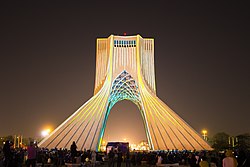
The Azadi Tower (Persian: برج آزادی, Borj-e Āzādi; translated: Freedom Tower), previously known as the Shahyād Āryāmehr (Persian: شهیاد آریامهر; English: King Memorial Tower), is the symbol of Tehran, the capital of Iran, and marks the entrance to the city.
...that during the Shiraz blood libel, the first to start the pogrom of the Jewish quarter were the soldiers sent to protect the Jews against mob violence?
...that a shrine in Shiraz over the tomb(pictured) of the famed Persian poetHafez was pulled down in 1899 by protesters, because it was being built by a Zoroastrian?
The regions which make up Greater Iran are defined by having long been under the rule of various Iranian empires and dynasties, during which the local populace gradually absorbed Iranian influence and assimilated it into their cultural and linguistic traditions; or those where a considerable Iranian population settled and retained their culture, such as in the areas surrounding the Iranian plateau. It is referred to as the "Iranian Cultural Continent" by Encyclopædia Iranica. (Full article...)
The Persians are descended from ancient Iranian peoples who migrated to Persis (also called "Persia proper" and corresponding with Iran's Fars Province) by the 9th century BC. Alongside the various ethnicities and cultures that they were contemporaries with, they established and ruled some of the world's most powerful empires, which are widely recognized for their massive cultural, political, and social influence in the ancient Near East and beyond. Persians have contributed greatly to art and science, and Persian literature is one of the world's most prominent literary traditions both inside and outside of Iran. The regional prestige of their civilization was the basis for the development of many noteworthy Persianate societies, especially among the Turkic peoples, throughout Central Asia and South Asia. (Full article...)
The memoir was recorded through thousands of hours of conversation between Zahra Hosseini and Azam Hosseini, while parts of the book are autobiography by the narrator. The title, Da, means "mother" in Kurdish and Luri, and was meant to memorialize the role of Iranian mothers during the Iran–Iraq War. (Full article...)
Tiridates I (Parthian: 𐭕𐭉𐭓𐭉𐭃𐭕, Tīridāt; Ancient Greek: Τιριδάτης, Tiridátes) was King of Armenia beginning in 53 AD and the founder of the Arsacid dynasty of Armenia. The dates of his birth and death are unknown. His early reign was marked by a brief interruption towards the end of the year 54 and a much longer one from 58 to 63. In an agreement to resolve the Roman–Parthian conflict in and over Armenia, Tiridates I, who was one of the brothers of Vologases I of Parthia, was crowned king of Armenia by the Roman emperor Nero in 66; in the future, the king of Armenia was to be a Parthian prince, but his appointment required approval from the Romans. Even though this made Armenia a client kingdom, various contemporary Roman sources thought that Nero had de facto ceded Armenia to the Parthian Empire.
In addition to being king, Tiridates I was also a Zoroastrian priest and was accompanied by other magi on his journey to Rome in 66. In the early 20th century, Franz Cumont speculated that Tiridates was instrumental in the development of Mithraism which ultimately became the main religion of the Roman Army and spread across the whole empire. Furthermore, during his reign, he started reforming the administrative structure of Armenia, a reform which was continued by his successors, and which brought many Iranian customs and offices into it. (Full article...)
👁 Image Israel (orange) was an important clandestine weapons supplier to Iran (green) during the Iran–Iraq War. Israel supported Iran during the Iran–Iraq War. Israel was one of the main suppliers of military equipment to Iran during the war. Israel also provided military instructors during the war, and in turn received Iranian intelligence that helped it carry out Operation Opera against Iraq's Osirak nuclear reactor. The nuclear reactor was a central component of Iraq's nuclear weapons program.
Israel supported Iran during the war so that Iran could provide a counterweight to Iraq; to re-establish influence in Iran which Israel lost with the overthrow of the shah in 1979, and to create business for the Israeli weapons industry. The Israeli arms sales to Iran also facilitated the unhindered immigration of the Persian Jewish community from Iran to Israel and the United States. Israel's support for Iran during the war was done clandestinely, and Iran publicly denied any cooperation between the two countries. (Full article...)
Territory under the uprisings control (dashed red line)
The Uprising of Sheikh Ubeydullah was a Kurdish uprising against the Ottoman Empire in 1879 and Qajar Iran between 1880 and 1881. Both uprisings were led by Sheikh Ubeydullah, the leader of the ShamdinanNaqshbandi family who claimed descendance from the Islamic prophet Muhammad through his daughter Fatima. Thus the family had a considerable influence, disposed over large amounts of donations, owned several villages in the region and many Kurdish tribal leaders were devout followers of him. The initial cause for the uprisings were the outcome of the Russo-Turkish war in 1877–1878 and the Treaty of Berlin which provided the Christian Armenians and the Nestorian Assyrians with considerable rights and autonomy, to which he did not agree to. (Full article...)
Oy is the third studio album by the Iranian singer-songwriter Mohsen Namjoo after Toranj and Jabr-e Joghrafiyaei. Released on 6 October 2009 this was Namjoo's first album produced and published outside Iran.
Foreign investors have concentrated their activity in a few sectors of the economy: the oil and gas industries, vehicle manufacture, coppermining, petrochemicals, foods, and pharmaceuticals. Iran absorbed US$24.3 billion of foreign investment from 1993 to 2007 and US$34.6 billion for 485 projects from 1992 to 2009. (Full article...)
Somayeh Mohammadi (Persian: سمیه محمدی), born (8 September 1980), is an Iranian woman and a member of the Mujahedin-e Khalq (MEK). She has received media coverage concerning controversy about her membership in the MEK.
According to her father, Mostafa Mohammedi, a former MEK member, Somayeh is being held hostage by MEK, but she publicly denies these claims and has filed a lawsuit against him. Somayeh claims that her father is an undercover agent of Iran. According to Somayeh, she joined the MEK voluntarily in 1998 "seeking freedom and democracy for Iran." (Full article...)
... that the film Critical Zone was shot in secret by Ali Ahmadzadeh without permission from Iranian authorities?
... that after Jamal Valizadeh was tortured in Iran, hid for six months, and escaped, he qualified to compete in the Olympics as a member of the Refugee Olympic Team?
April 24–April 25, 1980 – Operation Eagle Claw, a commando mission in Iran to rescue American embassy hostages, is aborted after mechanical problems ground the rescue helicopters. Eight United States troops are killed in a mid-air collision during the failed operation.
This is a list of recognized content, updated weekly by JL-Bot (talk·contribs) (typically on Saturdays). There is no need to edit the list yourself. If an article is missing from the list, make sure it is tagged (e.g. {{WikiProject Iran}}) or categorized correctly and wait for the next update. See WP:RECOG for configuration options.


.svg)



.svg)


.jpg)


_mint.jpg)


,_Herat_mint.jpg)




_(14754519586).jpg)


.png)


.jpg)


.jpg)
.jpg)
_10_Toman.jpg)


.jpg)


.svg)