|
VOOZH | about |
|
VOOZH | about |
The Circuit Breaker pattern is the design pattern used in modern software development to prevent the service from repeatedly trying to execute the operation that is likely to fail cases of the application. It can be particularly useful in microservices architecture where the services often depend on each other and failures can propagate through the system. The Circuit Breaker Pattern can help improve the resiliency and fault tolerance of the application by providing a way to handle and recover from failures gracefully.
The main concept behind the Circuit Breaker pattern is to wrap the potentially failing operation in the circuit breaker object. This object can monitor the number of failures that occur when the operation is called. If the number of failures exceeds a certain threshold then the circuit breaker trips and opens, preventing further calls to the operation. Instead, the circuit breaker trips and opens, preventing further calls to the exception depending on the configuration. After the specified amount of time, the circuit breaker will enter the half-open state. It can allow a single call to the operation to determine if it has recovered. If calls succeed then the circuit breaker closes and normal operation resumes. If the call fails then the circuit breakers reopen and the process repeats the application.
Below are the implementation steps of Circuit Breaker Pattern in Spring WebFlux.
We will create the Spring reactive project using spring Initializr and on creating the project, add the following dependencies into the project.
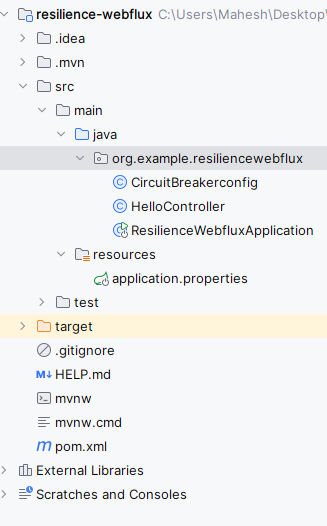
Once create the Spring Reactive project then the file structure will look like the below image:
Open the application.properties file and add the configuration of the circuit breakers of the project.
spring.application.name=resilience-webflux
resilience4j.circuitbreaker.instances.default.registerHealthIndicator=true
management.endpoints.web.exposure.include=circuitbreakersWe will now create the CircuitBreakerConfig class to configure the Circuit Breaker of the spring reactive application.
Go to src > main > java > org.example.resiliencewebflux > CircuitBreakerConfig and put the below code.
Now, we will create the HelloController class to define the REST endpoint that uses the Circuit Breaker of the application.
Go to src > main > java > org.example.resiliencewebflux > HelloController and put the below code.
No changes are required into the main class.
pom.xml:
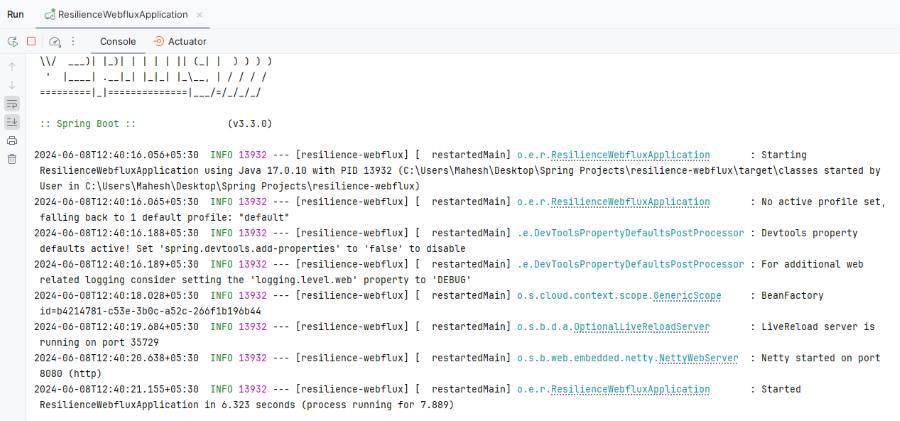
We will run the application and it will start at port 8080.
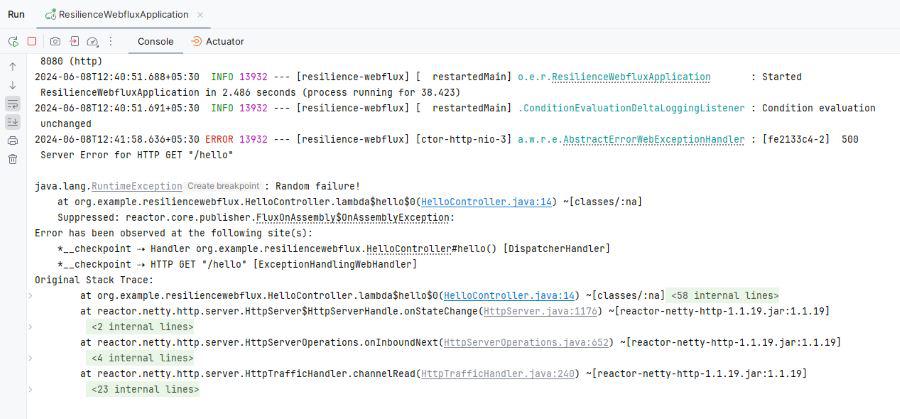
GET http://localhost:8080/helloIf Request fails then it will show the error logs into the Spring debug logs of the application. In that case, Circuit Breaker can handle the situation of the Spring reactive application.
This example demonstrates the circuit breakers pattern in Spring WebFlux of the Spring Reactive project.