|
VOOZH | about |
|
VOOZH | about |
Reactive Programming is a paradigm that deals with asynchronous data streams, enabling applications to be more responsive, resilient, and efficient. In the context of Spring Boot, Reactive Programming allows you to build scalable and non-blocking web applications. This article will walk you through the basics of Reactive Programming in Spring Boot, including prerequisites, concepts, and a step-by-step implementation with code examples.
Reactive Programming focuses on non-blocking, event-driven applications that handle operations as data becomes available, making it ideal for applications requiring high performance and scalability.
Spring Boot provides extensive support for Reactive Programming through the Spring WebFlux module, which is part of the Spring Framework and enables the creation of reactive web applications using the Project Reactor framework.
Reactive Programming focuses on handling asynchronous data streams and propagating changes efficiently. It enables developers to write code that efficiently handles large volumes of data by processing data as it arrives rather than waiting for all the data to be available before starting the computation.
Spring WebFlux is part of the Spring Framework and provides support for Reactive Programming using the Project Reactor library. The two main abstractions in Project Reactor are Mono and Flux.
Mono represents a single asynchronous value or an empty value. It acts as a container that either holds a single value or completes without a value.
Example: Fetching a single record from the database or handling a single HTTP request.
Mono<String> mono = Mono.just("Hello, Reactive World!");
mono.subscribe(System.out::println); // Outputs: Hello, Reactive World!
This Mono contains a single string value and prints it when subscribed to.
Flux represents a sequence of 0 to N asynchronous values. Example: Streaming a list of database records or handling multiple HTTP requests reactively.
Flux<String> flux = Flux.just("Hello", "Reactive", "World");
flux.subscribe(System.out::println);
// Outputs:
// Hello
// Reactive
// World
This Flux emits three string values and prints each value when subscribed to.
In a Spring Boot application, Reactive Programming allows for the creation of highly responsive and scalable applications by leveraging the non-blocking and asynchronous nature of reactive streams.
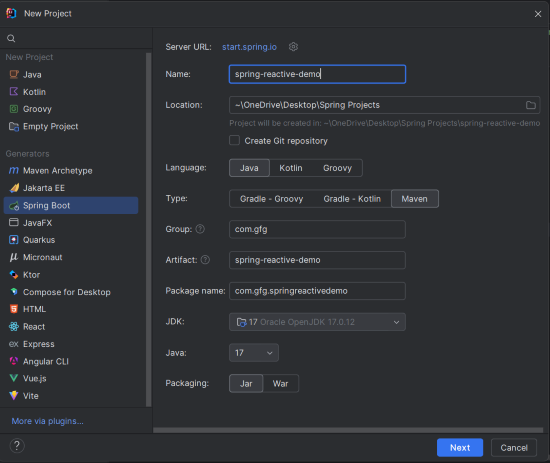
Mono or Flux objects, enabling you to chain reactive operations together.ResponseEntity, they return Mono or Flux objects, allowing the response to be sent as soon as the data is ready.Create a new Spring Boot project using IntelliJ IDEA. Choose the following options:
Click on the Next button.
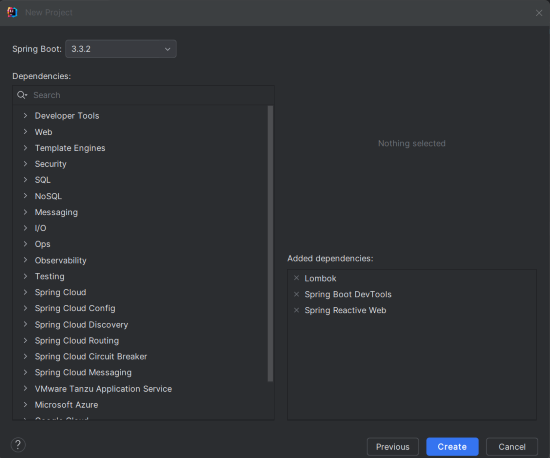
Add the following dependencies into the Spring Boot project.
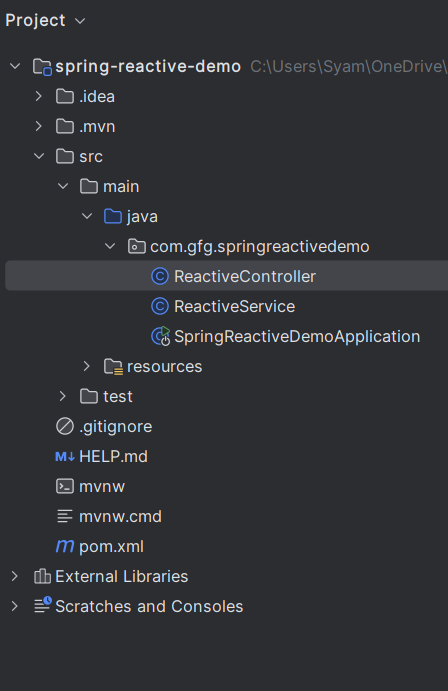
Once the project is created, the file structure will look like this:
The structure includes directories for source code, resources, and configurations, providing a clean and organized layout.
Create a service class to provide reactive data:
The getMessages() method returns a Flux stream of strings with a simulated delay between each message.
Create a controller to handle HTTP requests reactively:
The ReactiveController uses ReactiveService to handle GET requests at the /messages endpoint and returns the Flux stream to the client.
No changes are required in the main class.
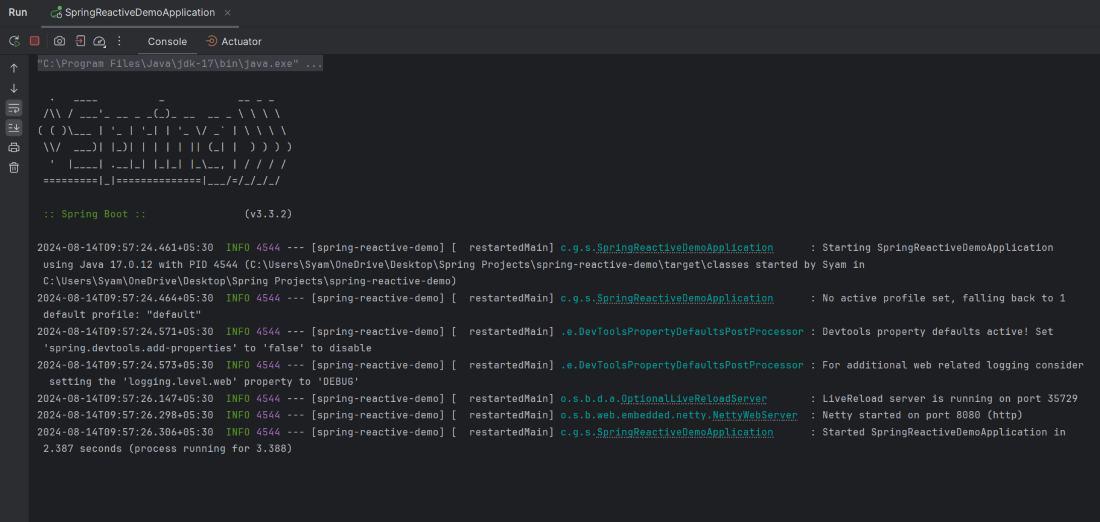
Once completed, the project will start and run on port 8080.
Send a GET request to http://localhost:8080/messages.
GET http://localhost:8080/messagesWe should see each message printed with a delay of three seconds. Below is the complete output video: