|
VOOZH | about |
|
VOOZH | about |
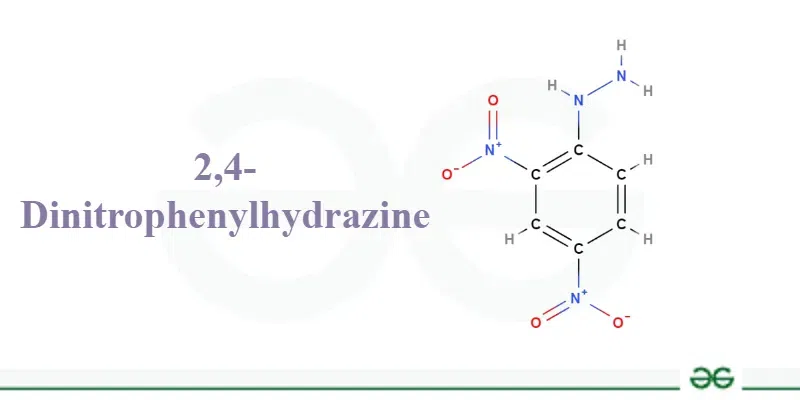
2,4-Dinitrophenylhydrazine is a chemical compound having the molecular formula C6H3(NO2)2NHNH2. It is also called Brady's Reagent. Another most popular name of 2,4-Dinitrophenylhydrazine is DNPH, which is most popular in the market. DNPH is a red and orange colored solid and is most commonly used as a reduction in shock, friction or explosion.
In this article on 2,4-Dinitrophenylhydrazine, we will learn about what is 2,4-Dinitrophenylhydrazine, the synthesis of DNPH, physical and chemical properties of DNPH and many more things in detail.
2,4-Dinitrophenylhydrazine (DNPH) is a organic chemical compound widely used as a reagent in organic chemistry to detect and identify carbonyl molecules, particularly aldehydes and ketones. It has the molecular formula C6H3NHNHCONHNH2. It appears as yellow to orange crystalline solid sparingly soluble in water but soluble in organic solvents such as ethanol, acetone, and ether.
2,4-Dinitrophenylhydrazine (2,4-DNPH) structure consists of a phenyl ring with two nitro groups attached at the ortho and meta positions with a hydrazine group attached to one of the carbon atoms in the phenyl group.
This reagent is useful in organic chemistry as it imparts a characteristic orange-to-red color and reacts with carbonyl compounds, allowing for qualitative identification of carbonyl functional groups.
The properties of 2,4-Dinitrophenylhydrazine are mentioned below:
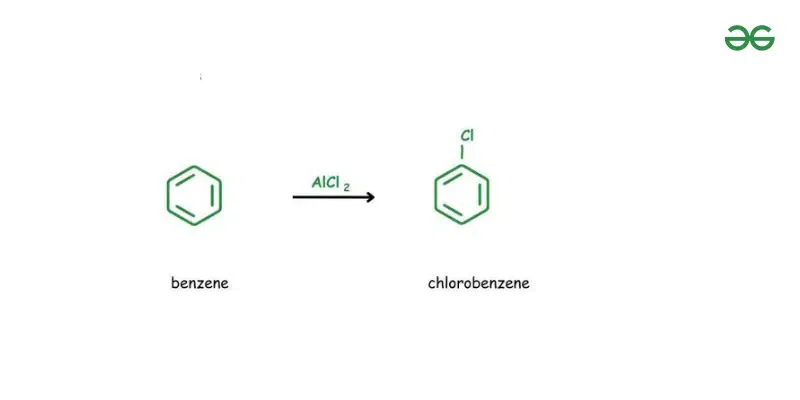
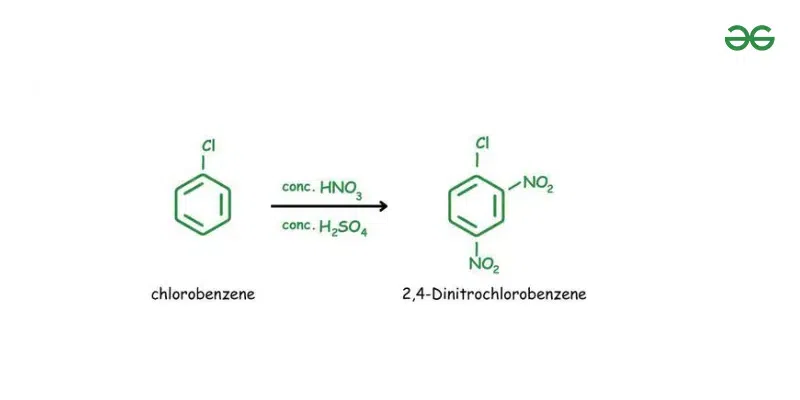
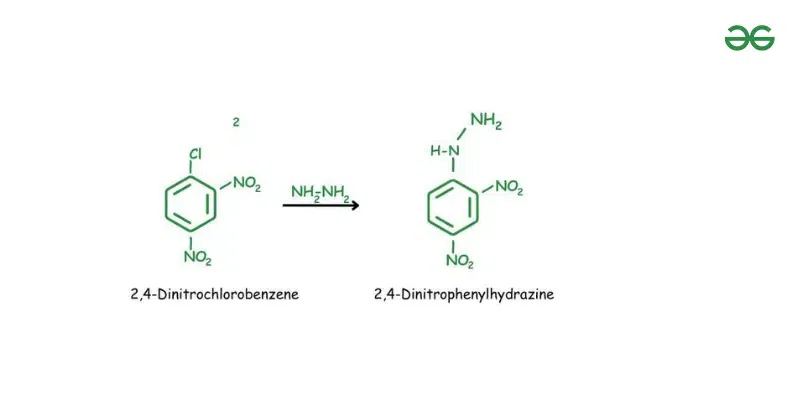
2,4-Dinitrophenylhydrazine is prepared by using chlorobenzene, due to Chlorobenzene is ortho and para directing groups.
Firstly, Benzene is converted into Chlorobenzene by the reaction of AlCl2.
After, Chlorobenzene is synthesized by using conc.HNO3 and conc.H2SO4, it gives 2,4-Dinitrochlorobenzene.
Then, 2,4-Dinitrochlorobenzene will be converted into with 2,4-Dinitrophenylhydrazine when reacts with hydrazine ( NH2-NH2).
The aqueous solution of the DNP is known as Brady's reagent. Brady's reagent used primarily for the detection of aldehydes and ketones (Carbonyl compounds). It reacts with carbonyl compounds (aldehydes & ketone) to produce a coloured precipitate which confirms the carbonyl compounds.
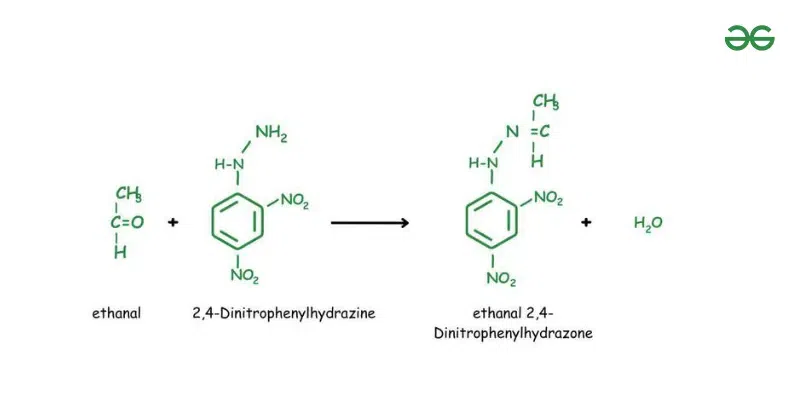
When an aldehyde or ketone reacts with Brady's reagent, it produces a 2,4-dinitrophenylhydrazone derivative, which is a yellow to orange precipitate.
Brady's reagent is produced by dissolving 2,4-dinitrophenylhydrazine in a suitable solvent, typically a mixture of sulfuric acid and ethanol. The reagent solution must be freshly prepared before use to ensure accurate results.
The 2,4-dinitrophenylhydrazine (2,4-DNP) test is commonly used in organic chemistry labs to detect the presence of carbonyl groups (aldehydes and ketones) i.e., (C=O) functional group in organic compounds. Basically, the aqueous solution of the 2,4-Dinitrophenylhydrazine is used for the Identification of the carbonyl compounds.
Brady's reagent will be used for Identification of a Carbonyl Compounds. The carbonyl compound is simply mixed with an acid solution of Brady’s reagent in methanol.
DNPH reacts with the carbonyl group (C=O) of aldehydes and ketones to form a 2,4-dinitrophenylhydrazone derivative. This reaction is a classic method for identifying the presence of carbonyl compounds.
2,4-Dinitrophenylhydrazine (2,4-DNP) interacts with aldehydes and ketones to produce compounds called 2,4-dinitrophenylhydrazones.
It's interesting to learn that 2,4-Dinitrophenylhydrazine (2,4-DNP) has a significant role in organic chemistry, especially in identifying carbonyl compounds like aldehydes and ketones. However, it's important to handle it with care as it is a potentially hazardous material, being both flammable and explosive. Proper storage and handling precautions should be taken to ensure safety.
Also, Check