|
VOOZH | about |
|
VOOZH | about |
When creating a Minimum Viable Product (MVP), database design is crucial as it shapes the foundation of the product's functionality, scalability, and performance. The database must efficiently support core features while allowing flexibility for future enhancements.
In this article, we'll look at the key principles for designing databases specifically for MVPs, emphasizing simplicity, scalability, and rapid development.
Designing a database for an MVP involves prioritizing essential features, streamlining development, and preparing for future improvements. The focus is on supporting initial user interactions, storing data, and implementing basic functionalities to showcase the product's value proposition.
Databases for MVPs typically focus on supporting fundamental features that demonstrate the product's core functionality while allowing for iterative improvements. Key features may include:
Entities in an MVP database represent core aspects of the product's functionality, while attributes describe their characteristics. Common entities and their attributes may include:
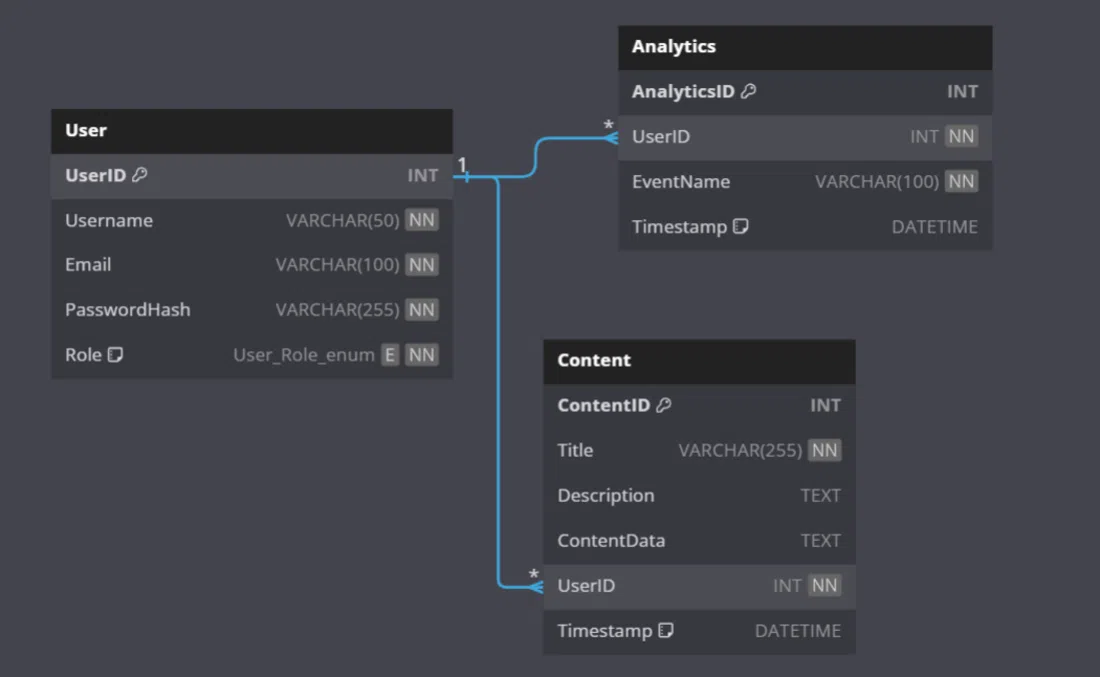
Based on the entities and their attributes provided, relationships between them can be defined to establish data flows and dependencies within the MVP database. Common relationships may include:
Here’s how the entities mentioned above can be structured in SQL format
-- Table: User
CREATE TABLE User (
 UserID INT PRIMARY KEY AUTO_INCREMENT,
 Username VARCHAR(50) NOT NULL,
 Email VARCHAR(100) NOT NULL,
 PasswordHash VARCHAR(255) NOT NULL,
 Role ENUM('admin', 'user') DEFAULT 'user' NOT NULL
);

-- Table: Content
CREATE TABLE Content (
 ContentID INT PRIMARY KEY AUTO_INCREMENT,
 Title VARCHAR(255) NOT NULL,
 Description TEXT,
 ContentData TEXT,
 UserID INT NOT NULL,
 Timestamp DATETIME DEFAULT CURRENT_TIMESTAMP,
 FOREIGN KEY (UserID) REFERENCES User(UserID)
);

-- Table: Analytics
CREATE TABLE Analytics (
 AnalyticsID INT PRIMARY KEY AUTO_INCREMENT,
 UserID INT NOT NULL,
 EventName VARCHAR(100) NOT NULL,
 Timestamp DATETIME DEFAULT CURRENT_TIMESTAMP,
 FOREIGN KEY (UserID) REFERENCES User(UserID)
);
The database model for an MVP focuses on simplicity and efficiency, emphasizing core functionalities and essential data storage. The model should support rapid development iterations and accommodate potential changes and enhancements as the MVP evolves based on user feedback.
Designing a database for an MVP requires a balance between simplicity and scalability, focusing on core functionalities and essential data storage to demonstrate the product's value proposition effectively. By following best practices in database design and iteration-driven development, MVPs can be rapidly developed, tested, and improved based on user feedback, ultimately paving the way for successful product launches and future iterations.
A well-designed database architecture tailored to the unique requirements of an MVP enables startups and entrepreneurs to validate their ideas, gather valuable user insights, and iterate towards building scalable and robust products that address real user needs.