|
VOOZH | about |
|
VOOZH | about |
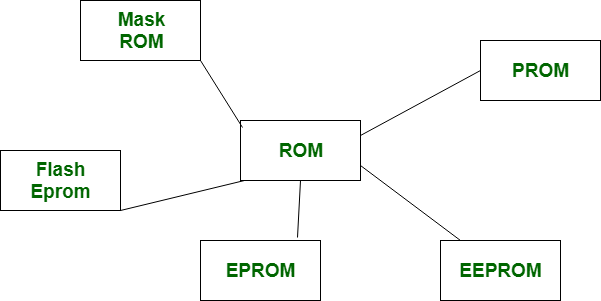
EPROM and EEPROM are types of ROM, which stands for Read-Only Memory. ROM is a kind of computer memory that you can only read from, not write to. This means once you put information in ROM, you can't change it. ROM keeps the information even when you turn off the computer. Before we compare EPROM and EEPROM, it's good to know the basics of ROM. ROM is different from other types of memory because you can't easily change what's stored in it. It's used for information that needs to stay the same, like the instructions that help start up your computer.
This article will talk about the differences between EPROM and EEPROM. We'll look at things like what their names mean, how they look, and their size. But first, let's understand what EPROM and EEPROM are.
EPROM(Erasable Programmable Read Only Memory) is also the type of ROM that can be read and written optically. To write associate EPROM, its storage cells should stay within the same initial state. EPROM provides reduced storage permanency as compared to PROM as a result of the EPROM is receptive to radiation and electrical noise. in the construction of EPROM, MOS transistors are used.
In EEPROM (Electrically Erasable Programmable Read-Only Memory) electric signal is used to erase the EEPROM’s contents. EEPROM may be a non-volatile memory that retains its content notwithstanding the ability is shifted. It stores the little quantity of information used for laptop/computer BIOS. it absolutely was a replacement for the PROM as well as EPROM.
The main difference between EPROM and EEPROM is that, the content of EPROM is erased by using UV rays. On the other hand, the content of EEPROM is erased by using electric signals.
| EPROM | EEPROM |
|---|---|
| In EPROM, UV light is used to erase the EPROM's content. | In EEPROM, electric signal is used to erase the EEPROM's contents. |
| EPROM includes a rock crystal crystal window at the top. | EEPROM area unit wholly sheathed in an opaque plastic case. |
| Relative size of cell in EPROM is one. | The relative size of cell in EEPROM is 3. |
| EPROM is modern version of PROM. | EEPROM is the modern version of EPROM. |
| EPROM is the external programming. | EEPROM is the external programming. |
| Once EPROM memory is erased then it can be reprogrammed. | EEPROM is also reprogrammed after erasing like EPROM. |
| The transistor used in EPROM consumes 12.5 volt. | The transistor used in EEPROM consumes 5 volt. |
| In EPROM, hot electron injection programming technique is used. | In EEPROM, tunnel effect is used as programming technique. |
| In EPROM, an erasure consumes 15 to 20 minute for erasing contents. | In EEPROM, an erasure consumes 5 millisecond time for erasing contents. |
| EPROM chip has got to be off from the computer circuit to erase and reprogram the computer's BIOS. | EEEPROM chip will be erased and reprogrammed within the electrical circuit to erase and reprogram the content of computer's BIOS. |
EPROM and EEPROM were made to fix problems with older types of memory called ROM and PROM. The big plus of EPROM and EEPROM is that you can erase and rewrite them. This means you can change the information stored in them. The main difference between EPROM and EEPROM is how you erase them. For EPROM, you use a special light called UV light. For EEPROM, you use electricity. This makes them more useful than ROM and PROM, which you can't change once they're set up.