The flip-flop is a circuit that maintains a state until directed by input to change the state. A basic flip-flop can be constructed using four-NAND or four-NOR gates. A flip-flop is popularly known as the basic digital memory circuit. It has its two states as logic 1(High) and logic 0 (Low) states.
A flip-flop is a sequential circuit which consists of a single binary state of information or data.
The digital circuit is a flip-flop which has two outputs and are of opposite states. It is also known as a Bistable Multivibrator.
Types of Flip-Flops
Given Below are the Types of Flip-Flop
SR Flip Flop
JK Flip Flop
D Flip Flop
T Flip Flop
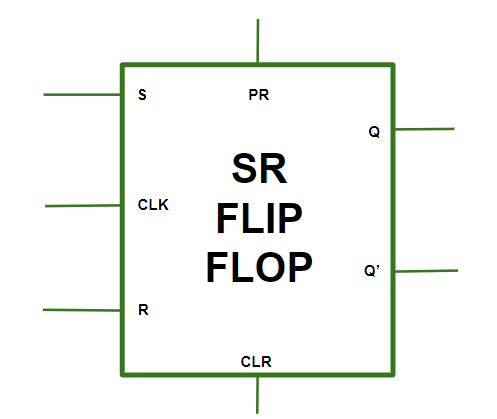
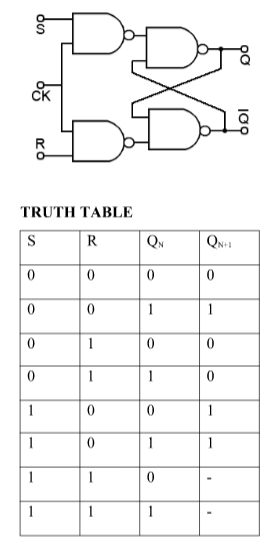
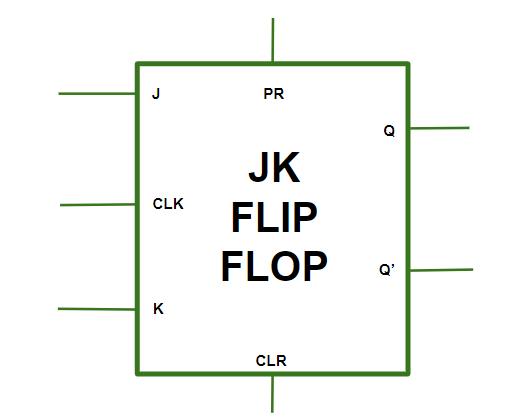
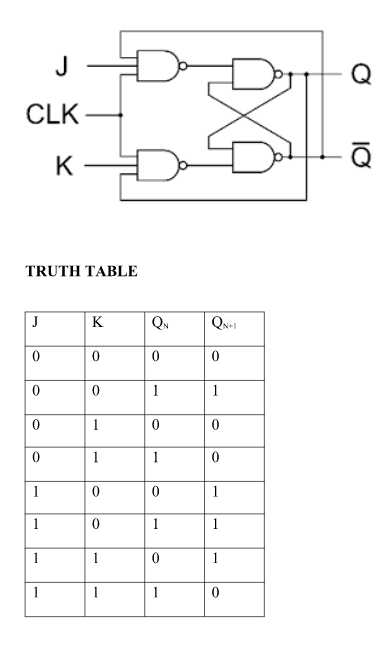
Logic diagrams and truth tables of the different types of flip-flops are as follows:
S-R Flip Flop
In the flip flop, with the help of preset and clear when the power is switched ON, the states of the circuit keeps on changing, that is it is uncertain. It may come to set(Q=1) or reset(Q’=0) state. In many applications, it is desired to initially set or reset the flip flop that is the initial state of the flip flop that needs to be assigned. This thing is accomplished by the preset(PR) and the clear(CLR).
Case 1 (PR=CLR=0 ):This condition is in its invalid state.
Case 2 (PR=0 and CLR=1):The PR is activated which means the output in the Q is set to 1. Therefore, the flip flop is in the set state.
Case 3 (PR=1 and CLR=0):The CLR is activated which means the output in the Q’ is set to 1. Therefore, the flip flop is in the reset state.
Case 4 (PR=CLR=1):In this condition the flip flop works in its normal way whereas the PR and CLR gets deactivated.
Race Around Condition in J-K Flip Flop
When the J and K both are set to 1, the input remains high for a longer duration of time, then the output keeps on toggling. Toggle means that switching in the output instantly i.e. Q=0, Q’=1 will immediately change to Q=1 and Q’=0 and this continuation keeps on changing. This change in output leads to race around condition.
Characteristics Equation for JK Flip Flop
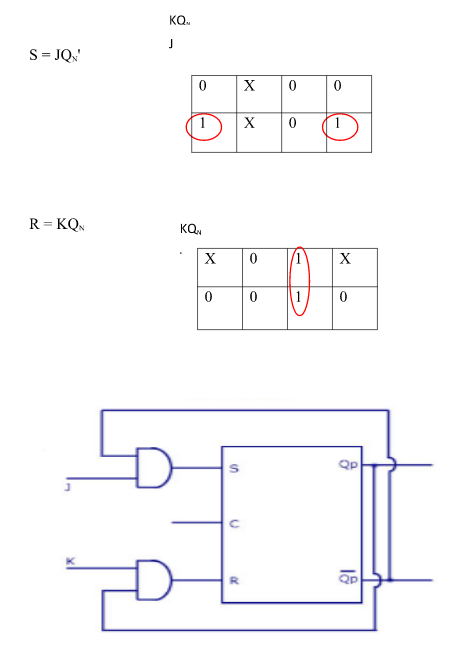
QN+1 = JQ'N + K'QN
D Flip Flop
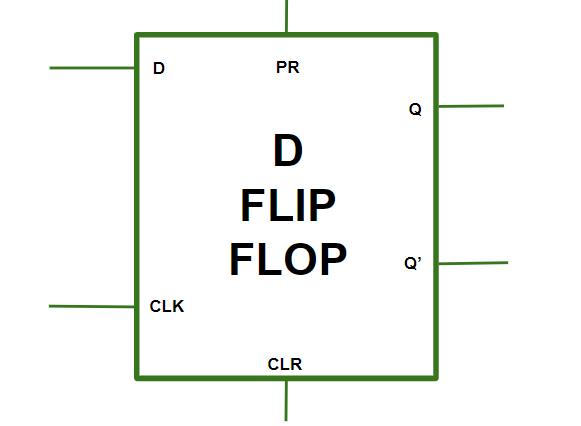
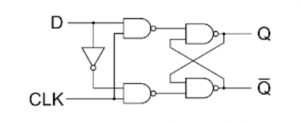
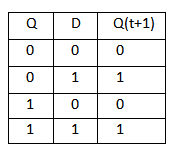
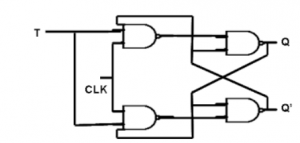
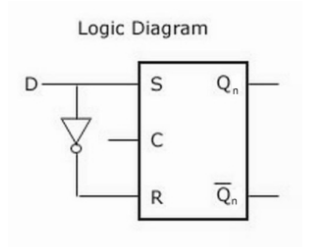
The D Flip Flop Consists a single data input(D), a clock input(CLK),and two outputs: Q and Q' (the complement of Q).
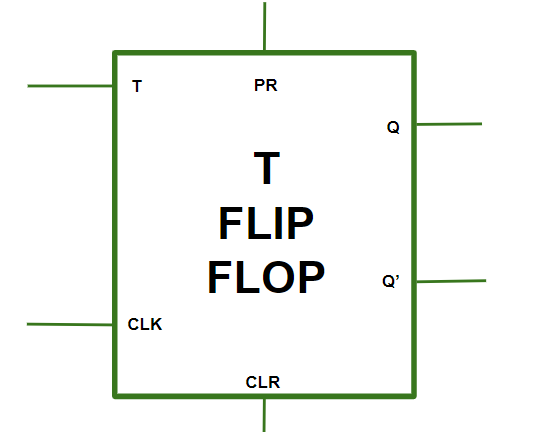
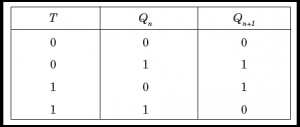
Case 1 (T=0):In this condition the flip-flop remains in its current state regardless of clock input,Also the Output Q will remain unchanged unit the value of T will not change.
Case 2 (T=1):In this condition the flip flop will change when T input is 1,At each rising or falling edge of the clock signal the output Q will be in complementary state.
Characteristics Equation for T Flip Flop
QN+1 = Q'NT + QNT' = QN XOR T
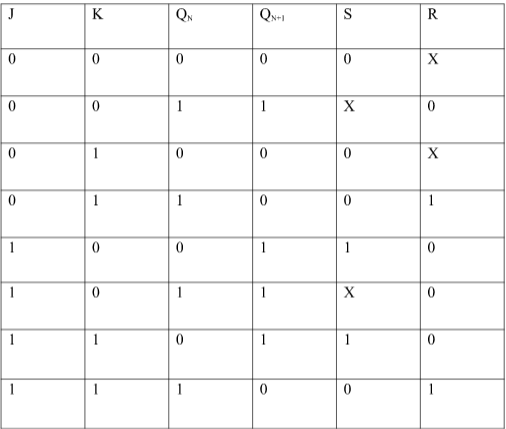
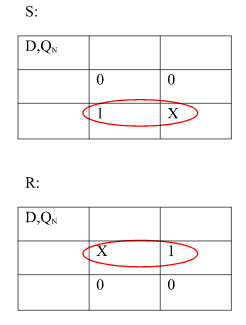
Conversion for Flip Flops
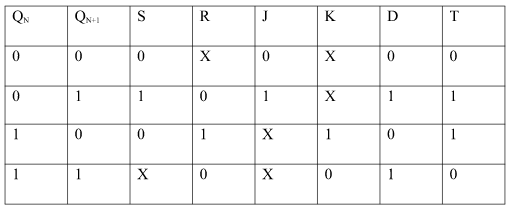
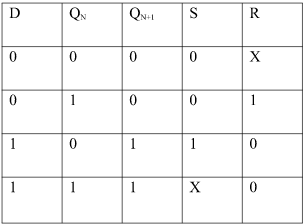
The Excitation Table of the Flip Flop can be given as