|
VOOZH | about |
|
VOOZH | about |
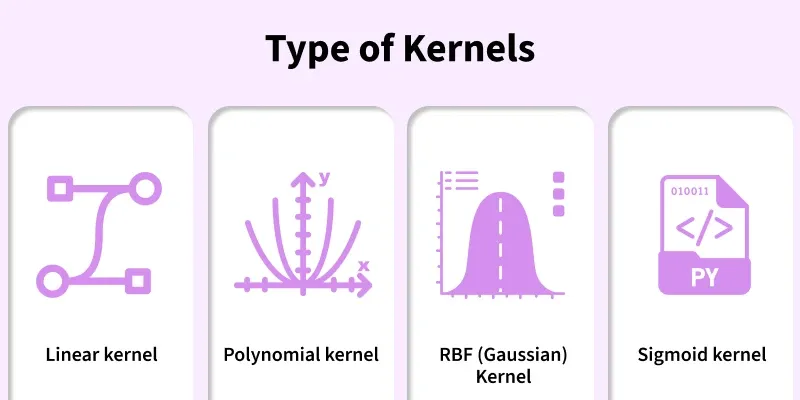
Support Vector Machine are a type of supervised learning algorithm that can be used for classification or regression tasks. In simple terms, an SVM constructs a hyperplane or set of hyperplanes in a high-dimensional space, which can be used to separate different classes or to predict continuous variables. SVM kernels map input data into higher-dimensional feature spaces, enabling the model to separate complex patterns with greater precision.
Stepwise implementation of different SVM Kernels:
Importing required modules.
Creating a 2-feature dataset so decision boundaries can be visualized easily.
This function creates a grid, predicts labels across the grid and draws classification regions.
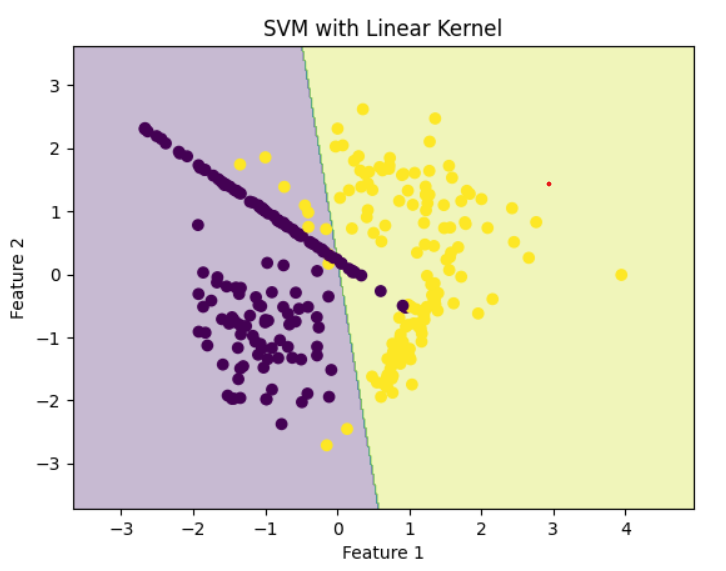
Linear kernel draws a straight line between classes.
Output:
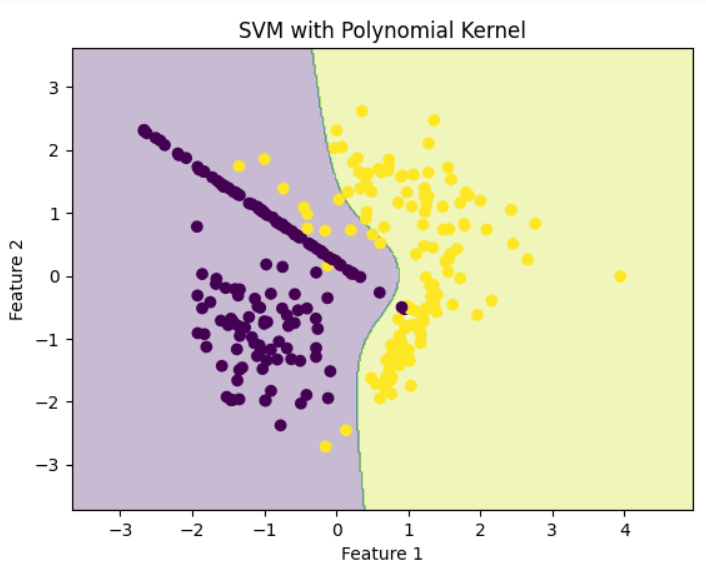
Polynomial kernel generates curved, non-linear separation.
Output:
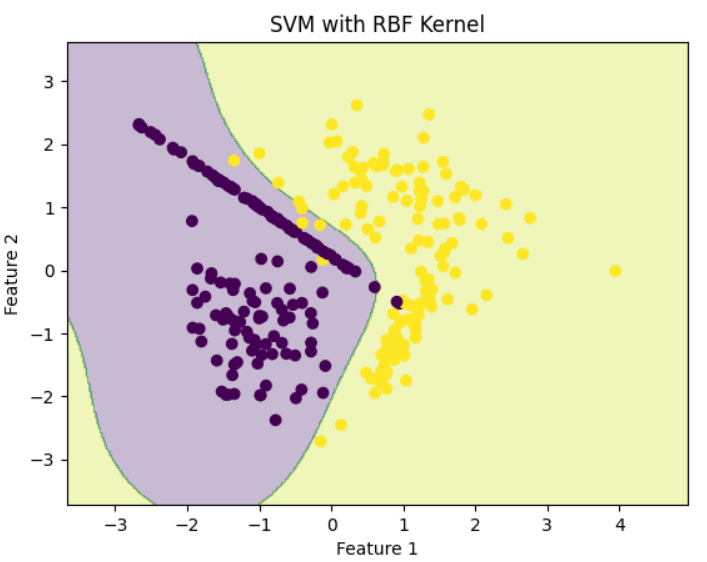
RBF kernel maps data to higher dimensions and creates smooth, complex surfaces.
Output:
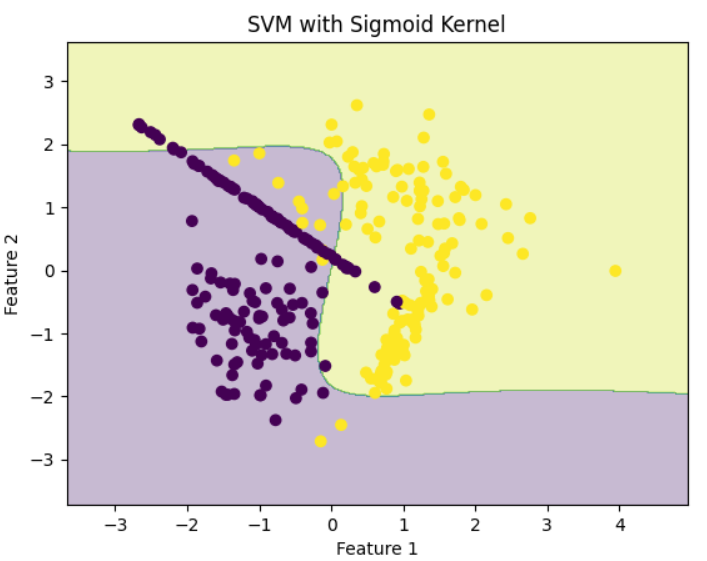
Sigmoid behaves similarly to neural network activation functions.
Output: