Machine learning classification algorithms are essential tools used to categorize data into predefined classes based on learned patterns. From simple linear models to advanced neural networks, these algorithms are used in applications like spam detection, image recognition, sentiment analysis and medical diagnosis.
Includes Logistic Regression, Decision Trees, Random Forest, SVM, KNN, Naive Bayes and more
Each algorithm has unique strengths suited for different datasets and problem types
Widely used across AI systems for fast, accurate and scalable prediction tasks
Let's see a few of the top Machine Learning Classification algorithms.
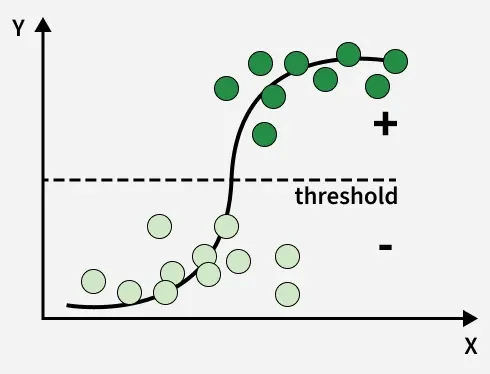
Logistic Regression is a linear classification algorithm that estimates the probability of a data point belonging to a particular class using the sigmoid function. Despite its name, it is primarily used for classification tasks, especially binary classification problems. It models the relationship between input features and the probability of a class label.
Uses a logistic (sigmoid) function to map outputs to probabilities.
Works well when classes are linearly separable.
Outputs probabilities rather than direct class labels.
Simple and computationally efficient.
Advantages
Easy to implement and interpret.
Performs well on linearly separable data.
Less prone to overfitting with regularization.
Probabilistic output helps in decision-making.
Limitations
Struggles with non-linear relationships.
Sensitive to outliers.
Assumes linear relationship between features and log-odds.
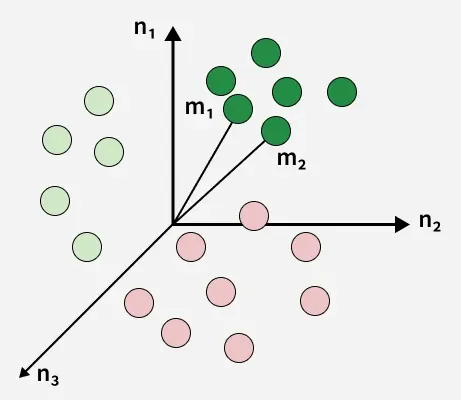
K-Nearest Neighbors is a distance-based classification algorithm that assigns a class to a data point based on the majority class among its nearest neighbors. It is a lazy learning algorithm, meaning it does not build an explicit model during training.
Uses distance metrics such as Euclidean or Manhattan distance.
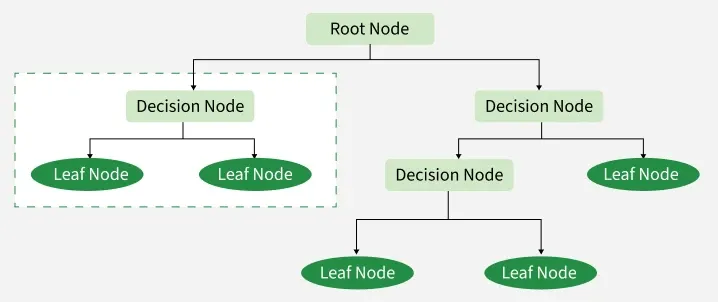
Decision Tree is a tree-structured classification algorithm where internal nodes represent feature tests, branches represent decision rules and leaf nodes represent class labels. It mimics human decision-making logic.
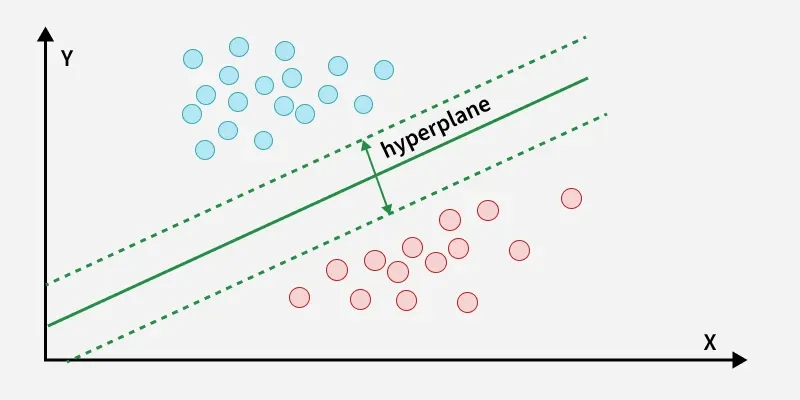
Support Vector Machine constructs an optimal hyperplane that maximizes the margin between different classes. It can handle both linear and non-linear classification using kernel functions.
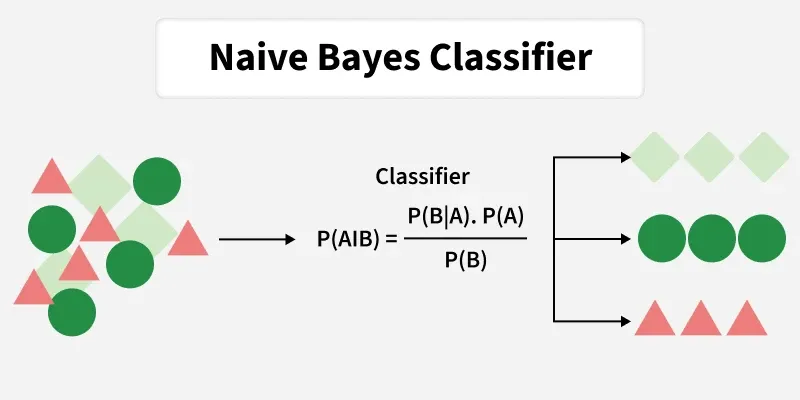
Naive Bayes is a probabilistic classification algorithm based on Bayes’ Theorem, which calculates the probability of a class given the input features. It assumes that all features are conditionally independent given the class label, which simplifies computation.
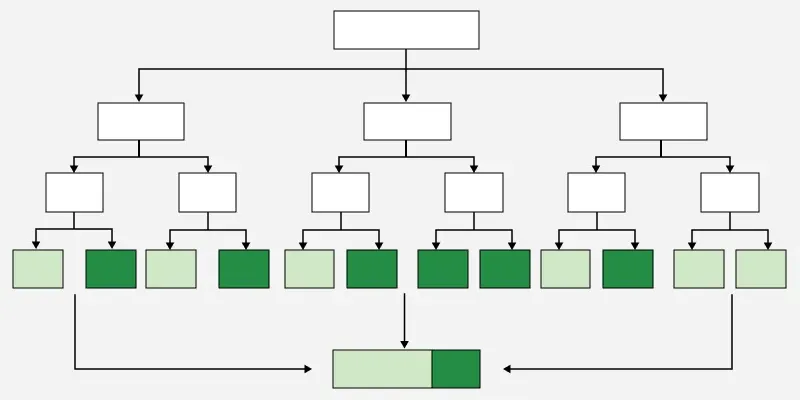
Random Forest is an ensemble classification algorithm that builds multiple decision trees using random subsets of data and features and combines their predictions through majority voting. By aggregating the results of many weak learners, Random Forest improves predictive accuracy and reduces overfitting commonly seen in single decision trees.