 |
VOOZH | about |
|
VOOZH | about |
Training and testing neural networks using R is a fundamental aspect of machine learning and deep learning. In this comprehensive guide, we will explore the theory and practical steps involved in building, training, and evaluating neural networks in R Programming Language. Neural networks are a class of machine learning models inspired by the human brain, and they have achieved remarkable success in a wide range of applications, including image recognition, natural language processing, and predictive modelling.
A neural network, also known as an artificial neural network (ANN), is a computational model that is loosely inspired by the structure and function of the human brain. It consists of interconnected nodes, or artificial neurons, organized in layers. These layers are typically categorized into three types:
Neural networks work by passing information from one layer to the next through weighted connections. Each connection has an associated weight, and each neuron computes a weighted sum of its inputs, applies an activation function, and passes the result to the next layer. The activation function introduces non-linearity into the network, allowing it to model complex relationships.
The training process involves adjusting the weights to minimize the difference between the network's predictions and the actual target values. This is achieved through optimization algorithms like gradient descent, which iteratively update the weights to reduce the loss or error of the model.
Now, let's delve into the practical steps for training and testing neural networks using R.
In R, you can use the keras library, which provides a high-level interface for building and training neural networks. Here's how to construct a neural network model using keras.
Data Preprocessing: Prepare your data for training by performing tasks like feature scaling (e.g., standardization or normalization), one-hot encoding for categorical variables, and handling missing values.
After constructing the neural network, you need to compile it by specifying the loss function, optimizer, and evaluation metrics. The choice of these components depends on your specific problem type (e.g., classification or regression).
Now, you are ready to train your neural network using the training data. Training involves iteratively updating the model's weights to minimize the specified loss function.
Output:
Epoch 1/50
22/22 [==============================] - 9s 195ms/step - loss: 0.6452 - accuracy: 0.6700 - val_loss: 0.5492 - val_accuracy: 0.8700
Epoch 2/50
22/22 [==============================] - 1s 33ms/step - loss: 0.4794 - accuracy: 0.9043 - val_loss: 0.3927 - val_accuracy: 0.9300
Epoch 3/50
22/22 [==============================] - 1s 48ms/step - loss: 0.3396 - accuracy: 0.9371 - val_loss: 0.2688 - val_accuracy: 0.9533
Epoch 4/50
22/22 [==============================] - 1s 43ms/step - loss: 0.2327 - accuracy: 0.9771 - val_loss: 0.1867 - val_accuracy: 0.9733
Epoch 5/50
22/22 [==============================] - 1s 39ms/step - loss: 0.1658 - accuracy: 0.9829 - val_loss: 0.1386 - val_accuracy: 0.9733
Epoch 6/50
22/22 [==============================] - 1s 44ms/step - loss: 0.1270 - accuracy: 0.9829 - val_loss: 0.1100 - val_accuracy: 0.9767
Epoch 7/50
22/22 [==============================] - 1s 51ms/step - loss: 0.1021 - accuracy: 0.9900 - val_loss: 0.0913 - val_accuracy: 0.9767
Epoch 8/50
22/22 [==============================] - 1s 41ms/step - loss: 0.0862 - accuracy: 0.9900 - val_loss: 0.0795 - val_accuracy: 0.9767
Epoch 9/50
22/22 [==============================] - 1s 41ms/step - loss: 0.0750 - accuracy: 0.9943 - val_loss: 0.0715 - val_accuracy: 0.9767
Epoch 10/50
22/22 [==============================] - 1s 39ms/step - loss: 0.0671 - accuracy: 0.9886 - val_loss: 0.0642 - val_accuracy: 0.9767
Epoch 11/50
22/22 [==============================] - 1s 42ms/step - loss: 0.0596 - accuracy: 0.9971 - val_loss: 0.0610 - val_accuracy: 0.9767
Epoch 12/50
22/22 [==============================] - 1s 35ms/step - loss: 0.0542 - accuracy: 0.9943 - val_loss: 0.0563 - val_accuracy: 0.9767
Epoch 13/50
22/22 [==============================] - 1s 34ms/step - loss: 0.0500 - accuracy: 0.9957 - val_loss: 0.0533 - val_accuracy: 0.9767
Epoch 14/50
22/22 [==============================] - 1s 43ms/step - loss: 0.0466 - accuracy: 0.9943 - val_loss: 0.0511 - val_accuracy: 0.9767
Epoch 15/50
22/22 [==============================] - 1s 39ms/step - loss: 0.0443 - accuracy: 0.9929 - val_loss: 0.0491 - val_accuracy: 0.9767
Epoch 16/50
22/22 [==============================] - 1s 39ms/step - loss: 0.0415 - accuracy: 0.9943 - val_loss: 0.0470 - val_accuracy: 0.9767
Epoch 17/50
22/22 [==============================] - 1s 39ms/step - loss: 0.0389 - accuracy: 0.9943 - val_loss: 0.0451 - val_accuracy: 0.9767
Epoch 18/50
22/22 [==============================] - 1s 36ms/step - loss: 0.0375 - accuracy: 0.9957 - val_loss: 0.0440 - val_accuracy: 0.9767
Epoch 19/50
22/22 [==============================] - 1s 35ms/step - loss: 0.0353 - accuracy: 0.9943 - val_loss: 0.0445 - val_accuracy: 0.9767
Epoch 20/50
22/22 [==============================] - 1s 40ms/step - loss: 0.0341 - accuracy: 0.9943 - val_loss: 0.0429 - val_accuracy: 0.9767
Epoch 21/50
22/22 [==============================] - 1s 47ms/step - loss: 0.0317 - accuracy: 1.0000 - val_loss: 0.0416 - val_accuracy: 0.9767
Epoch 22/50
22/22 [==============================] - 1s 44ms/step - loss: 0.0311 - accuracy: 0.9971 - val_loss: 0.0406 - val_accuracy: 0.9767
Epoch 23/50
22/22 [==============================] - 1s 37ms/step - loss: 0.0290 - accuracy: 0.9971 - val_loss: 0.0389 - val_accuracy: 0.9767
Epoch 24/50
22/22 [==============================] - 1s 39ms/step - loss: 0.0289 - accuracy: 0.9971 - val_loss: 0.0422 - val_accuracy: 0.9733
Epoch 25/50
22/22 [==============================] - 1s 33ms/step - loss: 0.0274 - accuracy: 0.9971 - val_loss: 0.0362 - val_accuracy: 0.9767
Epoch 26/50
22/22 [==============================] - 1s 40ms/step - loss: 0.0270 - accuracy: 0.9971 - val_loss: 0.0395 - val_accuracy: 0.9767
Epoch 27/50
22/22 [==============================] - 1s 46ms/step - loss: 0.0256 - accuracy: 0.9971 - val_loss: 0.0387 - val_accuracy: 0.9767
Epoch 28/50
22/22 [==============================] - 1s 37ms/step - loss: 0.0261 - accuracy: 0.9957 - val_loss: 0.0388 - val_accuracy: 0.9767
Epoch 29/50
22/22 [==============================] - 1s 39ms/step - loss: 0.0241 - accuracy: 0.9971 - val_loss: 0.0362 - val_accuracy: 0.9767
Epoch 30/50
22/22 [==============================] - 1s 36ms/step - loss: 0.0252 - accuracy: 0.9943 - val_loss: 0.0365 - val_accuracy: 0.9767
Epoch 31/50
22/22 [==============================] - 1s 33ms/step - loss: 0.0243 - accuracy: 0.9929 - val_loss: 0.0417 - val_accuracy: 0.9733
Epoch 32/50
22/22 [==============================] - 1s 39ms/step - loss: 0.0227 - accuracy: 0.9957 - val_loss: 0.0385 - val_accuracy: 0.9767
Epoch 33/50
22/22 [==============================] - 1s 40ms/step - loss: 0.0216 - accuracy: 0.9986 - val_loss: 0.0386 - val_accuracy: 0.9767
Epoch 34/50
22/22 [==============================] - 1s 38ms/step - loss: 0.0209 - accuracy: 0.9986 - val_loss: 0.0391 - val_accuracy: 0.9733
Epoch 35/50
22/22 [==============================] - 1s 36ms/step - loss: 0.0196 - accuracy: 0.9971 - val_loss: 0.0358 - val_accuracy: 0.9767
Epoch 36/50
22/22 [==============================] - 1s 34ms/step - loss: 0.0191 - accuracy: 1.0000 - val_loss: 0.0373 - val_accuracy: 0.9767
Epoch 37/50
22/22 [==============================] - 1s 42ms/step - loss: 0.0190 - accuracy: 0.9986 - val_loss: 0.0367 - val_accuracy: 0.9767
Epoch 38/50
22/22 [==============================] - 1s 38ms/step - loss: 0.0184 - accuracy: 0.9957 - val_loss: 0.0380 - val_accuracy: 0.9767
Epoch 39/50
22/22 [==============================] - 1s 42ms/step - loss: 0.0180 - accuracy: 1.0000 - val_loss: 0.0354 - val_accuracy: 0.9767
Epoch 40/50
22/22 [==============================] - 1s 36ms/step - loss: 0.0173 - accuracy: 1.0000 - val_loss: 0.0344 - val_accuracy: 0.9767
Epoch 41/50
22/22 [==============================] - 1s 34ms/step - loss: 0.0178 - accuracy: 0.9943 - val_loss: 0.0375 - val_accuracy: 0.9767
Epoch 42/50
22/22 [==============================] - 1s 38ms/step - loss: 0.0178 - accuracy: 0.9971 - val_loss: 0.0392 - val_accuracy: 0.9767
Epoch 43/50
22/22 [==============================] - 1s 40ms/step - loss: 0.0168 - accuracy: 0.9971 - val_loss: 0.0410 - val_accuracy: 0.9733
Epoch 44/50
22/22 [==============================] - 1s 39ms/step - loss: 0.0180 - accuracy: 0.9971 - val_loss: 0.0393 - val_accuracy: 0.9767
Epoch 45/50
22/22 [==============================] - 1s 36ms/step - loss: 0.0165 - accuracy: 0.9971 - val_loss: 0.0334 - val_accuracy: 0.9767
Epoch 46/50
22/22 [==============================] - 1s 33ms/step - loss: 0.0153 - accuracy: 1.0000 - val_loss: 0.0375 - val_accuracy: 0.9767
Epoch 47/50
22/22 [==============================] - 1s 41ms/step - loss: 0.0151 - accuracy: 0.9971 - val_loss: 0.0373 - val_accuracy: 0.9767
Epoch 48/50
22/22 [==============================] - 1s 40ms/step - loss: 0.0142 - accuracy: 0.9986 - val_loss: 0.0330 - val_accuracy: 0.9767
Epoch 49/50
22/22 [==============================] - 1s 52ms/step - loss: 0.0140 - accuracy: 1.0000 - val_loss: 0.0379 - val_accuracy: 0.9767
Epoch 50/50
22/22 [==============================] - 1s 39ms/step - loss: 0.0141 - accuracy: 0.9986 - val_loss: 0.0339 - val_accuracy: 0.9767
A random seed is set to ensure reproducibility.
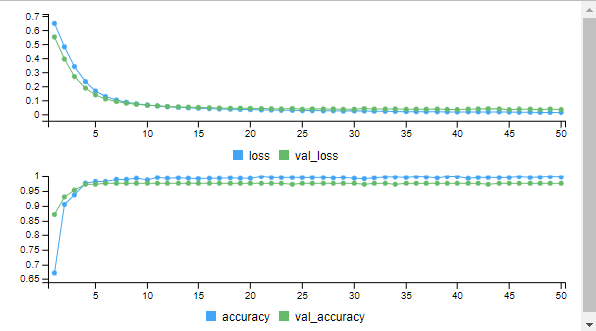
The model is trained on the training data. The training process involves iterating over the dataset for a specified number of epochs (50 in this example) and updating the model's weights to minimize the loss. The training data is divided into mini-batches of size 32 for each iteration. The validation data is provided to monitor the model's performance during training.
After training, it's crucial to evaluate your model's performance on a separate testing dataset. This allows you to assess how well your model generalizes to unseen data. Common evaluation metrics include accuracy, precision, recall, F1-score, and more, depending on your problem.
Now we Create a complex dataset and performing all the operations on it in a single response is a substantial task. Instead, I'll provide you with a simplified example that you can follow. In practice, complex datasets can vary widely, and the specific dataset you work with will depend on your application. Here's a simplified example using a synthetic dataset for binary classification.
Output:
 loss accuracy
0.03387477 0.97666669
The evaluation results indicate that your trained neural network achieved an accuracy of approximately 97.67% on the test data. This means that it correctly classified 97.67% of the test samples, which is an excellent result. The loss value of approximately 0.03387477 indicates how well the model is fitting the data, with lower values being better.
By using plot function we can plot the model.
Output:

.png)