|
VOOZH | about |
|
VOOZH | about |
Symmetry is defined as a property of a shape or object where one half of the object is a mirror image of the other half. This means that if we divide the object along a line (line of symmetry), both sides will look identical or exhibit a balanced proportion.
Symmetrical figures have a line of symmetry that divides the figure into parts that are equal and identical to each other in all aspects. For example, cutting a square along its diagonal results in the formation of two isosceles triangles that are similar to each other.
Symmetry of various shapes is added in the table below,
Number of Lines of Symmetry | Examples |
|---|---|
No line of Symmetry | |
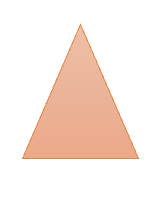
One Line of Symmetry | |
Two Lines of Symmetry | |
Three Lines of Symmetry | |
Four Lines of Symmetry | |
Five Lines of Symmetry | Regular Pentagon |
Infinite Line of Symmetry |
Table of Content
A shape or an object has symmetry if it can be divided into two identical halve. Some of the common examples of symmetrical figures are listed below in the figure.
In the below-attached figure, we can find that each figure has some imaginary lines which divide the figure into two halves and these two halves are the same in shape and size. Various figures that show symmetry are added in the image below,
An object or figure is said to be symmetrical if it's found to be similar to the other half of the object or figure. For dividing the object, into two halves an axis of symmetry is taken into consideration.
The properties of symmetrical figures are mentioned below:
The lines of symmetry are the imaginary lines along which a geometrical figure is symmetric in nature. We can classify the lines of symmetry in two types. First one is based on the nature of lines of symmetry which can be further classified as horizontal, vertical or diagonal in nature. Second type of line of symmetry is based on the number of lines of symmetry based on which which can classify line of symmetry as
An object can have a different number of lines of symmetry which are as follows:
| Symmetry Type | Description | Example |
|---|---|---|
| One Line of Symmetry | A figure with a single line that divides it into two identical parts. | Isosceles triangle, Heart shape |
| Two Lines of Symmetry | A figure with two lines that divide it into two or more identical parts. | Rectangle |
| Three Lines of Symmetry | A figure with three lines that divide it into identical parts. | Equilateral triangle |
| Four Lines of Symmetry | A figure with four lines that divide it into identical parts. | Square |
| Infinite Lines of Symmetry | A figure with an infinite number of lines that divide it into many identical parts. | Circle |
Symmetry can be classified into several distinct types, each playing a significant role. The different types of symmetry are fundamental concepts that help us understand and describe patterns, shapes, and structures in the world around us. Below are the different types of symmetry in mathematics:
Rotational symmetry refers to the property of a shape or object to remain unchanged under a rotation about a specific point. This type of symmetry often involves regular polygons, such as a circle, where any degree of rotation leaves the shape looking the same. It's a fundamental concept in geometry and design.
Translational symmetry relates to the ability of a figure or design to retain its form and appearance when shifted along a straight line in a specific direction. This type of symmetry is frequently observed in patterns, such as a repeating wallpaper design, where moving it left or right, up or down, keeps the pattern consistent.
Reflexive symmetry pertains to mirror or reflective symmetry, where an object or shape is symmetrical across a particular axis or line. It means that if you were to fold the object in half over this axis, both sides would perfectly match. Mirroring a shape is a common technique in art and design.
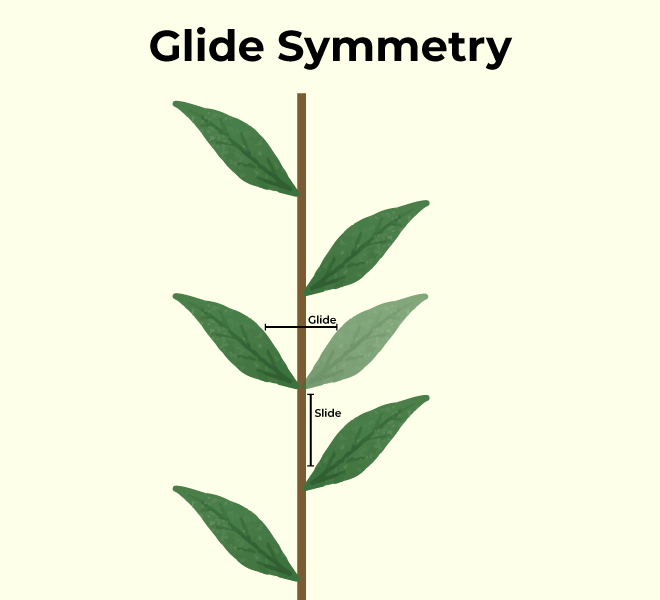
Glide symmetry combines both translational and reflective elements. It involves the ability of an object to be reflected across an axis and then translated (shifted) parallel to the axis. The resulting figure retains its appearance. This type of symmetry is less common but adds complexity to patterns and designs.
Point symmetry, often known as central symmetry, occurs when an object looks the same when rotated by 180 degrees around a central point. The figure retains its shape and orientation after this rotation. This type of symmetry is found in various natural and man-made objects, including snowflakes and stars.
Letter symmetry refers to the visual balance and mirror-like quality of letters and characters in written or printed text. It is a concept that is often considered in typography, calligraphy, and graphic design. In typography, the symmetry of letters plays a vital role in the overall aesthetics of a typeface. It involves ensuring that the left and right halves of a letter or character are evenly balanced, creating a pleasing and harmonious appearance. Letter symmetry is especially important in fonts and typefaces where each character is meticulously crafted to maintain visual consistency. It adds to the readability and visual appeal of written and printed materials.
👁 Letter SymmetryLike, letters and shapes human face is also symmetrical in nature. If we draw a line of symmetry passing exactly through the middle of the face then the each side will appear to be same and combining them would result in the complete face. For better understanding of face symmetry the image has been added below:
👁 Face SymmetryAlso, Check
Examples on symmetry are,
Example 1. Can the below figure considered to be symmetrical?
👁 Symmetry Example 1Solution:
No, we cannot consider this figure to be symmetrical. There is no line of symmetry existing for the figure.
Example 2: Can the below figure considered to be symmetrical?
👁 Symmetry Example 2
Solution:
Yes, we can consider the figure to be symmetrical as it has a line of symmetry passing through it.
Example 3: Draw the line of symmetry of below figures if the line of symmetrical exists for below figures.
👁 Symmetry Example 3(i)
Solution:
Since, the first figure is unsymmetrical, hence the line of symmetry can be drawn for figure B only which is shown as below
Example 4: Can the below figure considered to be symmetrical?
Solution:
No this figure cannot be considered to be symmetrical in nature.
Example 5: Can the below considered to be symmetrical
Solution:
Yes, we can consider 'figure A' to be symmetrical.
Various questions on symmetry are,
Question 1: Is the below figure symmetrical in nature?
Question 2: Is the below figure symmetrical in nature?
Question 3: Can we consider the below figure to be symmetrical in nature?
👁 Symmetry Practice Q3
Question 4: Draw the line of symmetry of below figure if the line of symmetrical exists for below figures.
👁 Symmetry Pracrtice Q4
Question 5: Draw the line of symmetry of below figures if the line of symmetrical exists for below figures.



.png)