|
VOOZH | about |
|
VOOZH | about |
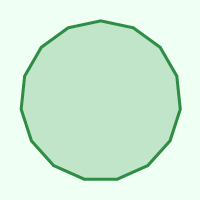
A polygon is a two-dimensional closed geometric figure made up of straight line segments.
Some of the key features are:
Polygons can be classified based on various different parameters, some of these parameters are:
Area of a polygon can be easily calculated using polygon formula. Let's discuss types of polygons based on these parameters in detail as follows:
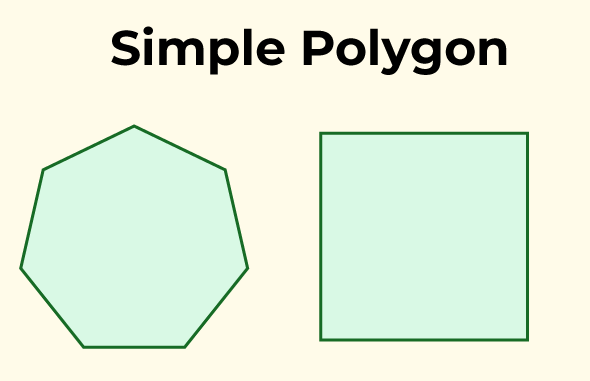
A simple Polygon is a closed geometric shape which is constructed using non-intersecting line segments. In simple words, a two-dimensional figure with sides that do not intersect with each other is called a simple polygon. Some of the common examples of simple polygons are triangles, squares, rectangles, pentagons, hexagons, and many more.
👁 Simple PolygonA complex polygon is a two-dimensional geometric shape that has sides consisting of straight line segments and may have self-intersections or holes. Unlike simple polygons, which do not cross themselves, complex polygons can have edges that intersect each other within the polygon's boundary, resulting in a more intricate and irregular shape.
👁 Complex PolygonComplex polygons can be formed by combining simple polygons or by adding cut-outs (holes) within a simple polygon. These cut-outs create regions within the polygon that are not part of the main boundary. The inclusion of self-intersections and holes makes complex polygons more challenging to work with and analyse compared to simple polygons.
Based on the length of sides, the polygons are classified as follows:
If all the sides and interior angles of the polygon are equal or if a polygon is equiangular and equilateral, then the polygon will be known as a regular polygon. Example square, rhombus, equilateral triangle, etc.
👁 Regular PolygonIf all the sides and the interior angles of the polygon are of different measure, then the polygon will be known as an irregular polygon. For example scalene triangle, rectangle, kite, etc.
👁 Irregular PolygonBased on the measurement of interior angles the polygons are classified as follows:
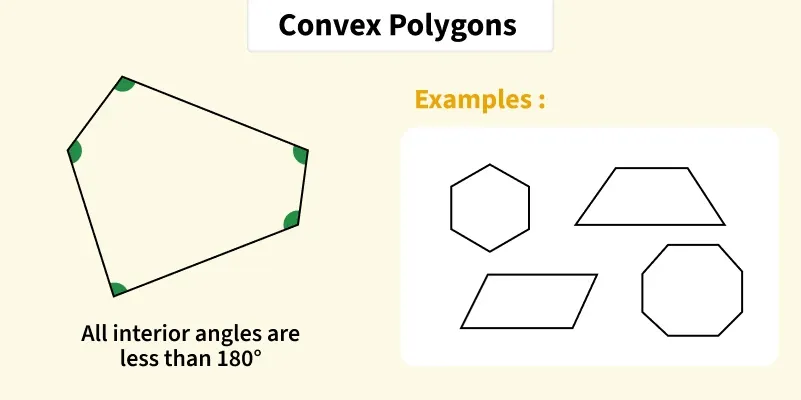
If all the interior angles of a polygon are strictly less than 180° or equal to it,or if a line segment between two points on the boundary does not go outside the polygon, then the polygon will be known as a convex polygon.
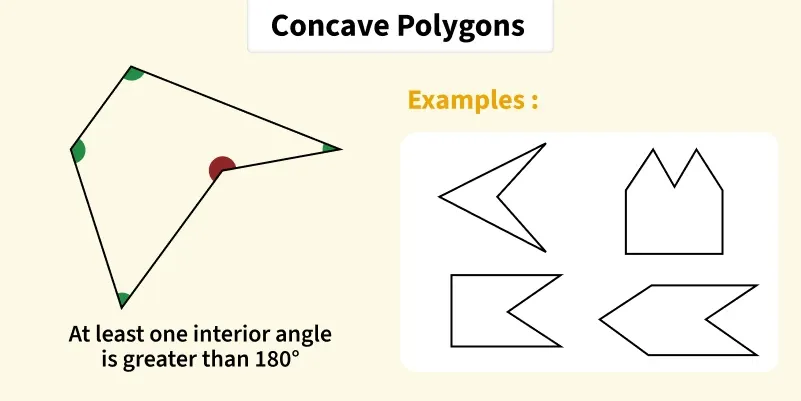
👁 convex_pentagonIf one or more interior angles of a polygon are more than 180° degrees or a polygon contains at least one reflex interior angle, then the polygon will be known as a concave polygon. This polygon can have at least four sides.
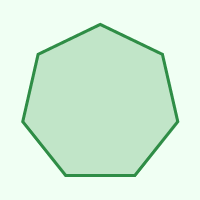
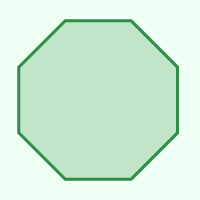
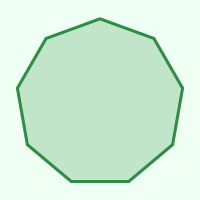
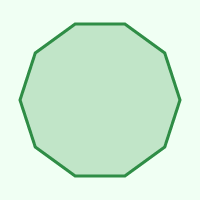
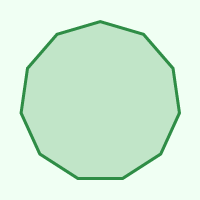
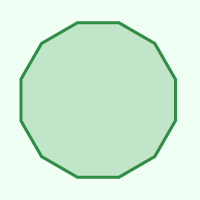
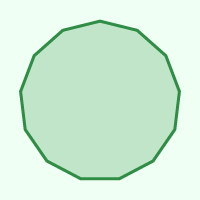
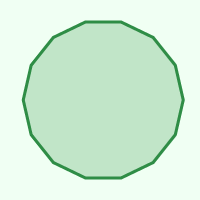
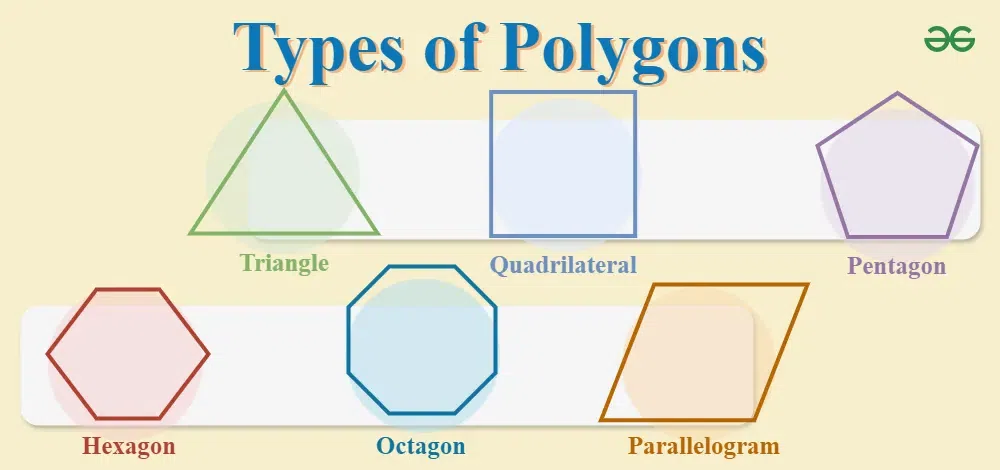
Polygons are classified based on the number of sides or vertices they have. So, some of the polygons are:
All of these polygons are given in the following table:
Polygon | Shape | No. of sides | No. of Diagonal | No. of vertices | Interior Angle | Exterior Angle |
|---|---|---|---|---|---|---|
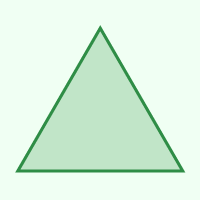
Triangle | 👁 Triangle | 3 | 0 | 3 | 60° | 120° |
Quadrilateral | 👁 Quadrilateral | 4 | 2 | 4 | 90° | 90° |
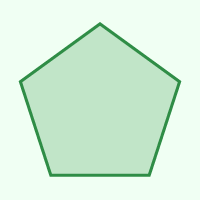
| 👁 Pentagon | 5 | 5 | 5 | 108° | 72° | |
Hexagon | 👁 Hexagon | 6 | 9 | 6 | 120° | 60° |
| 👁 Heptagon | 7 | 14 | 7 | 128.571° | 51.429° | |
| 👁 Octagon | 8 | 20 | 8 | 135° | 45° | |
| 👁 Nonagon | 9 | 27 | 9 | 140° | 40° | |
Decagon | 👁 Decagon | 10 | 35 | 10 | 144° | 36° |
Hendecagon | 👁 Hendecagon | 11 | 44 | 11 | 147.273° | 32.727° |
Dodecagon | 👁 Dodecagon | 12 | 54 | 12 | 150° | 30° |
Triskaidecagon | 👁 Triskaidecagon | 13 | 65 | 13 | 158.308° | 27.692° |
Tetrakaidecagon | 👁 Tetrakaidecagon | 14 | 77 | 14 | 154.286° | 25.714° |
Pentadecagon | 👁 Pentadecagon | 15 | 90 | 15 | 156° | 24° |
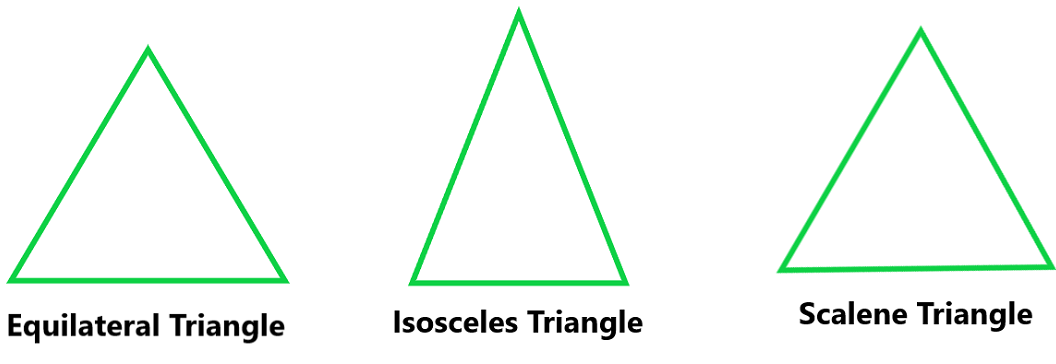
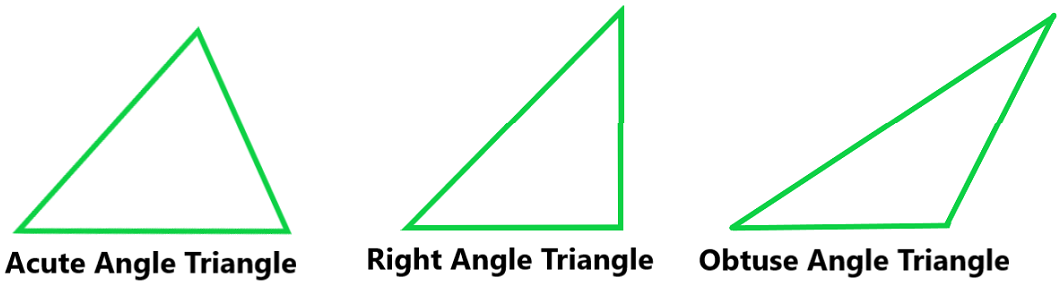
A triangle is a polygon, it is formed with the help of three-line segments intersecting each other, so a triangle has 3 vertices, 3 edges, and 3 angles. The triangles are classified into different types, based on the sides and angles.
Some properties of the triangle:
👁 Types of Triangle based on sides
👁 Types of Triangles based on angles
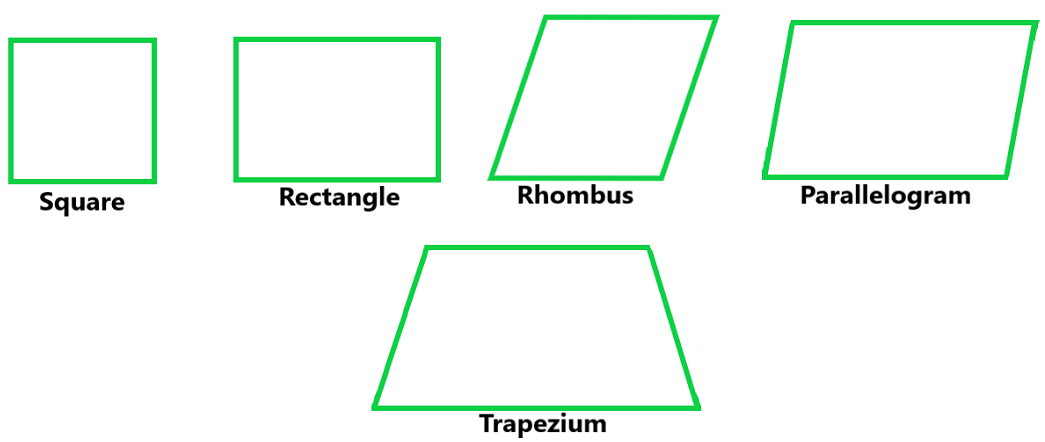
A Quadrilateral is nothing but a polygon having at least 4 sides. A polygon is formed by enclosing four line segments such that they meet at each other at vertices to make 4 or more angles. Examples of Quadrilateral are Square, Rectangle, Parallelogram, Rhombus, Trapezium.
Some properties of a quadrilateral:
Apart from triangle and quadrilateral there are also other polygons but they don't have much use in real life.
Read More,
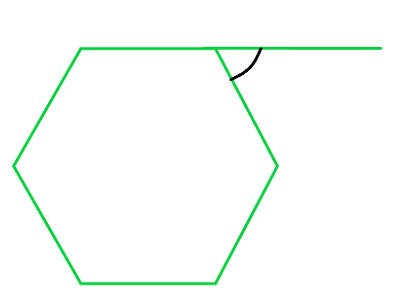
Question 1: Find the exterior angle of a regular hexagon.
Solution:
As we know that, hexagon has 6 sides therefore
Exterior Angle = 360o / n = 360o / 6
Exterior Angle = 60o
Question 2: Find the interior angle of a regular pentagon.
Solution:
As we know that pentagon has 5 sides, therefore
Exterior Angle = 360o / 5 = 72o
Interior Angle = 180o - 72o = 108o
Question 3: Find each interior angle of a regular decagon.
Solution:
As we know that, decagon has ten sides.
Using angle sum formula,
As we know that,
S = (n − 2) × 180°
Here, n = 10
Therefore,
Sum of angles of decagon = (10 − 2) × 180°
= 8 × 180° = 1440°
As we know that all the interior angles are equal of a regular decagon,
Therefore, the measure of each interior angle of regular decagon = sum of interior angles / number of sides
Interior angle = 1440 / 10 = 144°
Hence, Sum of Interior Angle of decagon is 1440° and each interior angle is of 144°.
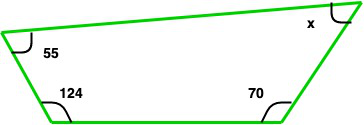
Question 4: Find the value of x in the given figure:
Solution:
As we know that the sum of angles os a quadrilateral = 360o
so, 55o + 124o + 70o + x = 360o
249o + x = 360o
x = 111o
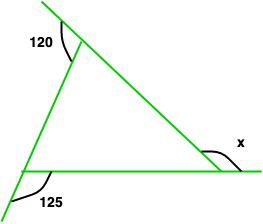
Question 5: Find the value of x in the given figure:
Solution:
As we know that the sum of exterior angles = 360o
So, 120o + 125 + x = 360o
245o + x = 360o
x = 360o - 245o
x = 115o

.png)
.png)
.png)