 |
VOOZH | about |
|
VOOZH | about |
Integrating an SQL database with FastAPI enables efficient data storage and retrieval. SQLite is commonly used along with SQLAlchemy to define and manage database models. Let's understand it with an example that demonstrates how to integrate an SQL database with FastAPI.
Make sure you have FastAPI, pydantic, sqlalchemy and uvicorn libraries installed in the system. Run the below command in the terminal to install them.
pip install fastapi pydantic sqlalchemy uvicorn
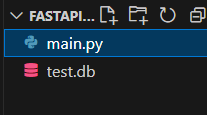
The project uses a single main.py file containing all the code. Running it creates a "test.db" SQLite database to store and manage data.
Import the necessary modules for building the FastAPI application, handling the database with SQLAlchemy and defining data models using Pydantic.
Create the FastAPI app instance, configure the SQLite database connection using a SQLAlchemy engine and define SessionLocal for managing database sessions. Also, initialize Base to define SQLAlchemy models like Item
Note: DATABASE_URL can be modified to connect to any SQL database supported by SQLAlchemy such as PostgreSQL or MySQL by updating the connection string with the appropriate database driver and credentials.
Define a SQLAlchemy model Item to store data in the database, with fields for id, name and description.
Create necessary tables in the database based on the defined models.
Define a dependency function (get_db) to get a database session. It yields the database session to be used in API endpoints and ensures that the database session is properly closed after use by API.
Define a Pydantic model ItemCreate with name and description fields to validate input data when creating an item.
Also, define a Pydantic model ItemResponse with id, name and description to structure the response data returned by the API.
Create a POST endpoint /items/ to add items to the database. It accepts input via ItemCreate, validates the data, stores it and returns a response structured by ItemResponse.
Create a GET endpoint /items/{item_id} to retrieve an item by ID. It queries the database and returns the item, or raises a 404 error if not found.
Add a main block to run the FastAPI application only when the script is executed directly, using Uvicorn on http://127.0.0.1:8000.
Output: We can run this code as we run any simple python file. API will be available at "127.0.0.1:8000" and to use Swagger UI we will acess "127.0.0.1:8000/docs" in browser.
Video Demonstration:
Explanation:

.jpg)