Data Structures and Algorithms (DSA) form the foundation of effective problem-solving in programming. Python provides several built-in and external libraries that help implement common data structures such as arrays, linked lists, queues, hash maps, heaps and trees.
Built-in DSA Libraries
These libraries require no installation and are widely used in real-world applications.
1. Array Module
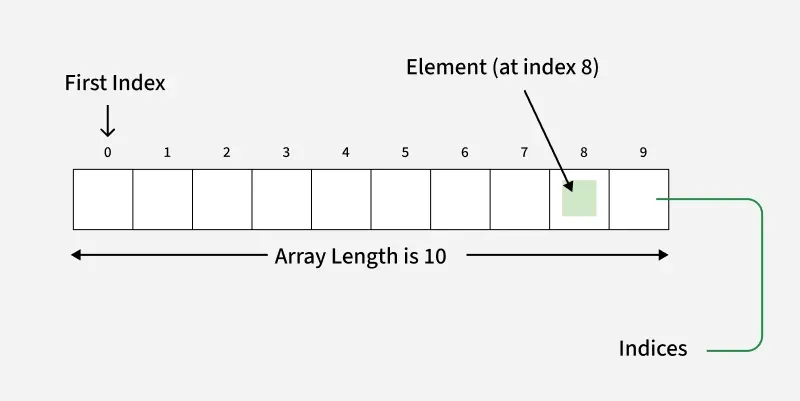
The array module implements the array data structure, where elements of the same data type are stored in contiguous memory locations. It is mainly used when memory efficiency and faster access are required compared to lists, especially for numeric data.
Broadcasting: Automatic shape alignment during operations
3. Deque Module
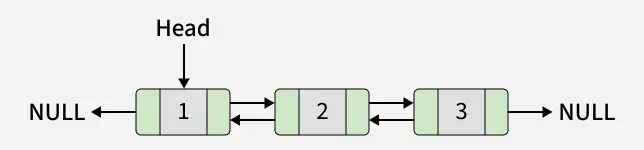
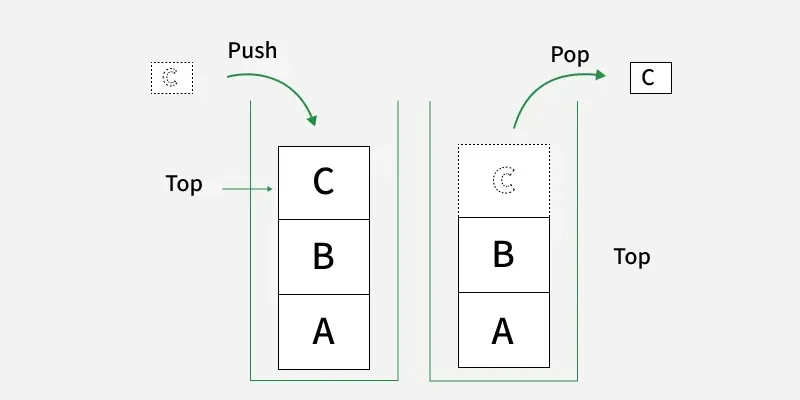
deque module implements a doubly linked list data structure. It allows constant-time insertion and deletion from both ends, making it ideal for queues and stacks.
👁 11 Representation of Doubly Linked List👁 1 Representation of Stacks
Important Operations
append(x): Insert element at the right end
appendleft(x): Insert element at the left end
pop(): Remove element from the right end
popleft(): Remove element from the left end
extend(iterable): Add multiple elements to the right
4. Queue Module
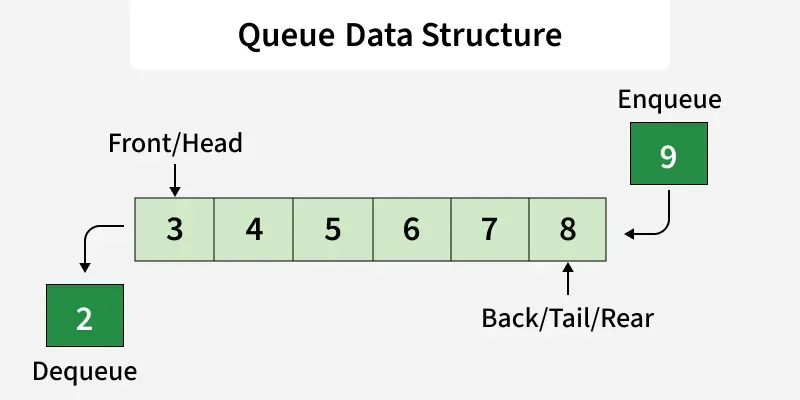
queue.Queue module provides a queue data structure that follows FIFO order. It is designed to be thread-safe and is mainly used in multi-threaded and producer–consumer applications.
collections module provides specialized data structures that extend Python’s built-in containers. It is commonly used to work with various data structure, mainly with:
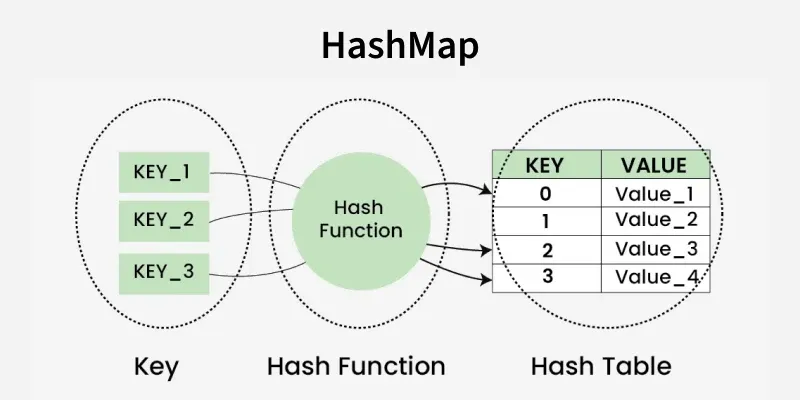
Hash maps: for storing data as key–value pairs with fast access
namedtuple stores data with named fields like an object
Important Operations
keys(): Returns all keys
values(): Returns all values
items(): Returns key–value pairs
get(key): Retrieves a value safely
update(dict): Update multiple entries
append(x): Adds element to right end (deque)
popleft(): Removes element from left end (deque)
6. Heapq Module
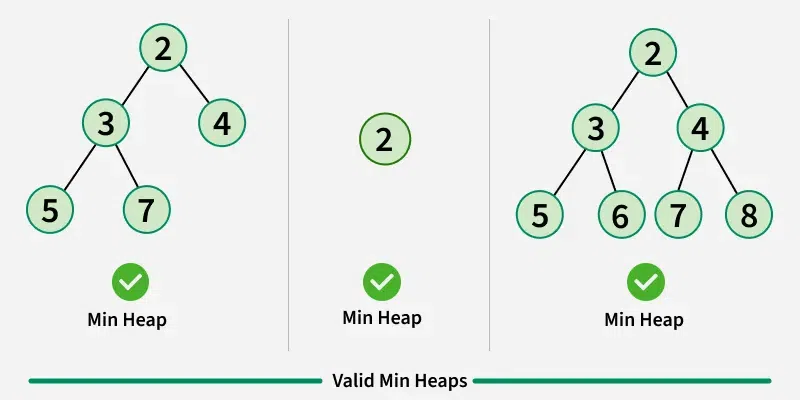
heapq module implements the heap data structure, specifically a min-heap. It allows quick access to the smallest element and is widely used in priority queues and scheduling algorithms.
bisect module supports binary search operations on sorted lists. It helps maintain sorted order while inserting elements efficiently without manually sorting the list.
Important Methods
bisect_left(list, x): leftmost insertion point.
bisect_right(list, x): rightmost insertion point.
insort_left(list, x): inserts at leftmost valid position.
insort_right(list, x): inserts at rightmost valid position.
bisect(list, x): alias of bisect_right.
External Libraries for Advanced Data Structures
These are not part of Python by default. They must be installed and are used only when your problem truly needs them.
1. treelib (Tree Data Structure)
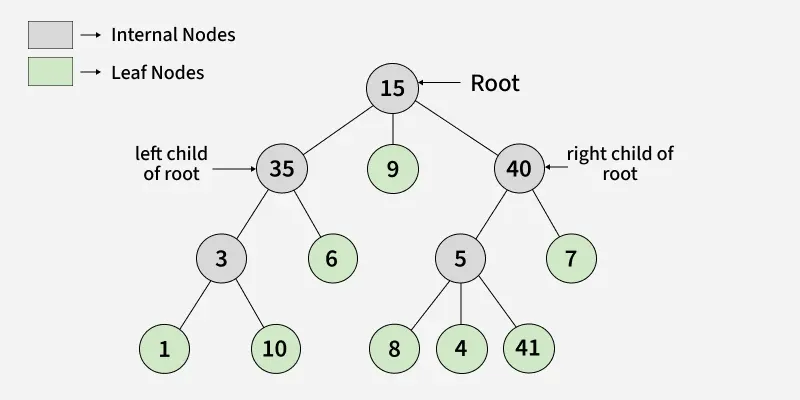
treelib library is used to implement tree data structures, where data is stored in a parent-child hierarchy. It makes creating, managing, and displaying trees readable, which is useful when working with hierarchical data.
create_node(tag, id, parent): Adds a new node to the tree
remove_node(id): Removes a node
get_node(id): Retrieves a specific node
children(id): Returns child nodes
show(): Displays the tree structure
2. intervaltree (Interval Tree)
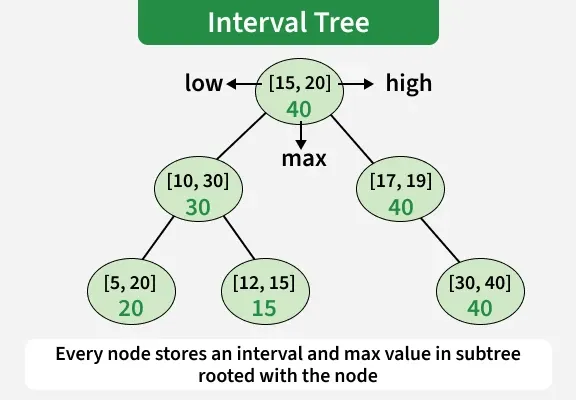
intervaltree library is used to store and search numeric ranges (intervals) efficiently. It is helpful when you need to quickly find overlapping intervals or ranges.
search(start, end): finds intervals overlapping a range.
at(point): finds intervals containing a specific point.
clear(): removes all intervals.
3. pygtrie (Trie/Prefix Tree)
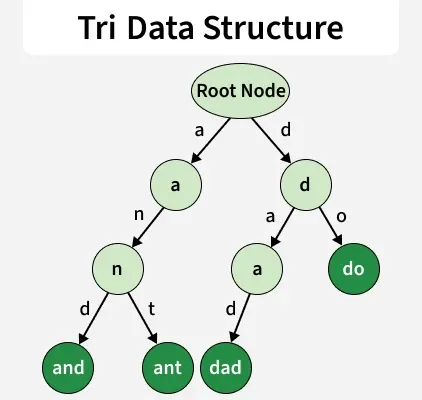
pygtrie library provides an implementation of the Trie (prefix tree) data structure. It stores strings character by character, making prefix-based searches very fast.