|
VOOZH | about |
|
VOOZH | about |
SQLite is a lightweight, fast and embedded SQL database engine. SQLite is perfect for small to medium-sized applications, prototyping, embedded systems and local data storage in Python applications because it doesn't require a separate server process like other relational database management systems (RDBMS) like MySQL or PostgreSQL.
We don't need to install anything additional to get started because Python has built-in support for SQLite through the sqlite3 module. Let's understand each of the features in detail.
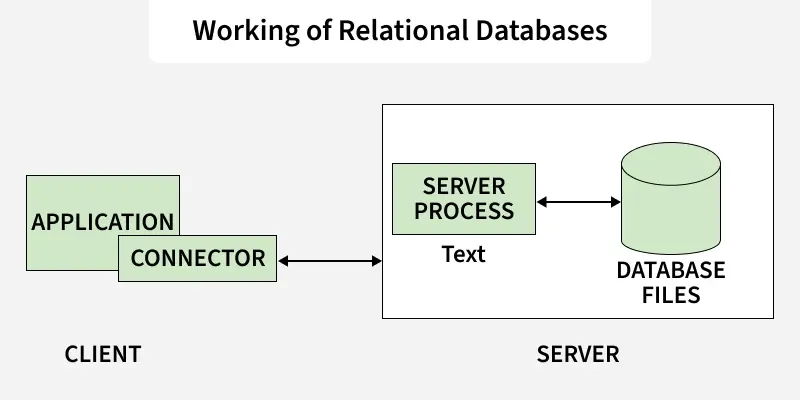
Generally, an RDBMS such as MySQL, PostgreSQL, etc., needs a separate server process to operate. The applications that want to access the database server use TCP/IP protocol to send and receive requests and it is called client/server architecture. The diagram below illustrates the working of relational databases:
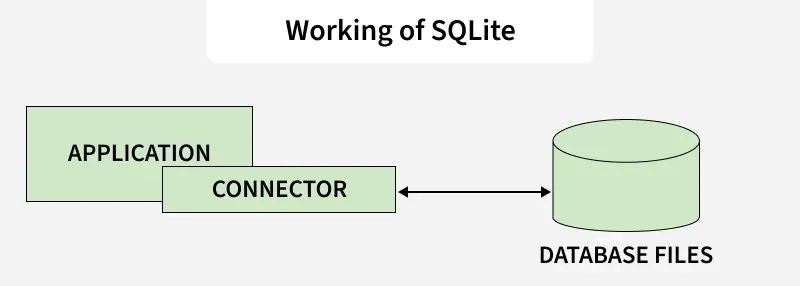
SQLite does not require a server to run. SQLite database read and write directly from the database files stored on disk and applications interact with that SQLite database. It is one of SQLite's biggest advantages is that it is serverless. Here's what that means:
SQLite is self-contained, here's what it means:
Key benefits of being Self-Contained:
Unlike other databases, SQLite requires zero setup:
Example: Connecting to a SQLite Database in Python
We can also manage transactions explicitly using:
Transaction Control Example:
SQLite uses a single-file database architecture, meaning:
Benefits of Single-File Storage:
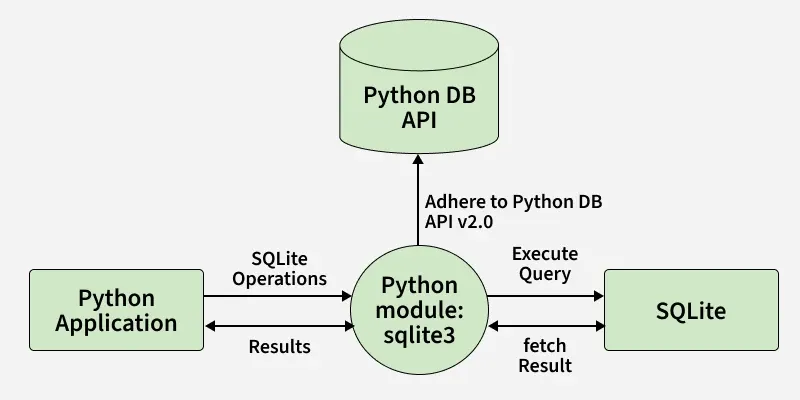
Python includes built-in support for SQLite via the sqlite3 module, which conforms to the Python Database API Specification v2.0 (PEP 249).
While SQLite is simple to use, it offers several advanced features:
To prevent SQL injection:
cursor.execute("SELECT * FROM users WHERE id = ?", (user_id,))
Fetch rows as dictionaries:
conn.row_factory = sqlite3.Row
For temporary, fast operations:
conn = sqlite3.connect(':memory:')
with sqlite3.connect('example.db') as conn:
cursor = conn.cursor()
cursor.execute("SELECT * FROM users")
Explanation:
import sqlite3: imports Python’s built-in SQLite module, which allows interaction with SQLite databases.
sqlite3.connect('example.db'): establishes a connection to a SQLite database file named example.db.
conn.cursor(): creates a cursor object from the connection, which is used to execute SQL queries and fetch results.
To learn more about different types of relation databses, refer to: MySQL, PostgreSQL, RDBMS.