|
VOOZH | about |
|
VOOZH | about |
Cross-Origin Resource Sharing (CORS) is an additional security measure implemented by modern browsers to prevent unauthorized requests between different domains. When developing a web API with Falcon, it's common and recommended to implement a CORS policy to allow cross-origin requests securely. In this article, we will see Python Falcon CORS, its advantages, and also examples.
Python Falcon, a minimalist web framework for building APIs, offers the flexibility to implement a CORS policy effortlessly. By default, Falcon's CORS support is disabled, necessitating explicit configuration to enable it. Leveraging Falcon's built-in features, developers can enable CORS by simply passing a flag to the application initializer. To import the Python Falcon-CORS use the below command
from falcon_cors import CORS
Below, are the example of how to use Python Falcon CORS in Python:
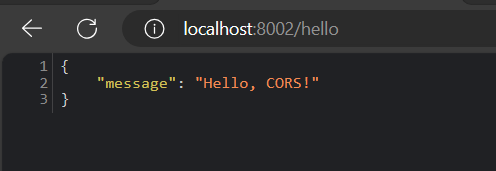
Basic CORS configuration in Falcon offers a simple approach to enabling cross-origin resource sharing. Below, code demonstrates setting up CORS in a Python Falcon application. It involves creating a Falcon application instance, configuring CORS middleware to allow all origins, defining a Falcon resource with a simple message, adding a route for the resource, and running the application on localhost:8002.
Output
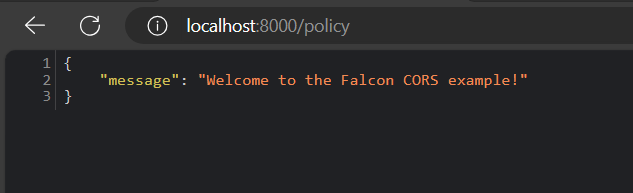
Directly passing the "falcon.CORSMiddleware" middleware to the application allows customization of the CORS policy applied. Below, cdoe uses a customized CORS configuration in a Python Falcon application. It creates a Falcon application instance, configures CORS middleware to allow requests only from 'http://localhost:3000' with all HTTP methods and headers permitted, defines a Falcon resource class that returns a greeting message.
Output
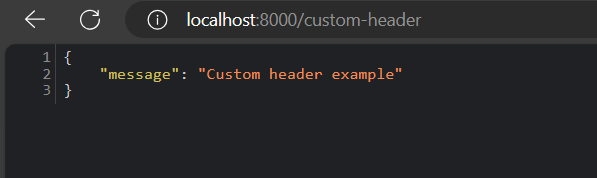
Fine-grained CORS configuration in Falcon allows developers to finely tune cross-origin resource sharing policies. Below code shows a finely configured CORS setup in a Python Falcon application. It initializes a Falcon application instance, configures CORS middleware with specific settings such as allowed origins, methods, headers, exposed headers, and allows credentials for all origins. A Falcon resource class is defined to demonstrate a simple example, and a route is added for this resource
Output
In conclusion , Python Falcon's CORS support provides a reliable technique for securing cross-origin communication in web APIs. By enabling CORS in Falcon apps, developers can reduce security risks associated with illegal requests while also promoting interoperability across domains. Falcon's simple configuration and customization options enable developers to enforce tight CORS standards.