Python is a great language for doing data analysis, primarily because of the fantastic ecosystem of data-centric python packages.
Pandas is one of those packages and makes importing and analyzing data much easier.
Pandas
dataframe.isna() function is used to detect missing values. It return a boolean same-sized object indicating if the values are NA. NA values, such as None or numpy.NaN, gets mapped to True values. Everything else gets mapped to False values. Characters such as empty strings '' or numpy.inf are not considered NA values (unless you set pandas.options.mode.use_inf_as_na = True).
Syntax: DataFrame.isna()
Returns : Mask of bool values for each element in DataFrame that indicates whether an element is not an NA value.
Example #1: Use
isna() function to detect the missing values in a dataframe.
👁 Image
Lets use the
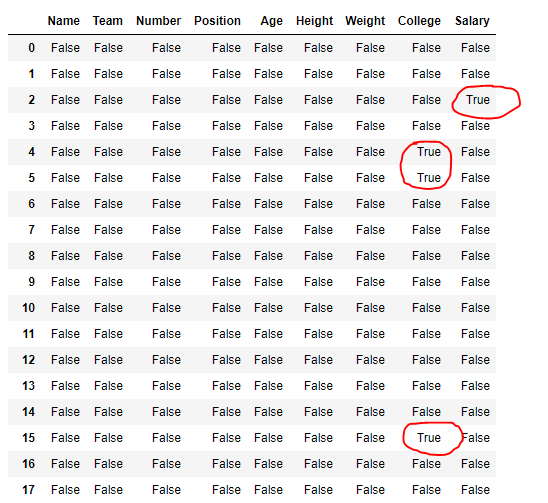
isna() function to detect the missing values.
Output :
👁 Image
In the output, cells corresponding to the missing values contains true value else false.
Example #2: Use
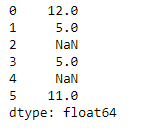
isna() function to detect missing values in a pandas series object
👁 Image
Let's detect all the missing values in the series.