|
VOOZH | about |
|
VOOZH | about |
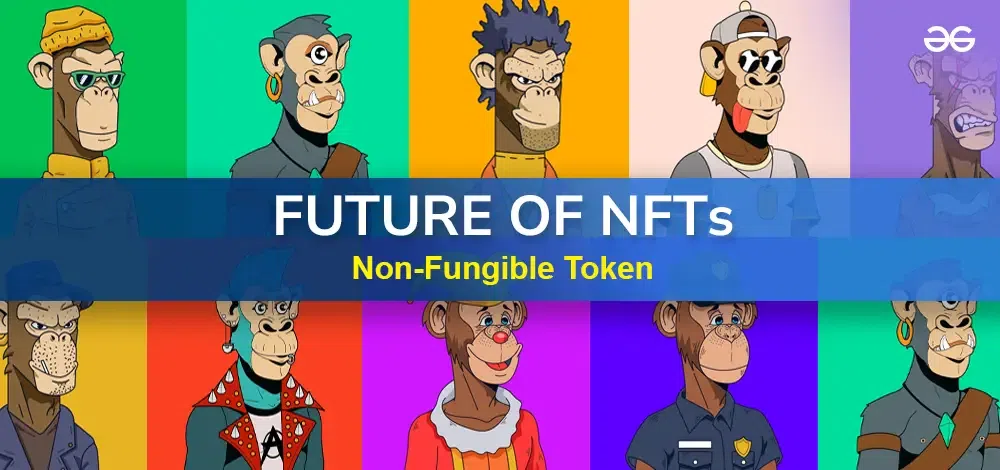
In recent times, Non-Fungible Commemoratives( NFTs) have gained wide attention across multiple industries, from art and entertainment to gaming and finance. As digital commemoratives that represent ownership of unique assets on the blockchain, NFTs have revolutionized how we think about ownership and digital failure. But what does the future hold for NFTs? This composition delves into the rising trends, implicit operations, and challenges that will shape the future of NFTs in the times to come.
Table of Content
NFTs are digital assets stored on blockchain technology, generally using Ethereum's network. Unlike cryptocurrencies similar to Bitcoin or Ether, which are commutable and can be changed on a one-to-one basis, NFTs are unique and can not be replicated. Each NFT has distinct metadata that defines its oneness, making it ideal for representing ownership of digital or physical assets like art, music, videos, virtual goods, and indeed real estate.
NFTs have exploded in popularity, particularly in 2021, with some digital artworks selling for millions of dollars. commerce like OpenSea, Rarible, and Foundation have eased these deals, and the gaming industry has embraced NFTs to create decentralized in-game assets. Major companies, including sports leagues and fashion brands, have also jumped on the NFT crusade, releasing limited- edition collectibles and other digital assets.
However, while NFTs have created new profit aqueducts for creators and collectors, they aren't without contestation. enterprises around environmental impact, request volatility, and the eventuality of brand violation have raised questions about their long-term viability.
One of the most instigative trends in NFTs is their integration with the Metaverse — a collaborative virtual space where druggies can interact with each other and digital assets. NFTs will probably serve as property deeds for virtual land, incorporations, and other in-game assets within these extensive digital worlds. The rise of platforms like Decentraland and The Sandbox signals a future where NFTs will play a pivotal part in the Metaverse's frugality.
NFTs are formerly reshaping the gaming industry by enabling players to truly enjoy in- game particulars. In the future, NFTs may allow players to transfer their assets across different games and platforms. This" interoperability" will foster an ecosystem where digital assets have value beyond a single game, unleashing new openings for inventors and players likewise.
While NFTs are presently most popular for digital assets, tokenizing real-world assets like real estate, intellectual property, and indeed legal contracts is gaining instigation. NFTs could give a decentralized, tamper- evidence system of representing ownership and transfer of palpable goods. This has the implicit to disrupt industries similar to real estate, finance, and law.
NFTs and DeFi could decreasingly cross, creating new ways for druggies to earn unresistant income. For illustration, druggies could stake their NFTs in liquidity pools or use them as collateral to adopt finances. This hybridization of NFTs and DeFi could lead to further robust, innovative fiscal products that work the oneness and ownership verifiability of NFTs.
One of the major examens of NFTs is their environmental impact, particularly due to the energy- ferocious nature of Ethereum's Proof of Work( PoW) agreement medium. still, the future of NFTs could be greener as furthereco-friendly blockchains, similar as Tezos, Solana, and Ethereum 2.0, gain traction. These platforms use Proof of Stake( PoS) or other agreement mechanisms that significantly reduce energy consumption, addressing a crucial concern for environmentally conscious creators and collectors.
Despite the promising future, several challenges could hamper NFT relinquishment
The future of NFTs is filled with eventuality. As technology evolves, we're likely to see NFTs come more integrated into everyday life. Their operations will extend far beyond digital art and collectibles, impacting industries as different as finance, entertainment, and real estate. While challenges similar as nonsupervisory scrutiny and request volatility remain, NFTs are well- deposited to continue transubstantiating the conception of ownership in the digital and physical worlds.
The future of NFTs is promising, but it's also uncertain. As with any new technology, there are pitfalls and challenges, but the possibilities for invention are endless. Whether through integration with the Metaverse, expansion into gaming, or tokenizing real-world assets, NFTs will probably play a vital part in reshaping digital frugality.