|
VOOZH | about |
|
VOOZH | about |
20 min
read
Learn how to build secure healthcare apps in 2026. Explore costs, compliance, features, and trends in our complete healthcare app development guide
By
Jesus Vargas
Updated on
May 29, 2026
.
Reviewed by
Real-World Experience with No-Code Tools: With over 320 apps built, we know firsthand what works—and what doesn't—when using no-code platforms like Glide, Bubble, FlutterFlow and Webflow.
Expert Team with 40+ Years of Combined Experience: Our team has deep technical knowledge, with experts who use no-code tools to solve real-world problems for clients every day, ensuring our advice is actionable and reliable.
Detailed Guides Based on Actual Projects: We don’t just talk about no-code; we use it daily to solve real business problems for our clients, from MVPs to complex automations.
Take a deeper look at our editorial guidelines
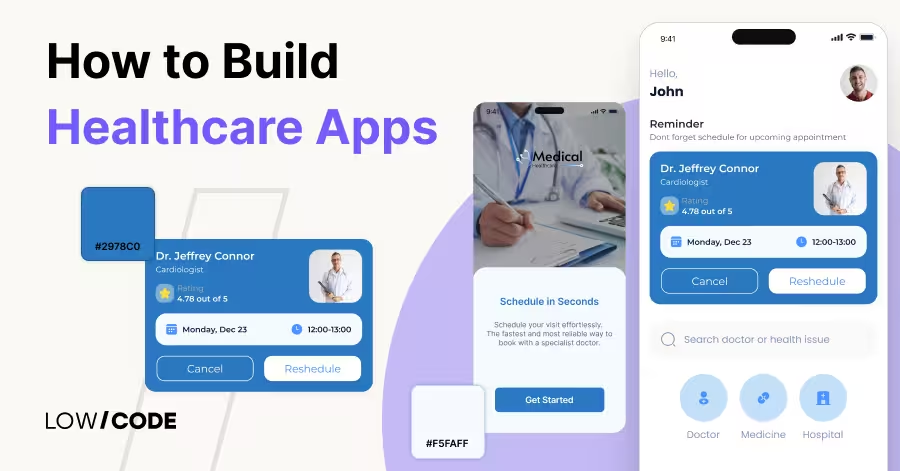
Healthcare application development is the process of creating digital tools that support medical services, patient care, and hospital management. These apps may include telemedicine platforms, electronic health record (EHR) systems, fitness tracking, or medication reminder apps.
Unlike regular mobile apps, healthcare apps must follow strict rules and ensure sensitive data is safe.
The main differences from generic app development include:
This focus makes healthcare app development more complex and highly regulated than normal app building.
The healthcare app market has experienced explosive growth, reaching $659.8 billion in 2025 and projected to hit $1.8 trillion by 2030. COVID-19 accelerated digital adoption by nearly a decade, forcing healthcare systems worldwide to embrace mobile solutions for patient care and operational management.
Hospitals, startups, and clinics are investing in healthcare apps because they improve both patient experience and operations.
A strong example is telehealth apps, which became widely used in 2024. They helped reduce patient wait times by offering virtual consultations, freeing up in-person care for urgent cases. This shows how apps can reshape healthcare delivery worldwide.
Read more | SaaS Application Development Guide
Healthcare applications come in many forms, each designed to solve specific needs for patients, doctors, and healthcare systems. Below are the main categories:
Read more | Best 7 Low-code Mobile App Builders
To be effective, healthcare apps must offer features that improve patient care, streamline doctor workflows, and ensure secure communication. Some of the most important features include:
Read more | No-code Agency vs In-house teams
In healthcare app projects, the approach you choose affects speed, cost, compliance, and user experience. With no-code and low-code mobile app platforms, both native and web-based apps can be built faster than traditional coding. Let’s see how they compare.
Native healthcare apps are created for iOS or Android specifically. With low-code tools like FlutterFlow, you can build native apps faster while still accessing advanced device features.
No-code/low-code platforms speed up development, helping healthcare providers launch secure native apps without needing large dev teams.
Web-based healthcare apps run inside browsers and are easier to deploy. No-code tools like Bubble or Webflow allow building responsive healthcare web apps quickly with strong UI flexibility.
These are ideal when clinics want cost-effective apps with quick rollout, especially for patient engagement and admin workflows.
Read more | No-code Agency vs traditional Agency
When building healthcare apps without coding, the right platform depends on your goals — from patient-facing tools to complex workflows. Here are some of the best no-code platforms for healthcare use:
Bubble is powerful for building web-based healthcare apps like patient portals, booking systems, or dashboards. It allows complex workflows, custom APIs, and HIPAA-compliant hosting options with proper setup.
Bubble is ideal for clinics that want to integrate records, automate processes, and offer responsive apps across devices. Its flexibility supports role-based access, making it useful for apps where doctors and patients need different views.
Bubble App Development
Bubble Experts You Need
Hire a Bubble team that’s done it all—CRMs, marketplaces, internal tools, and more
Read more | Bubble.io Capabilities and Limitations
FlutterFlow is best for creating native mobile healthcare apps with strong UI and device integration. It’s suitable for HIPAA-sensitive apps, remote monitoring tools, and patient engagement apps.
Developers can design quickly with drag-and-drop while still exporting clean Flutter code for custom extensions. FlutterFlow’s ability to connect to APIs and databases makes it excellent for secure healthcare workflows that need native performance and offline access.
FlutterFlow App Development
Apps Built to Scale
We’re the leading Flutterflow agency behind some of the most scalable apps—let’s build yours next.
Read more | FlutterFlow Pros and Cons
Glide turns spreadsheets into functional apps, making it a strong choice for simple healthcare tools like appointment trackers, medication reminders, or small clinic dashboards.
It’s not designed for heavy HIPAA compliance but works well for internal use or non-critical health apps. Glide is especially useful for prototypes, small practices, or wellness-related apps where speed and simplicity matter most.
Glide App Development
Turn Sheets Into Apps
As the largest Glide agency, we help businesses transform spreadsheets into powerful internal tools, CRMs, and mobile apps
Read more | Glide Advantages and Disadvantages
Automation platforms like n8n, Make, and Zapier play a big role in healthcare workflow automation. They connect apps for tasks like sending appointment reminders, syncing patient records, or alerting doctors when new data is logged.
While they don’t build apps directly, they enhance healthcare apps by ensuring smooth integrations between EHR systems, CRMs, and patient-facing platforms. This reduces manual work and improves care efficiency.
Read more | Zapier vs n8n
Airtable works well as a backend database for healthcare apps. It provides a user-friendly way to store patient information, appointment data, or treatment logs. While not inherently HIPAA-compliant, it can be paired with compliant hosting solutions for sensitive use.
Airtable is excellent for powering no-code healthcare apps because it connects easily with Bubble, Glide, or automation tools, making it a flexible foundation for structured healthcare data.
Read more | Airtable vs Xano
Building successful healthcare apps requires a step-by-step approach that balances patient needs with compliance. Each stage ensures the app is practical, secure, and medically useful from the start.
Healthcare apps must address real medical challenges rather than simply digitizing existing processes. Begin by interviewing doctors, nurses, and patients to understand their pain points. Validate whether your idea improves patient outcomes, reduces inefficiencies, or solves overlooked problems.
Focusing on one key problem with a strong solution ensures your app delivers measurable value instead of spreading efforts too thin.
Read more | AI App Development Guide
Before development, plan carefully around compliance. In healthcare, regulations like HIPAA, GDPR, and FDA requirements are non-negotiable. Start by mapping how patient data will move through your system and plan security protocols in advance.
Proper compliance mapping builds patient trust and prevents costly legal issues later. In addition to encryption and access controls, healthcare app teams should formalize incident response planning with NIST-based phases (preparation, detection/analysis, containment/eradication/recovery, and post-incident review), clear communication protocols, and recurring tabletop drills to reduce downtime and meet HIPAA expectations.
Read more | How to Build AI HR App
Selecting the right no-code tool is critical because not every platform supports healthcare’s strict standards. Match the platform to your app’s purpose:
Also evaluate integration options with EHR/EMR systems and long-term scalability. A secure, compliant platform ensures your app grows without sacrificing reliability.
Read more | How to Build an AI App for Customer Service
Even with no-code tools, healthcare app development requires deep domain expertise. Partnering with experts who understand healthcare workflows, data protection, and compliance is essential.
At LowCode Agency, we’ve built 350+ no-code apps across industries, including healthcare. Our team of expert no-code developers and designers understands both compliance needs and user experience design.
With our experience, you get apps that are secure, scalable, and intuitive. Working with the right team ensures your healthcare app is not only functional but also legally safe and clinically relevant.
Read more | Agency vs Freelancer for No-code Development
Strategic Technology Partner
We Help You Win Long-Term
We don’t just deliver software—we help you build a business that lasts.
Your first version should focus on one main workflow while ensuring compliance. Avoid trying to build every feature at once. Instead, launch a Minimum Viable Product (MVP) that solves one clinical use case exceptionally well.
A strong MVP gives healthcare professionals a tool they can actually use, while guiding further development with real feedback.
Read more | How to choose MVP features
Healthcare apps must integrate seamlessly with medical systems and pass rigorous testing. Security and reliability are critical because patient safety depends on it.
Thorough testing ensures the app works smoothly in real-world medical environments where downtime or errors are unacceptable.
Instead of a full rollout, start with a controlled pilot launch. Select a small group of hospitals or clinics willing to test early versions.
Pilot launches reduce risk while giving valuable insights into how the app fits actual medical practice.
Once validated, focus on scaling while maintaining compliance. As more users adopt your app, performance, security, and legal standards must remain strong.
Healthcare apps need constant updates to stay compliant and effective. Ongoing improvements ensure the app remains a trusted tool for both patients and providers.
At LowCode Agency, we also offer optional ongoing support for feature additions, security upgrades, and scaling. We act as your technology partner, not just developers, ensuring your healthcare app evolves smoothly as your needs grow.
Read more | Web Apps vs Native Apps | Key Differences Explained
User experience and accessibility are critical in healthcare apps because patients and providers come from diverse backgrounds, age groups, and ability levels. A thoughtful design ensures that apps are not only easy to use but also inclusive.
At LowCode Agency, we pay special attention to UX/UI because our expert design team ensures every healthcare app is accessible, intuitive, and user-centered, delivering a seamless experience for all patient groups.
Read more | How to Build an AI app for the Restaurant Business
Healthcare app compliance is not optional; it is the foundation that decides whether your app can legally operate and earn patient trust. Proper compliance protects both your organization and the sensitive medical data you manage.
A single violation can cost millions and permanently damage your reputation in the healthcare community.
Non-compliance in healthcare has severe consequences. HIPAA violations can cost from $100 to $50,000 per incident, with annual penalties reaching $1.5 million.
Beyond fines, breaches expose patient medical histories and financial information, eroding trust instantly. Non-compliant apps risk removal from app stores and even legal action. Protecting patient confidentiality is therefore critical for long-term success.
Healthcare apps must follow strict regulatory frameworks to ensure security and legal compliance. The most important include:
No-code tools like Bubble and FlutterFlow simplify compliance with HIPAA-ready hosting, encryption, audit trails, and SOC 2 certifications.
These platforms manage data residency, offer Business Associate Agreements, and ensure regular security audits. This reduces the compliance burden, letting developers focus on patient care features while staying legally safe.
Read more | How to Build AI Ecommerce platform
Data security is the backbone of every healthcare app. Since these apps handle protected health information (PHI), strict safeguards are required to keep data private and compliant. Below are key practices that ensure security in healthcare applications:
Read more | How to Build AI-driven App for Event Planning Business
For healthcare apps to deliver real value, they must integrate seamlessly with existing systems used by hospitals and clinics. No-code platforms make this process faster by offering pre-built connectors, APIs, and automation workflows.
Read more | How to build AI-driven Accountant App
Healthcare app development in 2025 requires significant investment, but the returns in efficiency and revenue often outweigh the costs. The actual budget depends on whether you are building a Minimum Viable Product (MVP) or a full-featured application.
Read more | Top 6 Automation Agencies
Despite upfront costs, healthcare apps consistently show high returns. They reduce administrative workload by automating tasks like scheduling, reminders, and billing. Hospitals using apps report up to 40% time savings and higher patient satisfaction.
Revenue opportunities also expand through telemedicine consultations, digital health subscriptions, and improved patient retention. Long term, healthcare apps lower costs, reduce errors, and improve care outcomes, making them one of the best ROI investments in medical technology.
Healthcare apps must follow payment structures that fit medical systems while ensuring patient trust and sustainable growth. The most common models include:
These models help healthcare apps remain profitable while delivering real clinical value.
Read more | Best Mobile App Development Agencies
Building healthcare apps comes with unique challenges that require careful planning and execution. Some of the biggest hurdles include:
Read more | Best Web Development Agencies
The future of healthcare applications is shaped by technology that improves efficiency, accuracy, and patient engagement. Key trends include:
Mobile App Development Services
Apps Built to Be Downloaded
We create mobile experiences that go beyond downloads—built for usability, retention, and real results.
Selecting the right partner is key to building healthcare apps that are secure, compliant, and scalable. The journey doesn’t end with an MVP — it requires continuous updates, feature expansion, and ongoing support to keep pace with regulations and user demands.
At LowCode Agency, we specialize in Bubble, FlutterFlow, Glide, and AI automation, with over 350+ no-code apps built. We act as your technology partner, not just developers, guiding growth every step of the way.
👉 Reach out to us to discuss how we can help you build scalable healthcare apps.
Last updated on
May 29, 2026
.
Jesus Vargas
-
Founder
Jesus is a visionary entrepreneur and tech expert. After nearly a decade working in web development, he founded LowCode Agency to help businesses optimize their operations through custom software solutions.
Custom Automation Solutions
Save Hours Every Week
We automate your daily operations, save you 100+ hours a month, and position your business to scale effortlessly.
Our AI — trained on 300+ shipped products — tells you what to build, what to skip, and what it'll actually cost. No fluff.
Assess My Idea"Working with LowCode Agency was the best decision I made in 2025"
Franklin Frith
CEO at HRM
The cost depends on features, integrations, and compliance needs. Traditional development ranges from 80,000 to 300,000 dollars or more. With no-code platforms like Bubble or FlutterFlow, healthcare MVPs can start from 25,000 dollars, making them faster and more affordable without compromising security or performance.
Healthcare apps must follow regulations like HIPAA in the US, GDPR in Europe, and FDA rules for clinical apps. They also need WCAG or Section 508 accessibility compliance. Requirements include secure data storage, encryption, audit trails, and strict authentication to protect sensitive patient information at every stage.
Traditional development can take six to twelve months for a full healthcare app due to compliance and complexity. With no-code platforms such as FlutterFlow, Bubble, or Glide, an MVP can often be developed within eight to twelve weeks while still ensuring scalability and regulatory readiness.
Core features include appointment scheduling, telemedicine consultations, secure messaging, and e-prescriptions. Other essential elements are patient dashboards, health monitoring, integration with EHR or EMR systems, and role-based access. These features improve patient engagement, streamline workflows, and ensure doctors and patients can interact efficiently within the app.
Patient data security is ensured through strong encryption protocols, secure APIs, and role-based access controls. Regular security audits, compliance checks, and timely updates are critical. Apps must implement end-to-end security measures, including SSL, multi-factor authentication, and monitoring, to safeguard sensitive medical records against breaches or misuse.
Native apps offer the best performance, security, and offline use, making them suitable for HIPAA-sensitive healthcare solutions. Cross-platform or no-code tools like FlutterFlow and Bubble are faster and more cost-effective. The choice depends on compliance requirements, budget, and whether broad accessibility or advanced security is the top priority.
Custom App Development
Best 9 Education Software Development Companies
Compare the best 9 education software development companies. Discover top-rated teams, edtech expertise, and how to choose the right partner.
Custom App Development
Telehealth App Development | Guide for Startups
Learn how to build a telehealth app from scratch. Explore features, cost, tech stack, and steps to create a secure, scalable telehealth solution
Custom App Development
Best 9 Insurance App Development Companies (Top Rated)
Compare the best 9 insurance app development companies. See top-rated teams, expertise, and how to choose the right partner for your insurance product.
Custom App Development
Enterprise Software Development Tools & Stack
Explore enterprise software development tools and technology stacks. Learn about development platforms, frameworks, DevOps tools, and how to select the right stack.
Custom App Development
How to Build a DoorDash-Like App Using Low-code
Learn how to build a DoorDash-like app using low-code. Covers features, tech stack, workflows, costs, and scaling a food delivery platform.
Custom App Development
Enterprise Software Development Cost: Complete Guide
Understand enterprise software development costs, pricing factors, typical ranges, and how to budget effectively for custom software projects.