|
VOOZH | about |
|
VOOZH | about |
Spring Data JPA is a powerful tool in the Spring ecosystem that simplifies the implementation of data access layers in Java applications. It provides several repository interfaces, each offering different capabilities and levels of abstraction. These interfaces allow developers to perform operations such as creating, reading, updating, and sorting data with minimal boilerplate code, streamlining the development process and enhancing productivity.
Spring Data JPA offers a variety of repository interfaces that provide different levels of abstraction and functionality for managing data access in Java applications. Understanding these repository interfaces is crucial for efficiently handling database operations with minimal boilerplate code. The three primary repository interfaces in Spring Data JPA are CrudRepository, JpaRepository, and PagingAndSortingRepository.
The CrudRepository interface is the most basic of the repository interfaces provided by the Spring Data JPA. It defines the collection of the methods for the CRUD (Create, Read, Update, Delete) operations on the entities. By extending this interface, we can automatically gain access to these methods which include:
Use Case: CrudRepository is an idea for the simple data management tasks where the basic CRUD operations are sufficient.
The JpaRepository interface extends the CrudRepository and adds the more sophisticated JPA functionalities. It can provides the additional methods are specifically related with the JPA operations, such as:
Use Case: JpaRepository can be suitable when you need to leverage the advanced JPA features like batch operations, custom queries, and direct interaction with the persistence context.
The PagingAndSortingRepository interface extends the CrudRepository and introduces the methods to handle the pagination and sorting. it can includes the following methods:
Pagination involves dividing the result set into the manageable chunks or pages, which is useful when dealing with the large datasets. Sorting allows you to specify the order in which the data should be retrieved based on the one more fields.
Use Case: PagingAndSortingRepository is the go-to interface when you need to handle the large datasets efficiently and require support for the pagination and sorting.
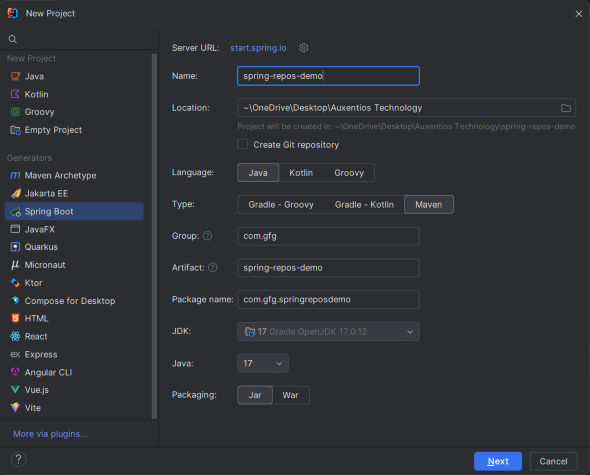
Create a new Spring Boot project using IntelliJ IDEA. Choose the following options:
Click on the Next button.
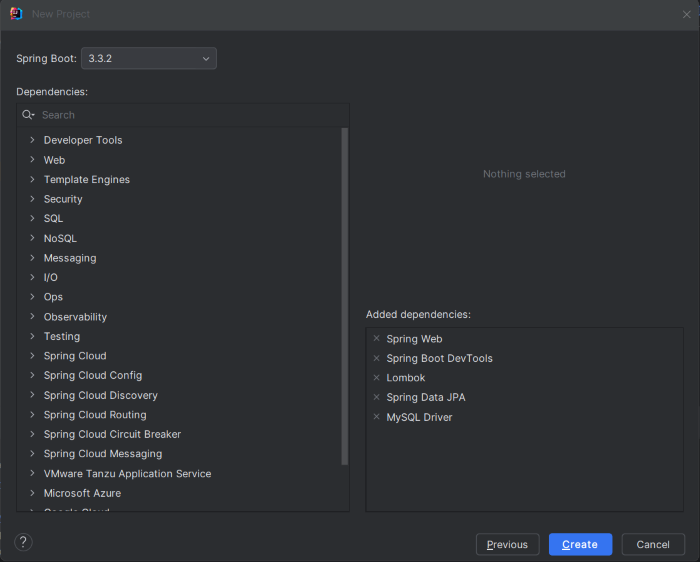
Add the following dependencies to your Spring Boot project:
Once the project is created, the file structure should look like this:
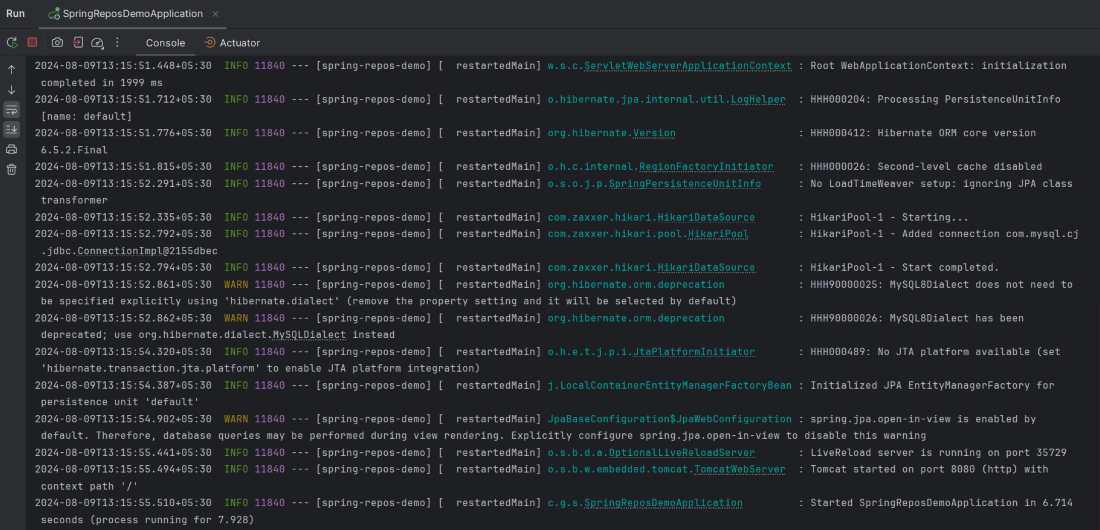
Once completed the project, it will run and start at port 8080.
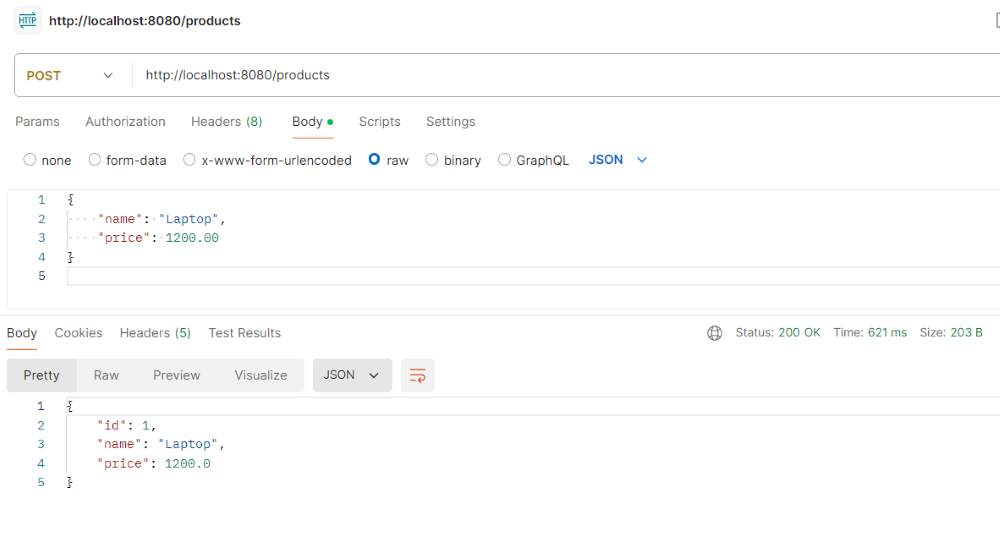
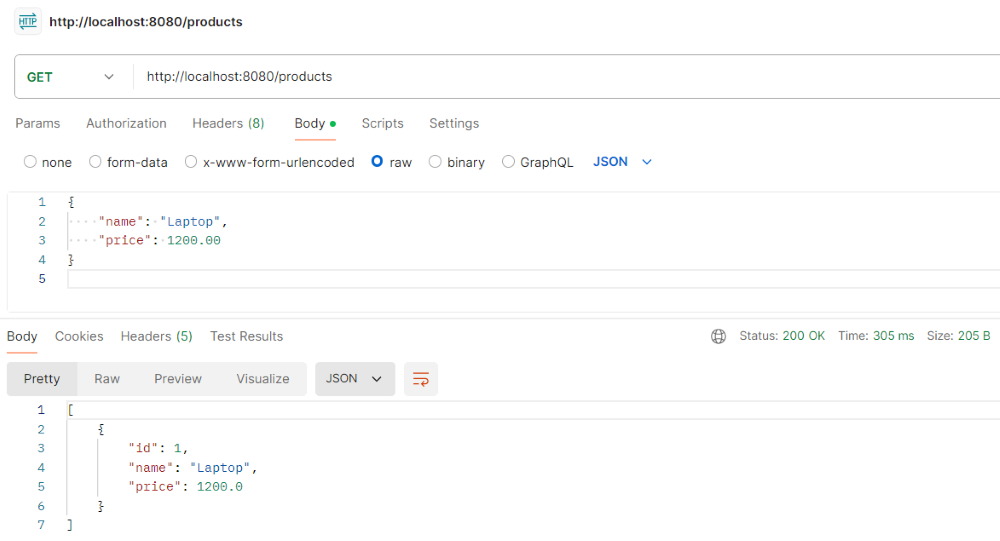
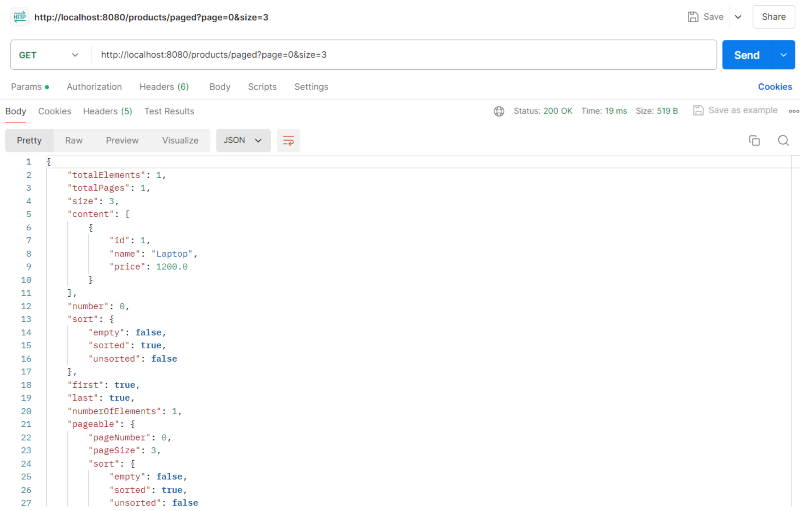
POST http://localhost:8080/productsGET http://localhost:8080/productsGET http://localhost:8080/products/paged?page=0&size=3In this article. We explored CrudRepository, JpaRepository, and PagingAndSortingRepository in the Spring Data JPA. Each repository interface can provides the specific functionalities that cater to different needs from basic CRUD operations to more advanced JPA-specific operations and pagination. By the using these repositories, we can efficiently manage the data layer with minimal code and effort of the Spring Boot application.