|
VOOZH | about |
|
VOOZH | about |
Securing APIs is essential to ensure that only authorized clients can access application resources. One common approach is using an API Key and API Secret, which act as credentials sent with each request. Spring Security allows us to validate these credentials before granting access to protected endpoints.
The following concepts are fundamental to understanding how API Key and Secret authentication works in Spring Security.
Authentication: It verifies the identity of the client making the request.
Example: Checking whether the provided API Key and Secret are valid.
Authorization:It determines whether the authenticated client has permission to access a resource.
Example: Allowing authenticated users to access /api/** endpoints.
A custom authentication token stores the API Key and Secret during the authentication process.
The filter intercepts incoming HTTP requests and extracts credentials from request headers.
Spring Security configuration defines:
The controller exposes secured REST endpoints that can only be accessed after successful authentication.
We can develop the simple spring boot application that can demonstrates the securing spring boot API key and secret of the application.
Create a new Spring Boot project using Spring Initializr and add the required dependencies,
pom.xml
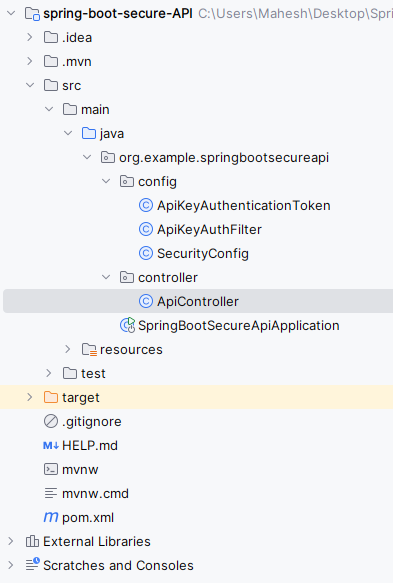
After the creation of the project has done, the folder structure will be like below image.
Open application.properties file and add the configuration for the server port in the project.
spring.application.name=spring-boot-secure-api
server.port=8081
Create a custom authentication token class.
Create a custom filter that intercepts requests.
Create the SecurityConfig class.
Create the Spring Boot entry point.
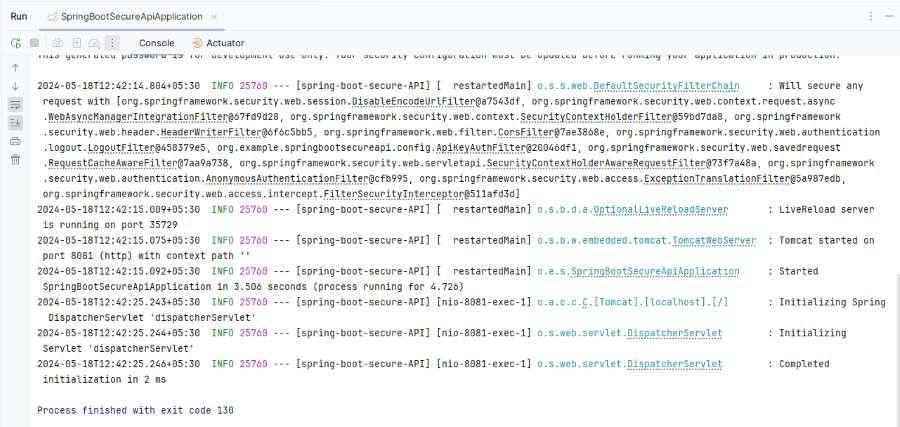
Once, we run the application, it will start at port 8081.
GET http://localhost:8081/api/data
Then show the error like below:
Missing API Key and secret
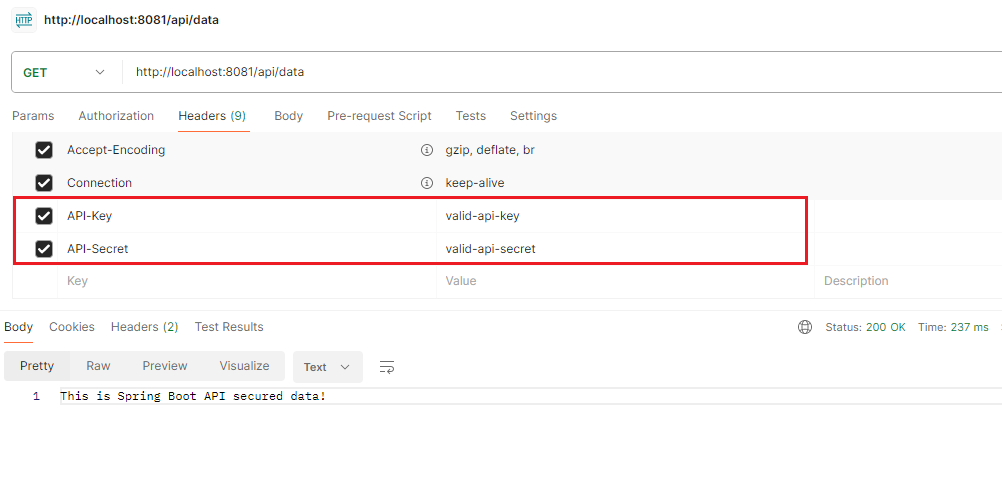
2. Endpoint Test with API key and secret
GET http://localhost:8081/api/data
Add the API key and secret in Header section.
API Key : valid-api-key
API Secret: valid-api-key
By the following these steps, we can secure the Spring Boot API using API keys and secrets. This method ensures that only the clients with valid credentials can access the API endpoints and thereby adding the extra layer of the security to the Spring Boot application.