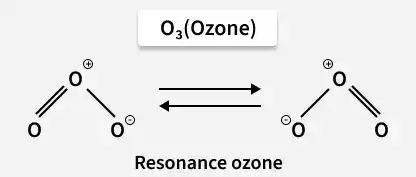
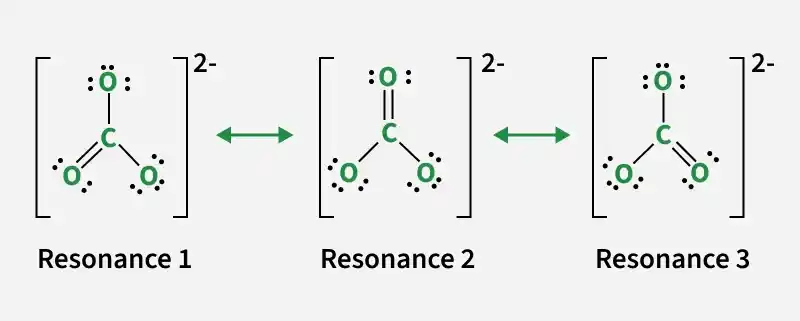
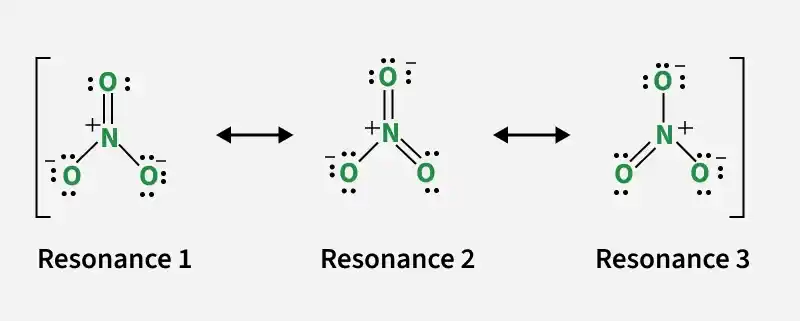
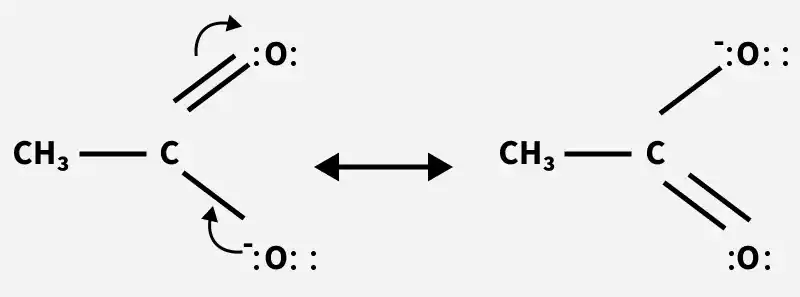
Resonance is a concept used to explain the structure of molecules that cannot be represented by a single Lewis structure. In such molecules, electrons are not confined between two atoms but are delocalized over multiple atoms. These molecules are described by two or more resonance structures, and the actual structure is a resonance hybrid of all these forms, which leads to greater stability and affects properties like bond length and chemical behaviour.
When a molecule cannot be represented by a single Lewis structure, it is shown by two or more possible structures. These are called resonance structures or canonical forms.
In these structures:
The positions of atoms remain the same.
Only the arrangement of electrons changes (like double bonds or lone pairs).
These different structures together represent the actual molecule.
They are imaginary structures (not real individually).
The real molecule is a combination of all structures.
Each structure contributes to the stability of the molecule.
More stable structures contribute more to the actual structure.
Resonance Hybrid
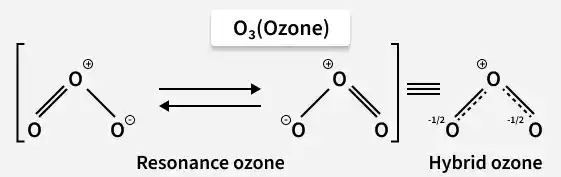
When a molecule has more than one resonance structure, the real structure of the molecule is not any one of those individual structures. Instead, the actual molecule is a combination of all the resonance structures. This real structure is called the resonance hybrid. The resonance hybrid shows the true arrangement of electrons in the molecule.
It represents how electrons are delocalized (spread out) over different atoms, rather than being fixed in one place.
It is the actual structure of the molecule.
It is more stable than any individual resonance structure.
Electrons are delocalized over the molecule.
Bonds in the hybrid have intermediate character (not purely single or double).
Resonance structures are drawn to show the different possible arrangements of electrons in a molecule. While drawing them, certain rules must be followed to represent the molecule correctly.
Only electrons move in resonance, atoms always remain in the same position.
Only π electrons or lone pairs are involved; sigma bonds do not break.
The total number of electrons remains the same in all structures.
The overall charge of the molecule does not change, only the position of charge may shift.
Each atom should satisfy the octet rule (especially carbon, nitrogen, oxygen).
Use a double-headed arrow (↔) between resonance structures, not a normal reaction arrow.
Structures differ only in the arrangement of electrons, not atoms.
More stable structures contribute more to the actual structure.
Stability is higher when there is complete octet, minimum charge separation, and negative charge on more electronegative atom.
Resonance Effect
Resonance effect (also called mesomeric effect) is the effect shown by a group in a molecule due to the movement of electrons through resonance. It involves the delocalization of π electrons or lone pair of electrons in a conjugated system. This effect influences the distribution of charge in a molecule and affects its stability and reactivity.
There are two types of resonance effect:
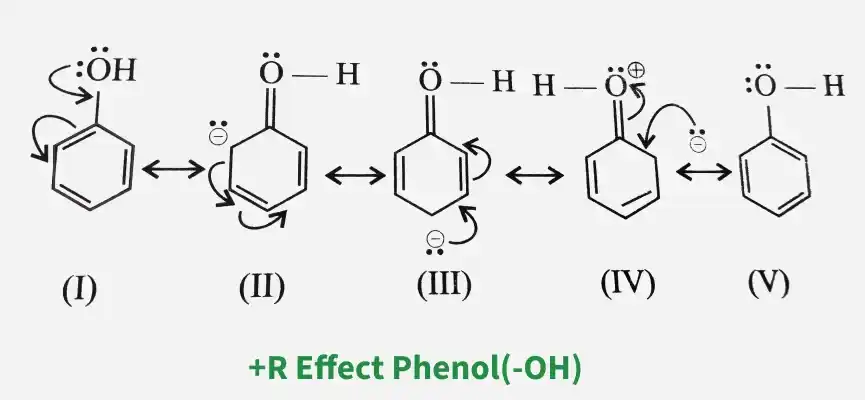
1. +R Effect (Positive Resonance Effect)
In this type, a group donates electrons to the rest of the molecule through resonance. This usually happens when the group has lone pairs of electrons that can be shared with the system.
These groups push electron density towards the molecule
They increase electron density, especially in systems like benzene rings
This makes the molecule more stable and reactive towards electrophiles
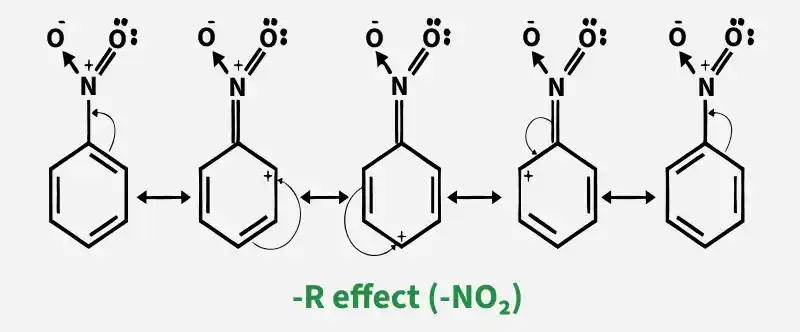
In this type, a group withdraws electrons from the molecule through resonance. This happens when the group has multiple bonds (like double bonds) or highly electronegative atoms.
These groups pull electron density away from the molecule
They decrease electron density in the system
This makes the molecule less reactive towards electrophiles