Carbon is one of the most important elements found in nature, serving as the basic building block of all living organisms and a key component of substances such as coal, petroleum, natural gas, and atmospheric carbon dioxide. Its ability to bond with elements like hydrogen, oxygen, nitrogen, and halogens allows it to form a vast variety of compounds, making it fundamental to both organic and inorganic chemistry. This remarkable ability to form such a large number of diverse compounds is what defines the versatile nature of carbon.
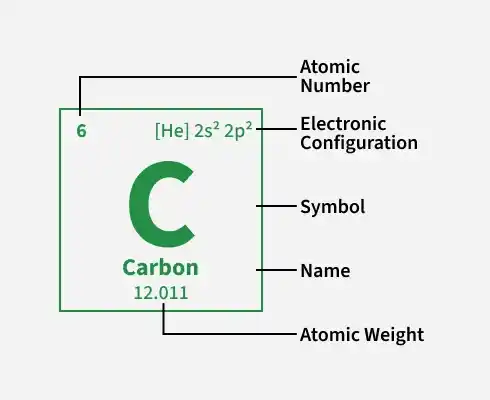
👁 carbon_c_element- Carbon has an atomic number of 6, which means it has six protons and six electrons.
- Its electronic configuration is 2,4, which means it has four electrons in its outermost shell (valence shell).
- Because of these four valence electrons, carbon can form four covalent bonds with other atoms. This property is known as tetravalency.
- Carbon also exists in different forms known as allotropes, such as diamond, graphite, and fullerene.
- These forms have different physical properties but are made of the same element.
Examples: methane (CH4), which is a simple hydrocarbon found in natural gas, and carbon dioxide (CO2)
Reasons for the Versatile Nature of Carbon
Carbon is considered a versatile element because it can form a very large number of stable compounds. This is mainly due to some special properties of carbon that allow it to combine with many elements and also with other carbon atoms. The main reasons for the versatile nature of carbon are explained below.
1) Catenation
- Catenation is the ability of carbon atoms to bond with other carbon atoms to form long chains, branched chains, or ring structures.
- Carbon–carbon bonds are strong and stable, which allows carbon atoms to form large and complex molecules.
- Because of catenation, carbon can form very long chains of atoms, which leads to the formation of millions of different compounds.
Examples:
- Ethane (C2H6 ) – two carbon atoms joined together
- Propane (C3H8 ) – a chain of three carbon atoms
- Benzene (C6H6 ) – carbon atoms arranged in a ring
2) Tetravalency
- Carbon has four electrons in its outermost shell, so it has a valency of four.
- This property is called tetravalency.
- Because of tetravalency, carbon can form four covalent bonds with other atoms such as hydrogen, oxygen, nitrogen, and chlorine.
- This ability to form four bonds allows carbon to create many different structures and compounds, which contributes to its versatile nature.
Examples:
- Methane (CH4) – carbon forms four single bonds with four hydrogen atoms
- Carbon dioxide (CO2) – carbon forms double bonds with two oxygen atoms
3) Ability to Form Multiple Bonds
- Carbon can form single bonds, double bonds, and triple bonds with other atoms.
- This increases the number of possible compounds carbon can form.
- Because of these different bonding possibilities, carbon can form a wide variety of molecules with different structures and properties.
Examples:
- Ethane (C2H6) – single bond between carbon atoms
- Ethene (C2H4) – double bond between carbon atoms
- Ethyne (C2H2) – triple bond between carbon atoms
4) Small Size of Carbon Atom
- Carbon atoms are small in size, which allows the nucleus to hold the shared electrons strongly when forming bonds.
- Because of this, carbon forms strong and stable bonds with other atoms as well as with other carbon atoms.
- The small size also helps carbon atoms come closer together, which makes the carbon–carbon bonds very strong and stable.
Examples:
- Long carbon chains in compounds like propane (C3H8)
- Ring structures such as benzene (C6H6)
5) Ability to Form Covalent Bonds
- Carbon usually forms covalent bonds by sharing electrons with other atoms.
- This happens because carbon has four valence electrons and needs four more electrons to complete its outer shell.
- Covalent bonding allows carbon to form stable molecules with many elements such as hydrogen, oxygen, nitrogen, and chlorine.
Examples:
- Methane (CH4) – carbon forms covalent bonds with hydrogen
- Carbon dioxide (CO2) – carbon forms covalent bonds with oxygen
Importance of Versatile Nature of Carbon
- Carbon can form a large number of stable compounds with itself and other elements.
- It shows tetravalency, meaning it can form four covalent bonds.
- It has the property of catenation, allowing it to form long chains, branched chains, and ring structures.
- Its small atomic size helps in forming strong covalent bonds.
- Carbon compounds can have a wide variety of structures and properties.
- Carbon is the basis of life, as all major biological molecules contain carbon.
- Important biomolecules include carbohydrates, proteins, fats, and nucleic acids.
- Carbon compounds are essential for growth, energy, and body functions.
- They are widely used in daily life as fuels, medicines, plastics, fibers, and detergents.
Examples:
- Methane (CH4) – used as a fuel in natural gas
- Ethanol (C2H5OH) – used in medicines and as a fuel
- Plastics and polymers – made from carbon compounds
Related Articles: