|
VOOZH | about |
|
VOOZH | about |
A two-terminal electrical device with its voltage-current relationship as its only distinguishing feature is represented mathematically as an idealized circuit element. Although ideal circuit elements are not "off-the-shelf" circuit components, their significance comes from the ability to be coupled to simulate real circuits made up of nonideal elements and other electrical components, allowing for the study of such circuits.
A circuit is an interconnection of elements. Based on their capability to generate energy these elements are classified into active or passive elements. Electric circuits are made up of three circuit components. These are resistance, inductance, and capacitance. These are called passive circuit elements and they do not transfer electrical energy. On the other hand, there are active elements like voltage and current sources which transfer electrical energy to the circuits.
The term "active element" refers to an independent source that can continually produce or absorb energy.
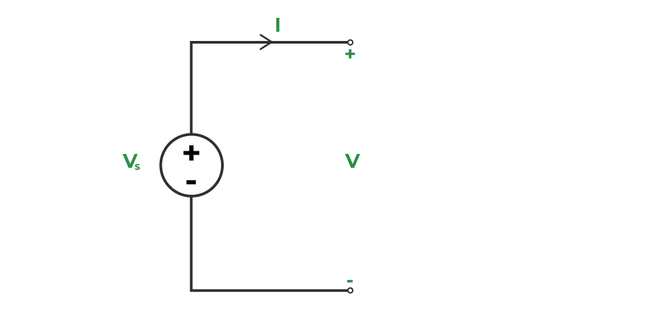
An independent voltage source is shown as,
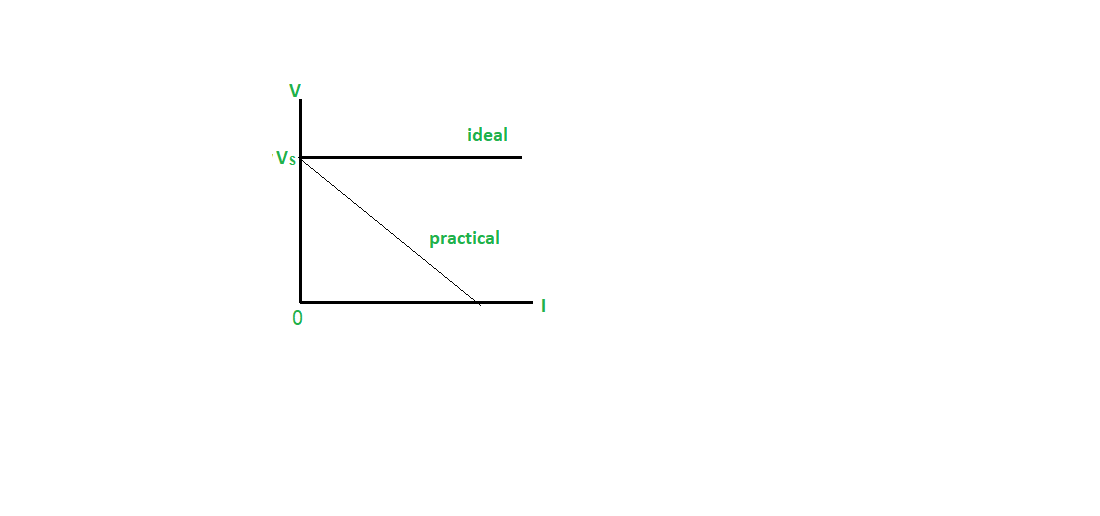
The ideal source's voltage is considered to be independent of the circuit's current. When current flows out of the positive terminal, the voltage source supplies power to the circuit; when current flows into the positive terminal, power is consumed. There is no limit to the amount of power that a perfect voltage source can provide or absorb.
Energy is given through a conversion process from another energy type in a practical voltage source, and the terminal voltage is slightly current-dependent. The practical voltage source has a very low internal resistance.
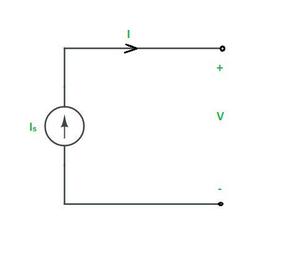
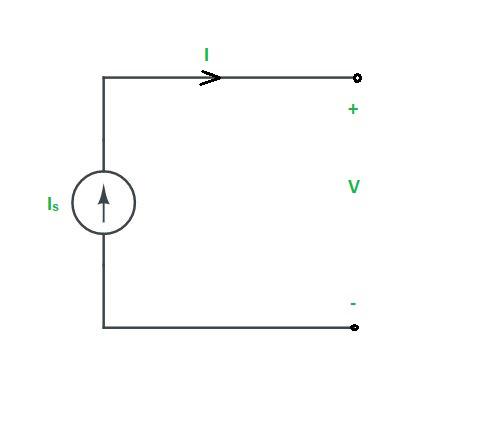
An independent current source is shown as,
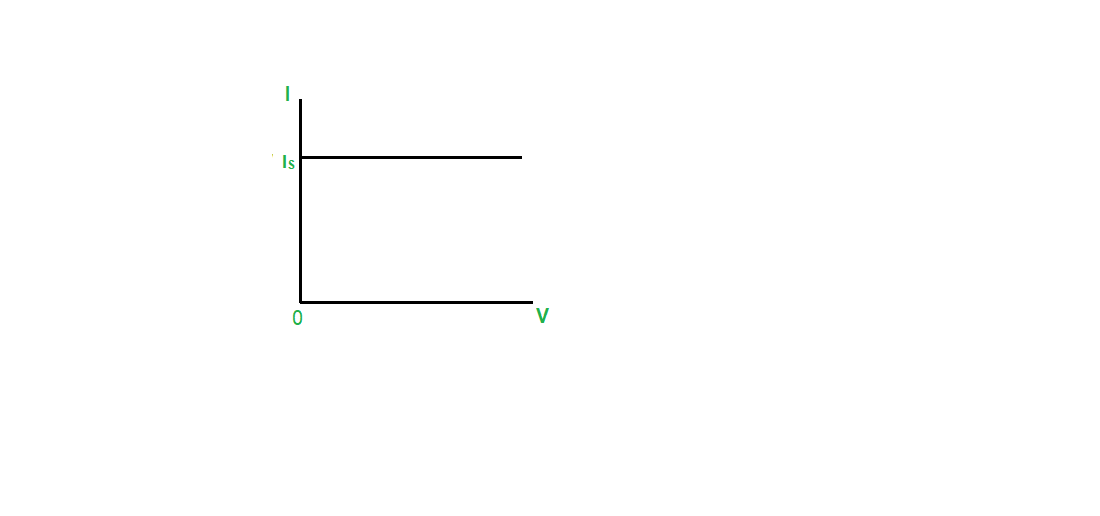
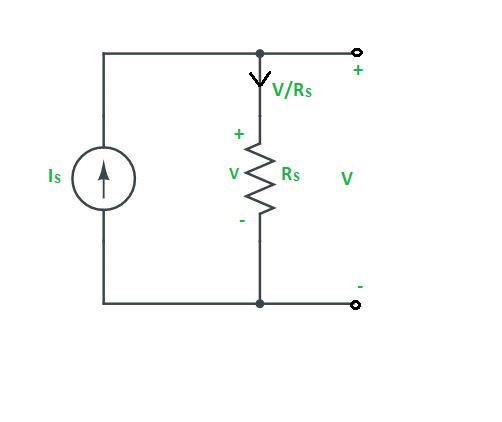
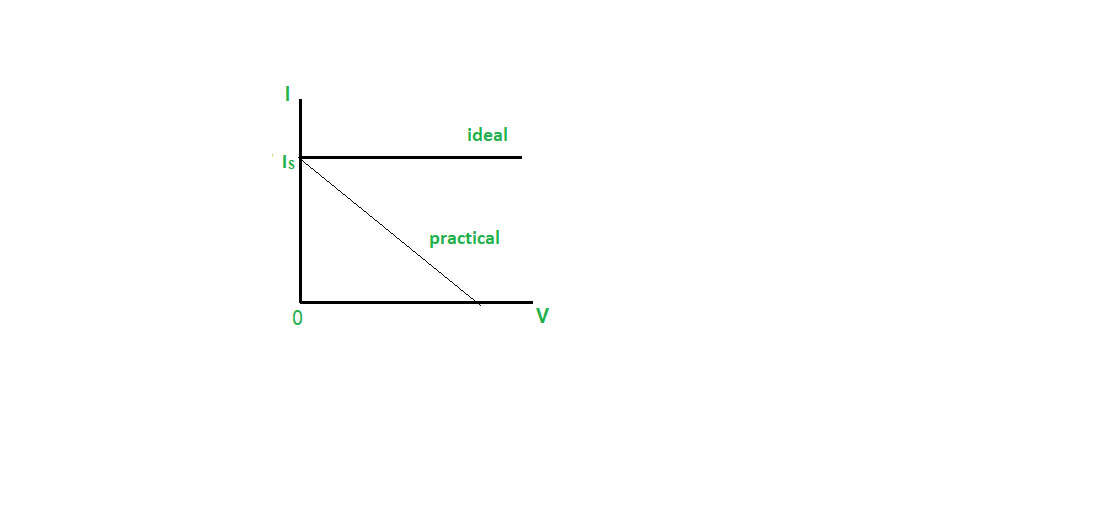
The current supplied by an ideal current source is voltage-independent. A practical current source is an ideal current source that is parallel and has a high internal resistance, and the current is also voltage-dependent based on the magnitude of the internal resistance.
Elements like resistance, inductance, and capacitance are called passive elements.
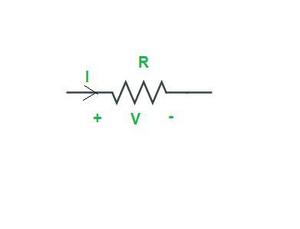
Resistance is defined as the property of a substance that opposes the flow of charge or electricity through it. Conductors offer very little resistance and hence readily allow electricity to flow through them, whereas insulating materials offer such a high resistance that they allow practically no electricity to flow through them. The practical unit of resistance is the ohm (Ω). The resistance of a conductor will be 1Ω when it allows 1A current to flow through it on the application of 1V across its terminals.
Ohm's law states that the voltage across a resistor equals the product of the current flowing through it and the resistance of the resistor. It may be expressed mathematically as
V = IR⇒ I = V/R
The resistance offered by a conducting material varies as follows:
Thus, the resistance R offered by the conductor is given by,
R = ρl/A
where l is the length of the conductor, A is the cross-sectional area and ρ is a constant of the material, generally known as the specific resistance or resistivity of the material. The resistivity of a material depends on its nature and the temperature of the conductor, but not on its shape and size.
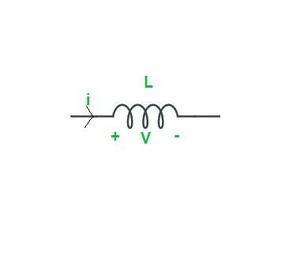
Inductance is the storage element that can store and deliver energy but its energy-handling capacity is limited. Inductor stores energy in the form of magnetic field. When a conductor is wound like a spring, then it is said to be a coil. The coil will exhibit ideally inductance(L) and practically some leakage resistance (R), which is modeled in series with the inductance. Henry is the practical unit of inductance (H). An inductor is a practical inductance.
When a time-varying current is flowing through the coil, a time-varying magnetic flux will be produced (by Faraday's law). The total flux produced is
ψ = NΦ Weber where N= number of turns Φ = flux per turn
The total flux generated is inversely proportional to the coil's current.
i.e ψ ∝ i ⇒ ψ = Li where L = inductance parameter of the coil.
The inductance of an inductor or a coil depends on the following factors :
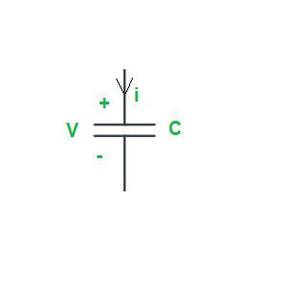
A Capacitor is a Passive element that stores energy in the form of electric field. It is a practical element that have the property of capacitance.
Farad is the unit of capacitance (F). A capacitor typically consists of two conducting plates that are separated by a dielectric material. The capacitor holds a positive charge when a positive voltage is placed across it. The capacitor also stores a negative charge when a negative voltage is placed across it. Capacitor only allows A.C current to pass through them and stops D.C Current. That's why Capacitor is used to filter non-A.C Component of current.
As a result, the quantity of charge stored in the capacitor is proportional to the applied voltage V across it, and the relationship is linear. It may be expressed mathematically as
Q ∝ V⇒ Q = CV where C = the conductor's capacitance Q = the charge held in a capacitor.
The capacitance of a capacitor is determined by the following factors:
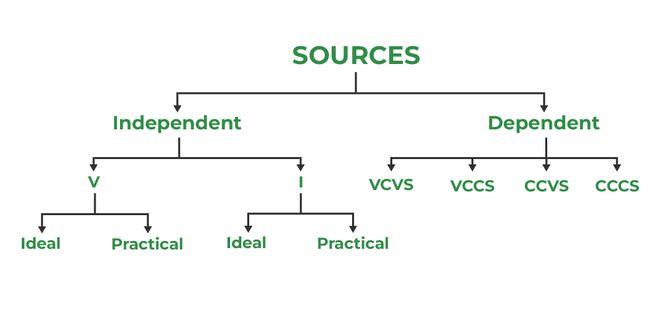
Energy sources are classified as :
A voltage that is maintained by an independent voltage source is either fixed or varies over time and is unaffected by any other quantity.
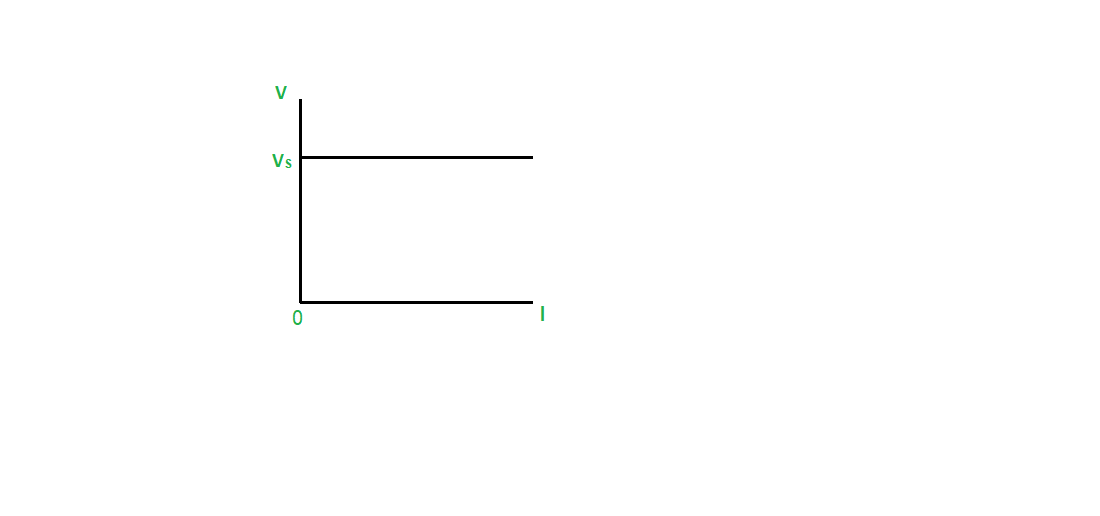
A two-terminal component having the feature that the voltage between the terminals is predetermined at each point in time is an ideal voltage source. The current flowing from the source has no bearing on this voltage. The internal resistance of an ideal voltage source is zero.
An ideal voltage source and its v-i characteristics are as follows :
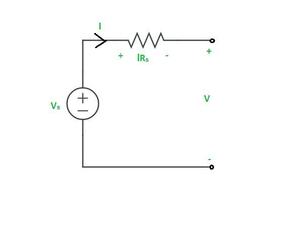
Practical Voltage Source
An ideal voltage source (Vs) is connected in series with a low internal resistance (Rs) to form a practical voltage source. A practical voltage source and its v-i characteristics are as follows :
A current that is maintained by an independent current source is either fixed or varies over time and is unaffected by any other quantity.
An ideal current source is, by definition, a two-terminal element having the property that the current flowing through the device is defined at every point in time. This current is unaffected by the voltage across the source. The resistance of the ideal current source is infinite. Zero conductance is equivalent to infinite resistance. As a result, the ideal current source has no conductance.
An ideal current source and its v-i characteristics are as follows :
An ideal current source (Is) is connected in parallel with a high internal resistance (Rs) or low conductance to form a practical current source. A practical current source and its v-i characteristics are as follows :
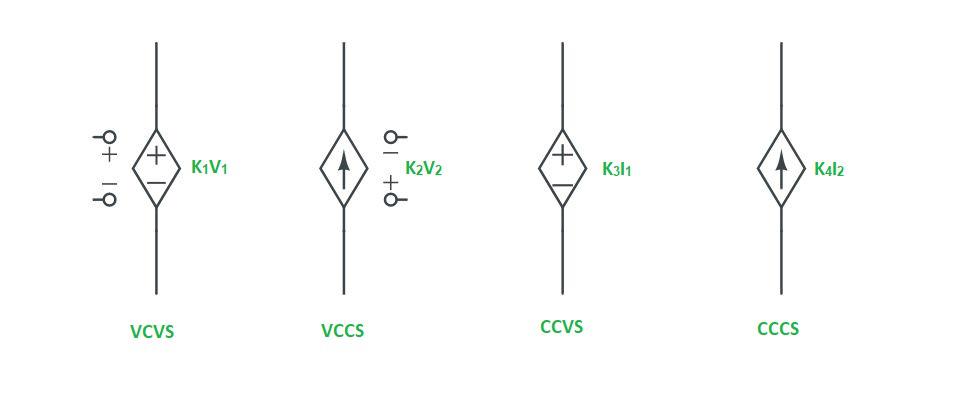
A dependent source is a current or voltage source that depends on another circuit's current or voltage rather than having a fixed value (i.e., independence). There are four types of dependent sources. They are as follows :
Circuit elements are components forming the basics of electronic systems, and each has unique functions contributing to their performance and reliability in circuits. It thus becomes very important for anyone working with electronics-to either design a circuit or investigate a circuit that is already built-to understand how each circuit element can be useful or detrimental. These elements then keep on evolving based on the advancements in technology, hence improving designs that are compact but still efficient enough to meet demand from various modern applications.