|
VOOZH | about |
|
VOOZH | about |
19 min
read
Learn how to build secure mobile apps with low-code in 2026. Security best practices, data protection, compliance, and real-world deployment tips.
By
Jesus Vargas
Updated on
May 29, 2026
.
Reviewed by
Real-World Experience with No-Code Tools: With over 320 apps built, we know firsthand what works—and what doesn't—when using no-code platforms like Glide, Bubble, FlutterFlow and Webflow.
Expert Team with 40+ Years of Combined Experience: Our team has deep technical knowledge, with experts who use no-code tools to solve real-world problems for clients every day, ensuring our advice is actionable and reliable.
Detailed Guides Based on Actual Projects: We don’t just talk about no-code; we use it daily to solve real business problems for our clients, from MVPs to complex automations.
Take a deeper look at our editorial guidelines
Mobile app security is no longer optional, even for early-stage products. Studies show that over 70 percent of mobile apps have at least one serious security flaw.
As more teams build apps using low-code, the real question is not speed versus safety. It is how to build secure mobile apps with low-code without slowing down delivery or growth.
Yes, low-code can build secure mobile apps when security is treated as a core design requirement, not an afterthought. The platform does not decide security. Your architecture and decisions do.
Low-code is secure enough for production when built responsibly. Apps fail security reviews because of poor decisions, not because low-code lacks capability.
Mobile App Development Services
Apps Built to Be Downloaded
We create mobile experiences that go beyond downloads—built for usability, retention, and real results.
Security becomes far more critical when you move from internal tools to mobile apps used by real customers. Mobile apps expose data, APIs, and workflows to a wider and less controlled environment, which increases both risk and responsibility.
Many founders underestimate these risks early. This breakdown of real-world mobile risks founders face shows why security must be planned from the start, even when using low-code.
Read more | How to Choose the Low-code Platform?
Low-code platforms simplify infrastructure, but they do not remove your responsibility for security. Understanding what the platform handles versus what you must design yourself is key to building secure mobile apps with low-code.
Security failures rarely come from the platform itself. This practical guide on understanding platform responsibility in practice explains where low-code ends and builder responsibility begins
Read more | How to Evaluate Low-code Agencies?
Low-code speeds up mobile app development, but it does not replace core security fundamentals. These basics still apply no matter how fast you build or which platform you use.
These fundamentals are non-negotiable for mobile apps. This guide on full mobile security foundations explains how these principles apply across different mobile architectures, including low-code builds.
Read more | Low-code MVP Development for Startups
Authentication and access control are where many low-code mobile apps succeed or fail security reviews. Mobile environments require stronger discipline because sessions, devices, and user behavior are less predictable than web or internal tools.
Strong access control protects both users and systems. This guide on building structured user access for business apps explains how to design permissions and authentication flows that stay secure as mobile apps scale.
Read more | Best Low-code Development Agencies
Low-code makes it easy to build logic visually, but that convenience can hide security risks if guardrails are not applied. Securing data and business logic is critical when mobile apps move into real-world usage.
Securing logic is about discipline, not complexity. This guide on handling logic safely in production apps explains how to design secure workflows without slowing down development.
Read more | 9 Best Generative AI Development Companies
Mobile apps introduce security risks that do not always exist in web or internal systems. Low-code makes building easier, but mobile environments still require careful planning to avoid exposure at the device and network level.
Mobile security needs a different mindset than web security. This overview of cross-platform considerations explains how security requirements change when apps run across devices and environments.
Read more | Best 7 Low-code Mobile App Builders
Low-code mobile apps often rely on external APIs, plugins, and third-party services. These integrations add power and speed, but they also introduce security risks if they are not handled carefully.
Integrations should strengthen your app, not weaken it. This guide on AI and external integrations in mobile apps explains how to connect third-party services securely in low-code environments.
Read more | Best Mobile App Development Agencies
Low-code platforms abstract source code, but that does not mean security testing is optional. You still need structured ways to validate how your mobile app behaves under real conditions before and after launch.
Security validation is an ongoing process, not a one-time checklist. This overview of MVP-stage testing realities explains how to test low-code mobile apps realistically when source code is abstracted.
Read more | Build AI-Powered Mobile Apps
Security expectations increase sharply once your low-code mobile app moves toward public release. App Store and Play Store reviews often catch gaps that teams miss during development, especially around data handling and user safety.
Launching securely is part of product maturity. This guide on publishing securely explains how to meet app store security expectations when releasing low-code mobile apps into production.
Read more | Native mobile app development
As low-code mobile apps move beyond early users and into enterprise environments, security expectations rise significantly. Teams must plan for visibility, accountability, and compliance, not just basic protection.
Enterprise security is about trust and readiness, not just protection. This guide on building enterprise-grade mobile systems explains how low-code apps can meet higher security and compliance expectations without slowing development.
Read more | Cross-Platform Mobile App Development Guide
Most low-code security issues are not caused by advanced attacks. They come from small assumptions and shortcuts made early that quietly turn into serious risks once a mobile app is live.
Security mistakes are usually preventable with the right mindset. This breakdown on learning from failed builds highlights where low-code teams commonly go wrong and how to avoid repeating those errors.
Read more | Business Mobile App Development Guide
Low-code can be a secure choice for many mobile apps, but only when the risk profile matches the platform’s strengths. Knowing where low-code fits well and where it struggles helps teams avoid costly security surprises later.
Some teams also compare low-code options directly before committing long term, especially for mobile-heavy products. This comparison of low-code mobile app builders helps clarify where each platform fits. For lighter, internal-use scenarios, Glide often comes up in discussions, as outlined in this Glide mobile app security context.
Low-code is secure enough when the app’s risk profile is understood and designed for. Knowing when it fits and when it does not is the foundation of building responsibly.
Security requirements change based on how an app is used, what data it handles, and who accesses it. Low-code mobile apps must be designed differently depending on the industry and risk profile.
Security works best when it is tailored to the app’s purpose. Treating all low-code mobile apps the same is what leads to avoidable risks as products grow.
Security choices shape both the cost of building a low-code mobile app and its ability to generate revenue safely. Treating security as an add-on often increases long-term cost and puts monetization at risk once the app is live.
Understanding how costs evolve is critical when scaling securely. This breakdown of low-code mobile app development cost explains how budgets change as features and protections increase.
Monetization should never outpace security. Aligning both early is key, as shown in these practical mobile app monetization strategies used by growing low-code products.
As mobile products become more complex, security requirements change quickly. White-label models, native capabilities, and multi-tenant setups introduce risks that low-code teams must plan for early.
Advanced mobile scenarios magnify small security gaps. Planning for isolation, control, and visibility is what keeps complex low-code apps safe in production.
At LowCode Agency, we approach mobile security as a product decision, not a checklist added before launch. Our focus is on building low-code mobile apps that pass real security reviews, scale safely, and remain stable as usage, data, and integrations grow.
As a product studio, we have built over 350 low-code apps across mobile, SaaS, and internal systems, many of them operating in production for years. Teams work with us not just to ship fast, but to ship responsibly. If you are choosing a partner for a secure low-code mobile app, this guide on choosing the right development partner can help clarify what to look for.
If security, speed, and long-term stability matter for your mobile app, reach out and let’s discuss how to build it the right way from day one.
FlutterFlow App Development
Apps Built to Scale
We’re the leading Flutterflow agency behind some of the most scalable apps—let’s build yours next.
Security in low-code mobile apps is not theoretical for us. We’ve shipped multiple low-code mobile applications where data protection, access control, and production readiness were critical from day one.
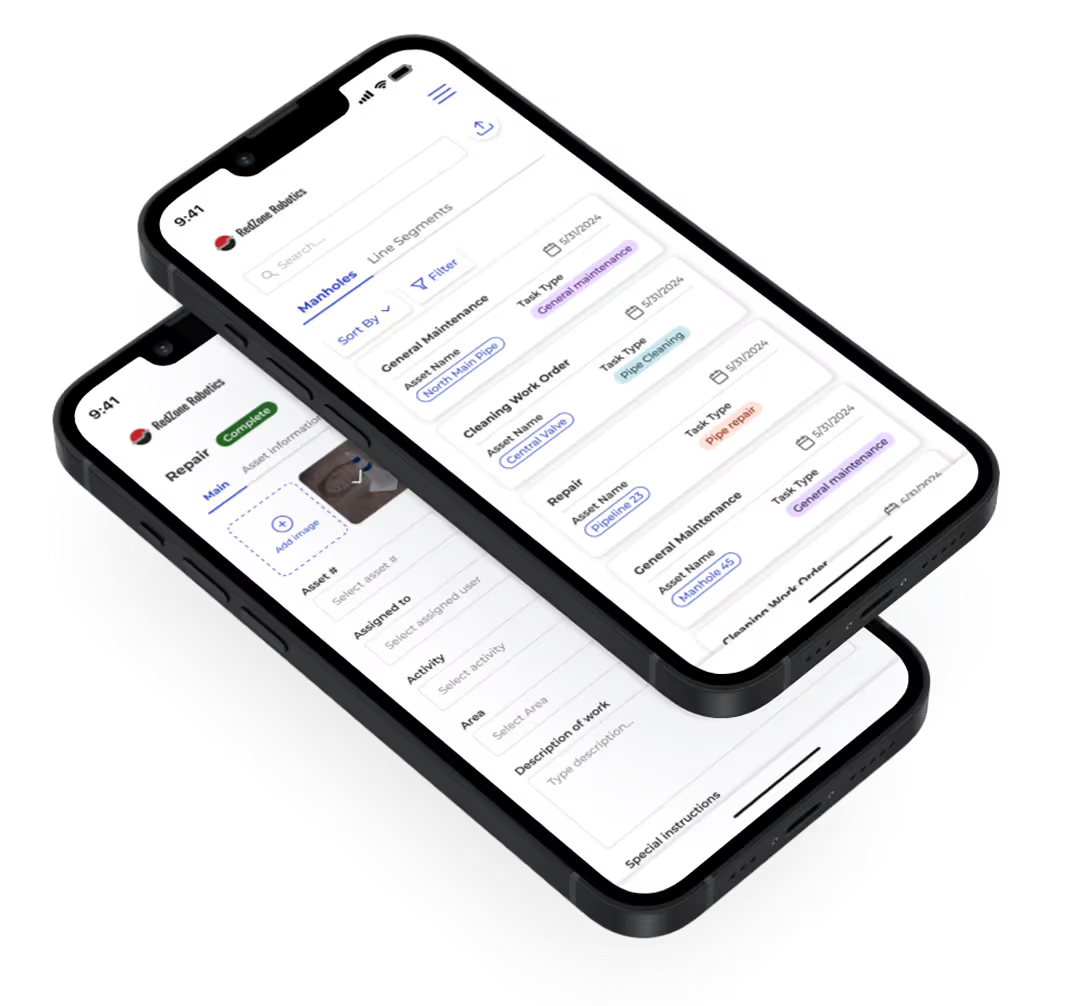
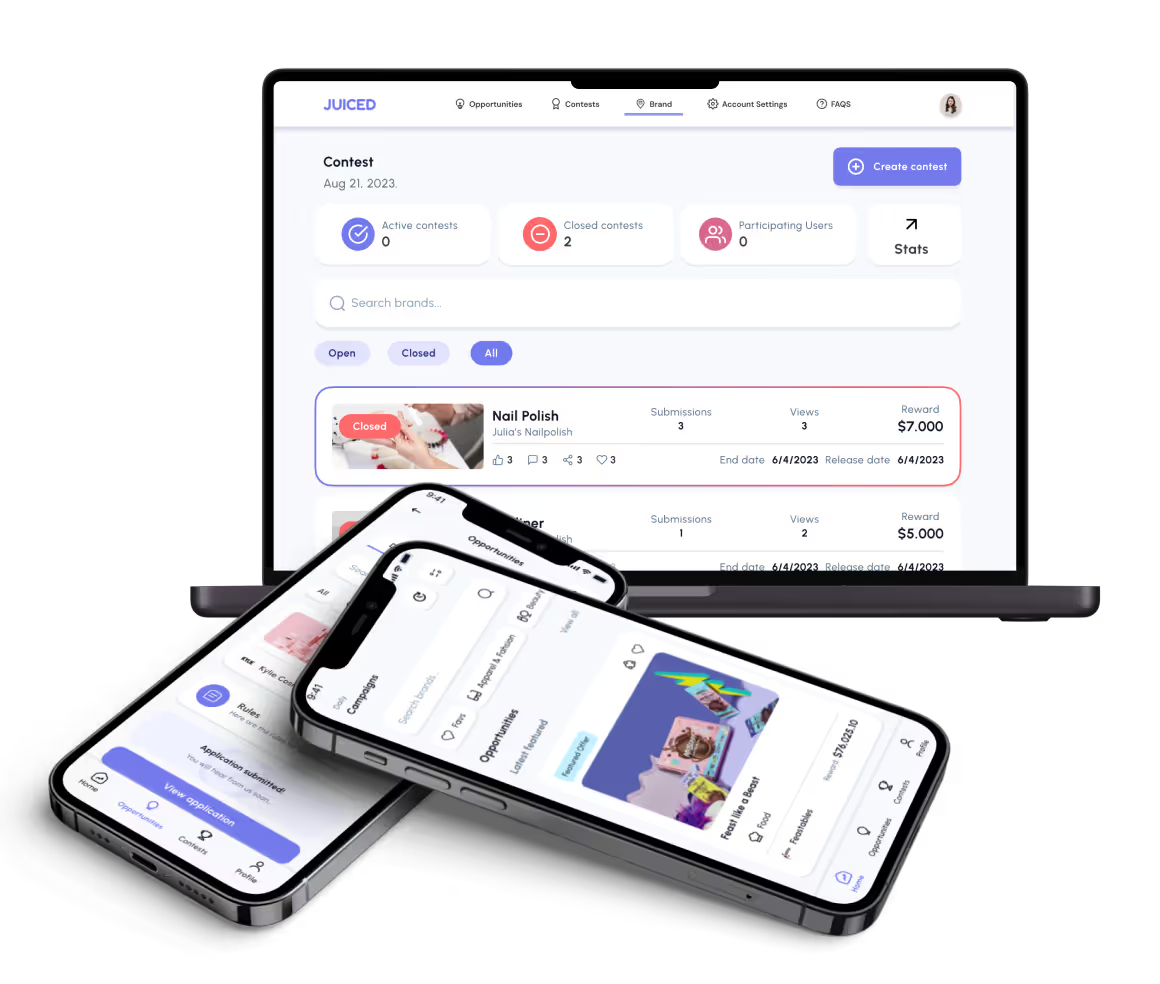
Below are real examples that show how secure architecture translates into measurable outcomes.
These projects show that low-code mobile apps can be secure at scale when security is designed into the system, not added later. The right structure, access control, and mindset make the difference between fragile apps and production-ready mobile products.
Low-code mobile apps can be secure when security is treated as a product decision, not a last-minute fix. Real protection comes from clear architecture, strong access rules, and disciplined backend logic, not from the platform alone. Teams that prioritize structure over speed avoid rebuilds, app store issues, and trust gaps as they scale.
If you are planning a low-code mobile app and want to get security right from day one, reach out and let’s discuss how to build it properly.
Last updated on
May 29, 2026
.
Jesus Vargas
-
Founder
Jesus is a visionary entrepreneur and tech expert. After nearly a decade working in web development, he founded LowCode Agency to help businesses optimize their operations through custom software solutions.
Custom Automation Solutions
Save Hours Every Week
We automate your daily operations, save you 100+ hours a month, and position your business to scale effortlessly.
Our AI — trained on 300+ shipped products — tells you what to build, what to skip, and what it'll actually cost. No fluff.
Assess My Idea"Working with LowCode Agency was the best decision I made in 2025"
Franklin Frith
CEO at HRM
Yes, low-code mobile apps can be secure for production when they are designed correctly. Security depends on how access rules, APIs, data storage, and workflows are configured. Well-structured low-code apps with backend validation and role-based access can meet real-world production and compliance requirements.
Low-code platforms secure the infrastructure, hosting, and basic encryption. You are still responsible for app-level security. This includes user authentication, permissions, data exposure, API protection, and workflow logic. Most security issues come from configuration mistakes, not from the platform itself.
Yes, low-code apps regularly pass App Store and Play Store reviews when privacy policies, permissions, authentication, and data handling are implemented correctly. Rejections usually happen due to poor access control, unclear data usage, or insecure login flows, not because the app was built with low-code.
APIs should be secured using authentication tokens, scoped access, and backend-only validation. Sensitive actions must never rely on frontend checks alone. Rate limiting and monitoring also help prevent misuse. In low-code apps, API security is handled through backend workflows and strict access rules.
Low-code may not be ideal for apps with extreme real-time needs, highly sensitive financial systems, or very strict regulatory requirements that demand low-level system control. In these cases, custom architectures may offer more flexibility, though they also come with higher cost and longer timelines.
LowCode Agency treats security as a product decision from day one. We design access rules before UI, secure APIs and workflows at the backend, and plan for long-term maintenance. With over 350 apps built, we help teams ship low-code mobile apps that are secure, scalable, and production-ready.
No-code/Low-code
How to Work With No-code Agency
Work with a no-code agency the right way. Learn how to choose, collaborate, avoid mistakes, and build scalable products without wasting time or money.
No-code/Low-code
Top no-code web app builders for 2026
Discover the ultimate curated list of top no-code web app builders, empowering you to build web apps without coding.
No-code/Low-code
Benefits of No-code Development: Why It’s Worth It
Discover the real benefits of no-code development, from faster builds to lower costs, and learn when it’s the right choice for your business.
No-code/Low-code
Top no-code influencers you need to follow
Meet the top no-code influencers you need to follow, experts who are leading the way in this rapidly growing field. Stay updated with their insights!
Mobile App Development
No-code/Low-code
No-code Mobile App Development (Build, Launch, and Scale)
Learn how to build no-code mobile apps step by step, choose the right tools, avoid mistakes, and scale your app without coding in 2026.
Custom App Development
No-code/Low-code
Low-code Real Estate App Development Guide
Low-code real estate app development guide covering app types, core features, workflows, integrations, costs, and scalability for modern property platforms.