|
VOOZH | about |
|
VOOZH | about |
Basic Authentication is a simple authentication method where the client sends a username and password encoded in base64 format in the HTTP request header.The basic authentication in the Node.js application can be done with the help express.js framework. Express.js framework is mainly used in Node.js application because of its help in handling and routing different types of requests and responses made by the client using different Middleware.
HTTP WWW-Authenticate header is a response-type header and it serves as a support for various authentication mechanisms which are important to control access to pages and other resources as well.
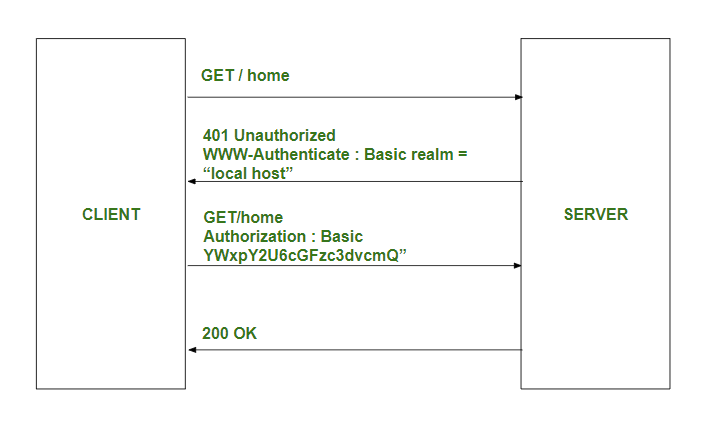
Explanation of the Authentication:
Module Installation: Install the express module using the following command.
npm install expressExample: This example sets up a Node.js Express server with basic authentication, requiring clients to provide valid credentials before accessing static files in the public directory.
Run index.js using the following command:
node index.jsExplanation: This middleware checks client authentication when accessing the server. Initially, it returns a 401 status code due to the absence of req.headers.authorization. The client then provides credentials, which are base64-encoded. The server decodes and verifies them; if correct, the next() method proceeds to the next middleware. If incorrect, the authentication prompt reappears.
Request Header Details:
Basic Authentication in Node.js using HTTP headers provides a straightforward method for securing access to resources. By implementing a middleware function in an Express server, you can enforce authentication and protect sensitive areas of your application. For production use, consider securing the connection with HTTPS to protect credentials during transmission.