|
VOOZH | about |
|
VOOZH | about |
PostgreSQL is a free and open-source database management system used to store, organize and manage data efficiently. It is one of the most popular databases because it is reliable, secure and can handle large amounts of data.
Note: Before learning PostgreSQL, it is recommended to have basic knowledge of SQL concepts.
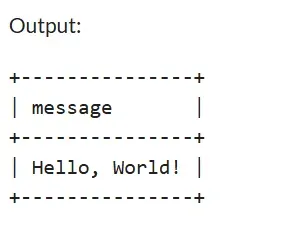
Below is an example to display “Hello, World!” using SQL:
1. Create a database
CREATE DATABASE test_db;2. Connect to the database
\c test_db;3. Create a table
CREATE TABLE greetings (
 id SERIAL PRIMARY KEY,
 message VARCHAR(255)
);
4. Insert a message
INSERT INTO greetings (message)
VALUES ('Hello, World!');
5. Retrieve the message
SELECT message FROM greetings;Output
Learn the fundamental concepts of PostgreSQL, including installation, setup and the basic building blocks needed to work with databases.
Databases help organize and store data. This section covers the essential operations used to manage databases in PostgreSQL.
Tables are used to store data in rows and columns. This section explains how to create and manage tables effectively.
Learn how to retrieve, filter, sort and analyze data using PostgreSQL queries.
Set operators help combine or compare the results of multiple queries.
Subqueries in PostgreSQL allow queries to be nested inside another query, making it easier to perform complex filtering and data retrieval operations.
Data modification in PostgreSQL helps insert new records, update existing data, delete rows and perform upsert operations efficiently.
Conditional and control statements in PostgreSQL help manage decision-making, looping and logical operations within queries and procedural code.
Constraints in PostgreSQL ensure data accuracy and integrity by restricting invalid or duplicate data from being stored in tables.
Joins in PostgreSQL combine data from multiple tables, while schemas help organize and manage database objects efficiently.
Roles and permissions in PostgreSQL control user access and database security by managing privileges and role-based operations.
PostgreSQL in-built functions simplify calculations, string manipulation, date handling and data processing operations within queries.
Indexes in PostgreSQL improve query performance by allowing faster data retrieval and efficient searching on database tables.
Advanced PostgreSQL concepts help you work with procedures, triggers, transactions, exception handling and other important database features.
PostgreSQL exercises and interview questions help strengthen practical knowledge and prepare for real-world database development and job interviews.