|
VOOZH | about |
|
VOOZH | about |
Functional testing ensures that software behaves according to specified requirements and delivers correct outputs for given inputs. It focuses on validating application features from an end-user perspective without any functional defects.
This section covers common Functional Testing interview questions, from basic concepts to real-world scenarios. Functional Testing ensures software works according to its requirements and helps evaluate your practical testing knowledge.
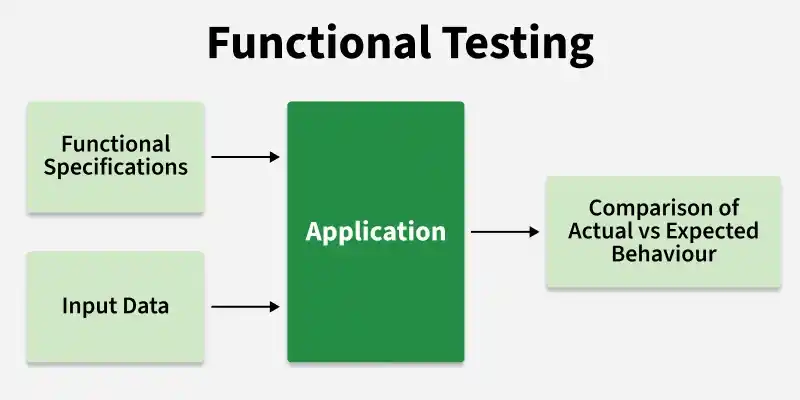
Functional testing is a type of black-box testing that verifies that each function of the software application operates in conformance with the requirement specification. This type of testing involves checking user interfaces, APIs, databases, security, and other functionality to ensure that the software behaves as expected.
Functional testing is crucial because it ensures that the software system operates according to the specified requirements and meets the needs of the end users. It helps identify any discrepancies between the actual and expected output, thereby improving the overall quality and reliability of the software.
The primary purpose of functional testing is to validate the software's functionality against the specified requirements. It ensures that the software performs its intended functions correctly and provides the expected results. This type of testing helps detect functional errors and issues early in the development cycle, reducing the risk of defects in the final product.
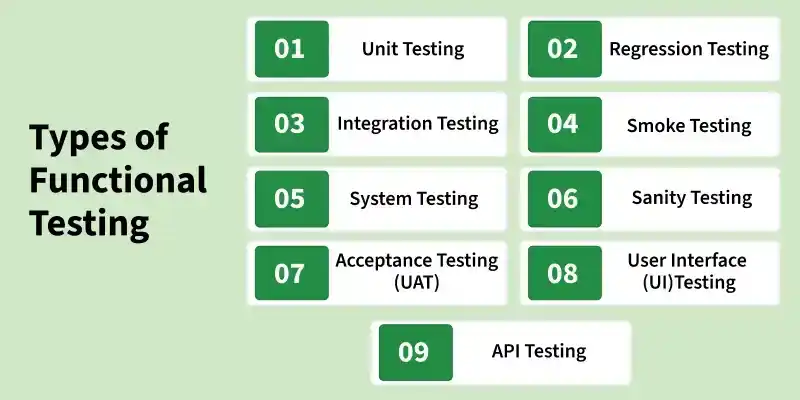
Functional testing includes several types of testing such as:
In functional testing, you test:
The important steps in functional testing include:
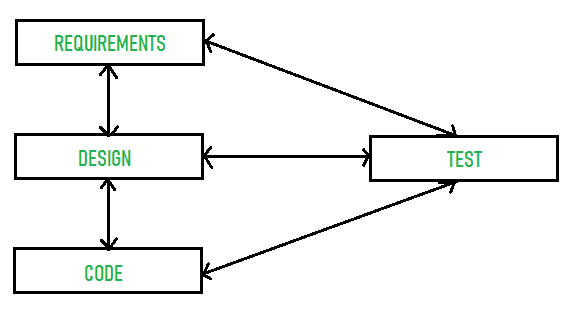
A traceability matrix is used to ensure that all requirements defined for a system are tested in the test protocols. It maps and traces user requirements with the test cases, ensuring that each requirement has been covered by a test case. This helps in identifying missing functionalities or gaps in testing.
Functional testing focuses on verifying that the software performs its intended functions correctly, based on the requirement specifications. Non-functional testing, on the other hand, evaluates aspects such as performance, usability, reliability, and scalability, which are not related to specific behaviors or functions of the software.
The different test levels include:
Acceptance testing is performed to verify whether a system meets business requirements and is ready for delivery. It ensures the software is acceptable to the end users before going live. It is usually the final phase of testing.
Adhoc testing is an informal and unstructured testing approach where the tester aims to find defects without any specific plans or documentation. It relies on the tester's intuition, experience, and understanding of the application. This type of testing is usually conducted when there is limited time and requires a quick evaluation of the software's functionality.
Equivalence partitioning is a software testing technique that divides input data into equivalent classes or partitions. Test cases are designed to cover each partition at least once, reducing the number of test cases needed while still covering a wide range of scenarios. This technique helps in identifying classes of inputs that are expected to produce similar results, making testing more efficient.
Boundary Value Analysis (BVA) is a testing technique that focuses on the values at the boundaries of input domains. Since defects often occur at the edges of input ranges, BVA involves creating test cases for the values at, just below, and just above the boundaries. This helps in identifying potential edge-case issues that may not be caught with other testing techniques.
Smoke testing is performed after a new build is received and before it undergoes more rigorous testing. It is a preliminary test to check whether the critical functionalities of the application are working. The main goal of smoke testing is to ensure that the build is stable enough for further testing. It is usually done early in the testing cycle to catch major issues early on.
End-to-end testing is necessary to verify the complete flow of an application from start to finish, ensuring that all integrated components work together as expected. This type of testing validates the system's overall functionality and identifies any issues that may arise in the real-world usage of the application. It helps in detecting defects that may not be apparent during unit or integration testing.
Sanity testing is a subset of regression testing focused on verifying specific functionalities or bug fixes. It is conducted to ensure that changes or fixes in the code have not affected existing functionalities. Sanity testing is usually performed after receiving a new build to quickly determine if the critical functionalities are working as intended, allowing testers to proceed with more detailed testing.
| Aspect | Severity | Priority |
|---|---|---|
| Meaning | Impact of the defect on system functionality | Importance or urgency of fixing the defect |
| Focus | Technical impact | Business requirement |
| Determined By | Testers / QA team | Product owner / business team |
| Nature | Objective (how bad the issue is) | Subjective (how soon to fix it) |
RTM, or Requirements Traceability Matrix, is a document that maps and traces user requirements with the test cases. It ensures that all requirements are covered by test cases and helps in identifying any gaps. RTM is used to track the progress of testing and ensure that all specified requirements have been tested.
Data-driven testing is a testing methodology where test scripts are executed using multiple sets of data inputs. This technique allows testers to create a single test script that can run with various data inputs, making it easier to validate how the application handles different data scenarios. It is commonly used in automation testing to increase test coverage and efficiency.
Mutation testing is a technique used to evaluate the quality of test cases. It involves making small changes (mutations) to the code and running the test cases to see if they can detect the changes. The goal is to ensure that the test cases are robust enough to catch defects. If the test cases fail to detect the mutations, it indicates that the test cases need improvement.
It is impossible to test a program thoroughly because software can behave differently for an extremely large number of inputs and conditions. Due to practical constraints, only selected test cases can be executed. System complexity and external dependencies further prevent complete coverage.
When requirements are not finalized, testing can be approached by:
When writing test cases, consider the following:
The number of test cases executed in a day depends on several factors, including:
Typically, a tester might execute anywhere from 10 to 50 test cases per day, but this can vary widely.
Stress testing involves evaluating how a system performs under extreme conditions, such as high load, limited resources, or intense activity. The goal is to identify the system's breaking point and ensure it can handle peak loads without crashing or experiencing significant performance degradation.
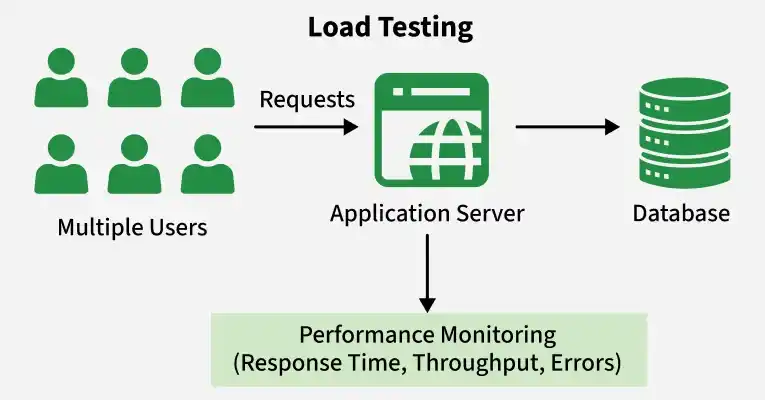
Load testing assesses the system's performance under expected user load. It measures response times, throughput, and stability when the system is subjected to typical or slightly above typical usage conditions. The aim is to ensure the system can handle anticipated traffic and perform efficiently.
Configuration management involves systematically managing changes to software, hardware, and documentation. It ensures that all components of a system are identified, tracked, and maintained consistently. Configuration management helps in maintaining the integrity and traceability of the system throughout its lifecycle.
In risk-based testing, consider the following factors:
Non-functional testing evaluates aspects of the software that do not relate to specific functions or behaviors. It includes testing for performance, scalability, security, usability, and reliability. The goal is to ensure the software meets predefined criteria for these attributes, providing a satisfactory user experience.
Automation testing offers several advantages:
Coverage in testing refers to the extent to which the test cases cover the software's code, functionality, or requirements. Different coverage techniques include:
A bug report is a document that communicates detailed information about a defect or issue found in the software. It typically includes:
GUI testing involves testing the graphical user interface of an application to ensure it meets specifications and provides a positive user experience. This includes checking elements like buttons, menus, icons, and dialogs for:
Standard rules for API test design include:
Advantages of manual testing include:
A test harness is a collection of software and test data configured to test a program unit by running it under varying conditions and monitoring its behavior and outputs. It typically includes:
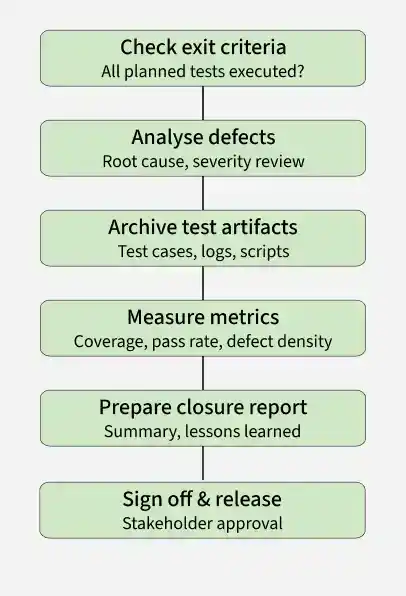
Test closure refers to the final phase of the testing process, where the following activities are performed:
A critical bug in functional testing is a serious defect that affects the main functionality of an application. It can make the system crash, behave incorrectly, or become unusable, so it must be fixed immediately.
Baseline testing involves comparing the current performance of a system or application against a defined baseline. The baseline is a set of metrics or benchmarks established from previous tests or industry standards. Baseline testing helps identify changes in performance, detect regressions, and ensure that new versions of the software maintain or improve upon the established benchmarks.
Defect cascading occurs when a defect in one part of the software triggers additional defects in other parts. As the initial defect propagates through the system, it causes a chain reaction of failures, making the overall impact more severe. Detecting and fixing the initial defect early can prevent these cascading failures and reduce the overall number of defects in the system
The basic components of a defect report typically include:
A testbed is a controlled environment configured for testing software. It includes hardware, software, network configurations, tools, and other resources needed to execute test cases. The testbed replicates the production environment to ensure that testing results are accurate and reliable.
Defect Removal Efficiency (DRE) is a metric used to measure the effectiveness of the defect detection and removal process. It is calculated as the ratio of defects found and fixed during testing to the total number of defects (including those found in production).
Bug Release: Bug release refers to releasing a software version even when known defects are present, but they are documented and acknowledged by the team. These bugs are usually low priority or have acceptable workarounds.
Bug Leakage: Bug leakage occurs when a defect is missed during testing and is discovered by the end user or in production. It indicates a gap in the testing process.
Agile testing is a software testing practice that follows the principles of Agile development, which emphasizes iterative and incremental delivery of software. Agile testing is important because it:
When encountering a bug, a tester should:
The different types of debugging categories include:
Test deliverables are the artifacts produced during the testing lifecycle. These include:
Common risks leading to project failure include:
Test Matrix: A test matrix is used to track and measure test coverage, execution status, and test progress. It mainly focuses on test cases, their execution results, and overall testing status.
Traceability Matrix: A traceability matrix maps requirements to test cases to ensure that all requirements are covered by testing. It helps verify that no requirement is missed.
| Feature | Positive Testing | Negative Testing |
|---|---|---|
| Purpose | Verify system works with valid inputs | Verify system handles invalid inputs |
| Input Type | Valid data and correct actions | Invalid, incorrect, or unexpected data |
| Focus | Confirm expected behavior | Check error handling and stability |
| Goal | Ensure functionality works as intended | Ensure system does not crash and shows proper error messages |
| Example | Successful login with correct username/password | Login attempt with wrong password |
The Big Bang approach is an integration testing method where all components or modules are integrated simultaneously, and the entire system is tested as a whole. It is typically used when the individual modules have been tested independently, and the focus is on testing the interactions between modules.
A fault, also known as a defect or bug, is an error or flaw in the software code that causes the system to produce incorrect or unexpected results.
Bug leakage occurs when defects are not detected during the testing phase but are found by end-users after the software has been released into production. It indicates gaps in the testing process.
Test-Driven Development (TDD) is a software development approach where tests are written before the code is developed. In TDD, developers write a test case for a new function, write the minimum code necessary to pass the test, and then refactor the code while ensuring that all tests continue to pass.
Latent Defect vs Masked Defect:
| Feature | Latent Defect | Masked Defect |
|---|---|---|
| Meaning | A hidden defect that exists in the system but is not yet discovered | A defect that is hidden by another defect and not visible until the first one is fixed |
| Detection | Found later, often during real usage or advanced testing | Discovered only after another defect is removed |
| Cause | Poor design, coding error, or missed requirement | One defect hiding the effect of another defect |
| Visibility | Not visible during normal testing initially | Temporarily hidden due to another defect |
| Example | A calculation error that appears only under rare conditions | A failure in output caused by another bug masking the real issue |
Random or Monkey Testing is an informal testing technique where the tester inputs random data into the system to check for crashes or unexpected behavior. It is used to identify edge cases and ensure the system’s robustness.
Context-driven testing is an approach that emphasizes adapting testing practices to the specific context of the project. It acknowledges that different projects have unique requirements, constraints, and goals, and testing strategies should be tailored accordingly.
The PDCA (Plan-Do-Check-Act) cycle is a continuous improvement model used in software testing:
Entry criteria are the conditions that must be met before testing can begin. These may include:
Exit criteria are the conditions that must be met before testing can be considered complete. These may include:
System testing is typically done after integration testing and before acceptance testing. It focuses on testing the complete and integrated system to ensure it meets the specified requirements. While it is ideally performed at a specific stage, system testing can be done iteratively in agile development environments.
End-to-end testing involves testing the complete flow of an application from start to finish. It ensures that all integrated components and systems work together as expected and validates the entire process flow to identify any issues in the application’s functionality, data integrity, and interactions.
Use case testing is a technique where test cases are designed based on use cases. Use cases describe the interactions between users and the system to achieve specific goals. This approach ensures that all user scenarios are tested, covering both functional and non-functional aspects of the system.
A/B testing, also known as split testing, involves comparing two versions of a web page, application, or feature to determine which one performs better. Users are randomly assigned to one of the two versions, and their interactions are analyzed to identify the more effective version based on predefined metrics.
The defect life cycle, also known as the bug life cycle, describes the stages a defect goes through from identification to resolution. Typical stages include:
Configuration testing involves evaluating the software’s performance and functionality on different hardware, software, and network configurations. It ensures compatibility and identifies issues related to varying environments, such as different operating systems, browsers, devices, and network conditions.
The level of risk is determined by two main factors:
Risk Level = Impact × Likelihood
Higher impact and higher probability lead to higher risk, which helps prioritize testing efforts.
Defect triage is the process of reviewing, prioritizing, and assigning defects based on their severity, impact, and urgency. During triage meetings, stakeholders (testers, developers, product managers) discuss each defect to decide its priority and the necessary actions for resolution.
A stub is a dummy or temporary program module used in top-down integration testing. It simulates the behavior of lower-level modules that are not yet developed or integrated, allowing testing of the upper modules.
In simple terms, a stub acts as a replacement for missing components by providing predefined responses to calls made during testing.